The Latency Imperative in Real-Time AI
For enterprises deploying AI in mission-critical, real-time applications, latency is not just a performance metric; it's a business imperative. Delays in AI inference can mean missed opportunities, degraded user experiences, and even critical failures in systems that demand immediate responses. Consider a global financial trading platform where milliseconds of latency in an algorithmic trading AI could translate into millions in lost revenue. Or a sophisticated autonomous driving system where a delayed perception AI response could have catastrophic safety consequences. The challenge lies in architecting AI systems that can consistently deliver sub-second, or even sub-millisecond, response times under heavy load and across diverse operational environments.
Optimizing AI latency for these demanding use cases requires a multi-faceted approach, moving beyond simple model tuning. It involves deep architectural considerations, intelligent data management, and strategic deployment. The goal is to reduce every possible point of delay, from the initial data ingestion to the final model output, ensuring that the AI's decision-making process is as instantaneous as the application demands.
Architectural Optimization Strategies
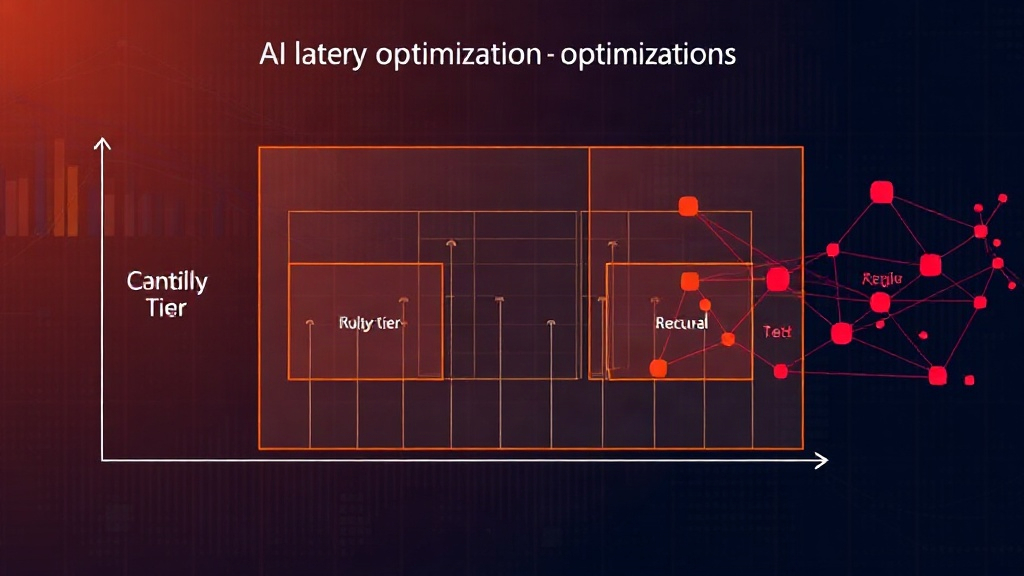
A robust strategy for tackling AI latency begins at the architectural level. One highly effective technique is semantic caching. This involves storing the results of frequently encountered queries or data patterns. When a recurring request arrives, the system can serve the answer directly from the cache, bypassing the computationally intensive process of running the AI model entirely. This is akin to having a highly organized assistant who instantly retrieves the answer to common questions without needing to research them each time. For instance, a customer service chatbot that frequently receives the same inquiries about return policies can use semantic caching to provide instant, accurate responses, significantly reducing average response time and freeing up the AI to handle more complex, novel queries.
Complementing caching, streaming responses play a crucial role in reducing *perceived* latency. Instead of waiting for the entire AI model to complete its computation and deliver a single, final output, streaming responses deliver partial results as they become available. This is particularly valuable in conversational AI or complex data analysis tasks. Imagine a user interacting with an AI that is generating a detailed report. With streaming, the user sees the introduction and initial findings appear almost immediately, followed by subsequent sections as they are processed. This creates a sense of responsiveness and engagement, even if the total processing time remains the same. The user feels the system is actively working and providing information, rather than being stuck in a black box of silence.
For applications where extreme speed is paramount, routing time-sensitive tasks to smaller, hardware-accelerated local models offers a significant advantage. Large, complex AI models, while powerful, can be resource-intensive and slow. By identifying specific, high-priority tasks that can be handled by leaner, more specialized models, enterprises can achieve near-instantaneous results. These smaller models can often be optimized to run on specialized hardware, such as GPUs or TPUs, located closer to the data source or user. This hybrid approach allows the system to leverage the power of large models for less time-sensitive tasks while using highly optimized, local models for immediate critical functions. This is like having a dedicated, high-speed courier for urgent documents, while regular mail handles less time-critical correspondence.
Network and Deployment Optimizations
Beyond internal model and system optimizations, network latency and deployment strategy are critical for global enterprise applications. Regional edge deployment is a cornerstone of minimizing network round-trip delays. By deploying AI inference nodes in geographic regions closer to end-users, the physical distance data must travel is drastically reduced. This is especially important for applications relying on continuous data streams or requiring real-time interaction from users across continents. For a global ride-sharing platform, for instance, deploying routing AIs and dispatch systems within regional data centers ensures that a user in Tokyo experiences minimal delay when requesting a ride, regardless of where the central AI control plane might be located. This strategy effectively brings the AI closer to the action, making it behave as if it were local.
The synergy of these strategies was demonstrated by a global ride-sharing platform that optimized its routing AI. By implementing edge caching for common route calculations and deploying lightweight neural networks on regional servers, they successfully cut real-time dispatch calculation latency by an impressive 70% during peak demand hours. This engineering feat directly translated into more efficient dispatch, reduced driver idle time, and an improved user experience, showcasing how a holistic approach to latency optimization can yield substantial business benefits.
The Continuous Pursuit of Speed
Engineering high-speed AI systems is not a one-time fix but an ongoing process. As models evolve, data volumes grow, and user expectations increase, continuous monitoring and refinement are essential. This involves profiling AI workloads, identifying bottlenecks, and iteratively applying optimization techniques. For enterprises operating at scale, the investment in reducing AI latency is a direct investment in user satisfaction, operational efficiency, and competitive advantage.