
The Looming AI Employment Crisis
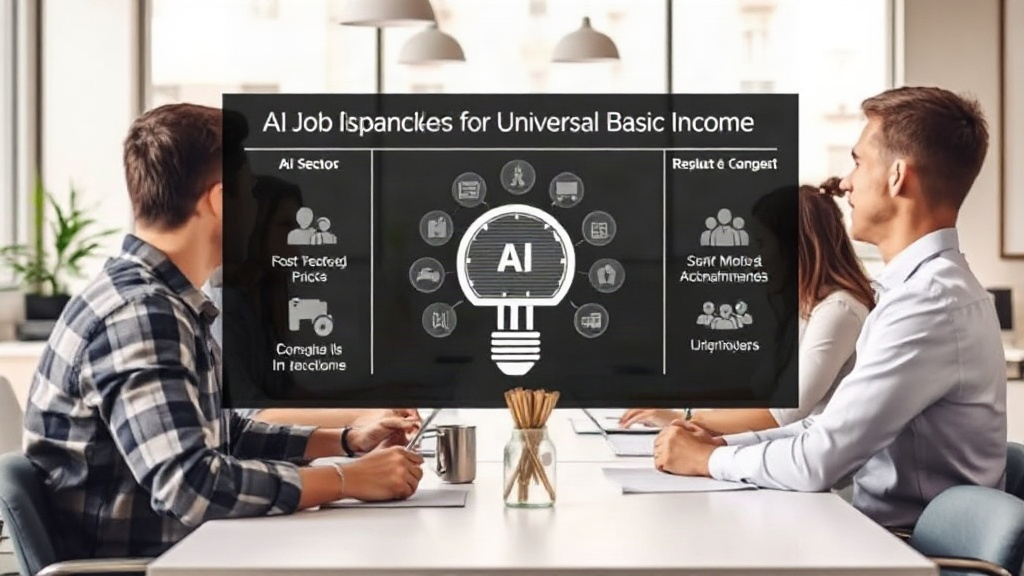
The rapid advancement of artificial intelligence is no longer a distant concern but an immediate threat to the global workforce. Within the next two years, many jobs could be automated, leading to widespread unemployment. This impending crisis has ignited a fervent discussion around Universal Basic Income (UBI) as a critical societal safeguard. The argument is simple: as AI takes over tasks across industries, from customer service to creative content generation, a fundamental shift in our economic structure is inevitable. Without proactive measures, the loss of employment to AI could quickly escalate into a personal financial emergency for millions.
The core of the issue lies in the unprecedented speed and scale of AI's capabilities. Unlike previous technological revolutions that displaced workers in specific sectors, AI has the potential to impact a far broader range of professions simultaneously. This isn't just about blue-collar jobs; white-collar roles involving analysis, writing, and even complex problem-solving are increasingly within AI's purview. The current economic and social safety nets are not designed to handle such a swift and pervasive disruption. This reality necessitates a paradigm shift in how we conceptualize work, income, and social welfare.
The Case for Universal Basic Income
Universal Basic Income, a system where all citizens receive a regular, unconditional sum of money from the government, is being proposed as the most viable solution. Proponents argue that UBI would provide a crucial financial floor, ensuring that individuals have their basic needs met even if their jobs are automated. This would not only prevent widespread poverty and social unrest but also allow individuals the security to retrain, pursue education, or engage in entrepreneurial activities without the immediate pressure of survival.
The concept of UBI is not new, but its urgency has amplified with the advent of advanced AI. Pilot programs in various countries have shown promising results, demonstrating improvements in health outcomes, reduced stress levels, and increased small business creation. However, these have often been limited in scope and duration. The current discourse emphasizes the need for a national, and perhaps international, commitment to establishing UBI before mass job displacement becomes a reality. The petition circulating online, urging Congress to establish UBI, reflects this growing public demand for action.
Addressing the Concerns and Challenges
Implementing UBI is not without its challenges. Critics raise concerns about the economic feasibility, potential inflationary effects, and the impact on work incentives. The sheer cost of providing a basic income to an entire population is substantial and would require significant tax reform or reallocation of government spending. Furthermore, there is a debate about the optimal level of UBI – enough to live on, but not so much as to disincentivize work entirely, especially for those whose jobs remain or who can transition to new roles.
However, the counterargument is that the cost of inaction – widespread unemployment, increased poverty, and social instability – would be far greater. The nature of work itself is changing. As AI takes over routine tasks, human labor might shift towards roles requiring creativity, emotional intelligence, and complex human interaction. UBI could provide the breathing room for this transition. It could foster a society where individuals are free to contribute in ways that are not solely dictated by market demand for traditional employment, potentially leading to a richer cultural and social landscape.
The Path Forward: Advocacy and Policy
The call for UBI is gaining momentum, moving from academic circles and fringe discussions into mainstream political debate. Organizations and individuals are actively lobbying governments to consider UBI as a proactive policy response to the AI revolution. The success of such initiatives hinges on public awareness, political will, and careful policy design. It requires a societal consensus that economic security should not be solely contingent on traditional employment, especially in an era where technology can perform an ever-increasing share of human labor.
The urgency cannot be overstated. Waiting until mass job losses occur will be too late. The transition to an AI-augmented economy needs to be managed with foresight and compassion. Establishing UBI now, before AI-driven unemployment becomes a widespread financial emergency, is presented not as a radical handout, but as a pragmatic and necessary adjustment to the future of work.