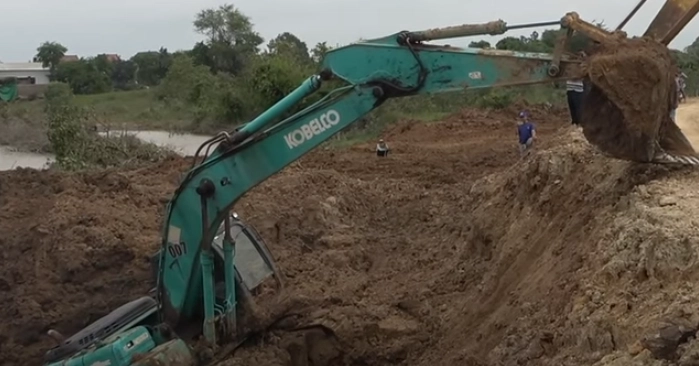
The Backhoe Analogy for AI
Two years ago, on May 23, 2023, I published my initial critique of AI, specifically targeting ChatGPT. My comparison then was to a scientific calculator: in the hands of a novice, it’s more likely to spell out “fart” than to solve complex mathematical proofs. Calculators, spreadsheets, and the internet fundamentally changed how we work, but the human element remained central. AI-driven Large Language Models (LLMs) follow this pattern. They alter our workflows, but they do not replace the human at the helm.
Today, I offer an updated perspective, inspired by a LinkedIn post from Dave Mangot. He shared a sentiment from a long-time associate that resonated deeply: AI is not a smart assistant waiting to take over tasks, nor is it a sentient being. Instead, AI, particularly in its current LLM form, is best understood as a backhoe. It’s a powerful piece of machinery, an implement that dramatically amplifies human capability when wielded by a skilled operator. It doesn't think for you; it executes your commands with immense power and scale.
Think of it this way: a backhoe can dig massive trenches, move tons of earth, and reshape landscapes with astonishing speed. It can perform tasks that would take dozens of people weeks to accomplish manually. However, the backhoe itself does not decide where to dig, how deep to go, or what the final shape of the terrain should be. That decision-making power, the strategic planning, the understanding of the underlying purpose, rests entirely with the human operator. The backhoe is a tool, albeit an incredibly potent one.
This distinction is crucial. Many popular narratives around AI focus on its potential for autonomy, for replacing human judgment, or for achieving sentience. These narratives often paint AI as an independent actor. The backhoe analogy, however, grounds us in reality. It highlights that AI’s value is intrinsically tied to human direction and expertise. The more complex the task, the more sophisticated the understanding required from the operator. Simply having access to a backhoe doesn’t make someone a master landscaper or civil engineer. Similarly, having access to powerful LLMs does not automatically make someone an expert strategist, writer, or analyst.
The Operator's Skill Matters Most
Consider the process of using a backhoe. An experienced operator doesn’t just point and dig. They understand the soil conditions, the proximity of underground utilities, the structural integrity of surrounding areas, and the desired outcome of the excavation. They maneuver the machine with precision, adjusting depth, angle, and force based on real-time feedback and their deep understanding of the project’s goals. A novice, on the other hand, might operate the backhoe clumsily, potentially causing damage, inefficiency, or failing to achieve the desired result. The machine is only as effective as the person controlling it.
The same applies to AI. Prompt engineering, while a new skill, is essentially the modern manifestation of this operator expertise. Crafting effective prompts requires understanding the AI’s capabilities and limitations, framing requests clearly and precisely, and iterating based on the output. It's about guiding the powerful tool to achieve a specific, human-defined objective. The nuance of a request, the contextual understanding, the ethical considerations – these all stem from the human operator.
This perspective challenges the notion of AI as an emergent intelligence that will inevitably surpass human capabilities across the board. Instead, it positions AI as a force multiplier. It can accelerate research, automate repetitive tasks, and generate content at scale, but only when directed by human insight. The quality of the output, the relevance of the insights, and the ultimate success of the endeavor are still dictated by the human intellect guiding the AI.
What this means for the future of work is a subtle but significant shift. Instead of focusing on whether AI will take jobs, we should focus on how human roles will evolve to leverage these powerful tools. The emphasis will be on critical thinking, problem-solving, creativity, and strategic decision-making – the very skills that the backhoe analogy suggests are indispensable. Professionals who can effectively operate these AI