AI as a Code Author, Not an Integration Engine
The allure of AI-powered development is undeniable. Tools like GitHub Copilot, Claude Code, and Cursor can now generate integration code snippets in mere seconds. For developers accustomed to spending hours crafting rudimentary connectors, this speed feels like a paradigm shift. It’s easy to fall into the trap of thinking the complex problem of B2B SaaS integrations is now solved, that AI will simply automate the entire process.
However, this perspective fundamentally misunderstands the nature of production-ready integrations. AI excels at pattern recognition, code generation, and parsing documentation. It can transform a payload or draft a basic API call with remarkable efficiency. But a functional integration is far more than a set of well-written functions. It requires a robust infrastructure that AI, in its current form, cannot provide.
Consider a simple integration connector. An AI might generate the TypeScript code to fetch data from one API and format it for another. This is akin to an author writing a single chapter of a book. The chapter might be well-crafted, grammatically correct, and even compelling. But it’s not a complete novel. It lacks the overarching plot, character development across chapters, editing, publishing, and distribution – the essential elements that turn raw text into a published work.

Beyond Code: The Unseen Integration Necessities
What makes an integration truly production-ready involves a complex web of operational requirements that extend far beyond the code itself. These include:
- Multi-Tenant Deployment: Most SaaS integrations need to serve multiple customers simultaneously. This requires architecture that isolates customer data, manages tenant-specific configurations, and scales efficiently. AI code generators typically produce single-tenant examples, not scalable multi-tenant solutions.
- Authentication and Authorization: Securely managing API keys, OAuth tokens, and user credentials across different environments (development, staging, production) and for multiple tenants is critical. This involves intricate workflows, token refresh mechanisms, and robust error handling that AI doesn't inherently build.
- Monitoring and Observability: Once deployed, integrations must be monitored for errors, performance degradation, and usage patterns. This necessitates setting up logging, tracing, alerting, and dashboards – infrastructure management tasks that AI code generation tools do not address.
- Error Handling and Retries: Real-world APIs are not always available or responsive. Integrations need sophisticated error handling, including exponential backoff, retry mechanisms, and dead-letter queues to ensure data consistency and reliability.
- Configuration Management: Integrations often require dynamic configuration for endpoints, credentials, and feature flags. Managing this configuration across different tenants and environments is a significant engineering challenge.
- Scalability and Performance: An integration that works for one customer might buckle under the load of hundreds or thousands. Designing for scalability involves architectural decisions, efficient data processing, and performance optimization that AI code generation alone cannot guarantee.
These are not trivial add-ons; they are foundational pillars of any reliable B2B SaaS integration. They require architectural planning, infrastructure setup, and ongoing operational management – tasks that fall squarely on the shoulders of integration engineering teams.
AI as a Co-Pilot, Not the Pilot
The value of AI in integration development lies in its ability to accelerate specific, well-defined tasks. It can:
- Generate boilerplate code: Quickly create data transformation functions, API client stubs, or basic request/response handlers.
- Understand documentation: Parse complex API specifications and provide summaries or code examples based on them.
- Suggest improvements: Offer optimizations for code snippets or identify potential bugs in drafted code.
- Assist in debugging: Help identify the root cause of errors in generated or existing code.
This positions AI as an incredibly powerful co-pilot. A developer can leverage AI to rapidly draft the core logic of an integration, freeing up their cognitive load to focus on the more challenging aspects: designing the multi-tenant architecture, implementing secure authentication flows, setting up monitoring, and ensuring scalability. The AI writes the sentences; the human builds the book.
Platforms like Prismatic are designed to bridge this gap. They provide the underlying infrastructure for building, deploying, and managing integrations. By pairing AI-generated code with Prismatic's capabilities—such as its Skill framework for modular code and its Multi-Channel Platform (MCP) dev server for local testing and deployment—developers can ensure that the code drafted by AI is not just functional but production-ready, scalable, and manageable for all their customers. Think of Prismatic as the publishing house and distribution network that takes the AI-authored chapter and turns it into a widely available book.
The Human Element Remains Indispensable
The rapid pace of AI advancement can be disorienting. Developers with decades of experience, who have navigated seismic shifts from assembly to the cloud, report feeling like beginners again. This feeling isn't about AI taking over the world; it's about the sheer velocity of change and the cognitive load required to adapt. The 'lack of affect' described by some long-time engineers—that slightly too-fast 'I'm fine'—stems from this constant, non-collapsing pressure. Unlike a typical crunch that ends with a release, the AI evolution has no predictable endpoint, creating a sustained state of adaptation.
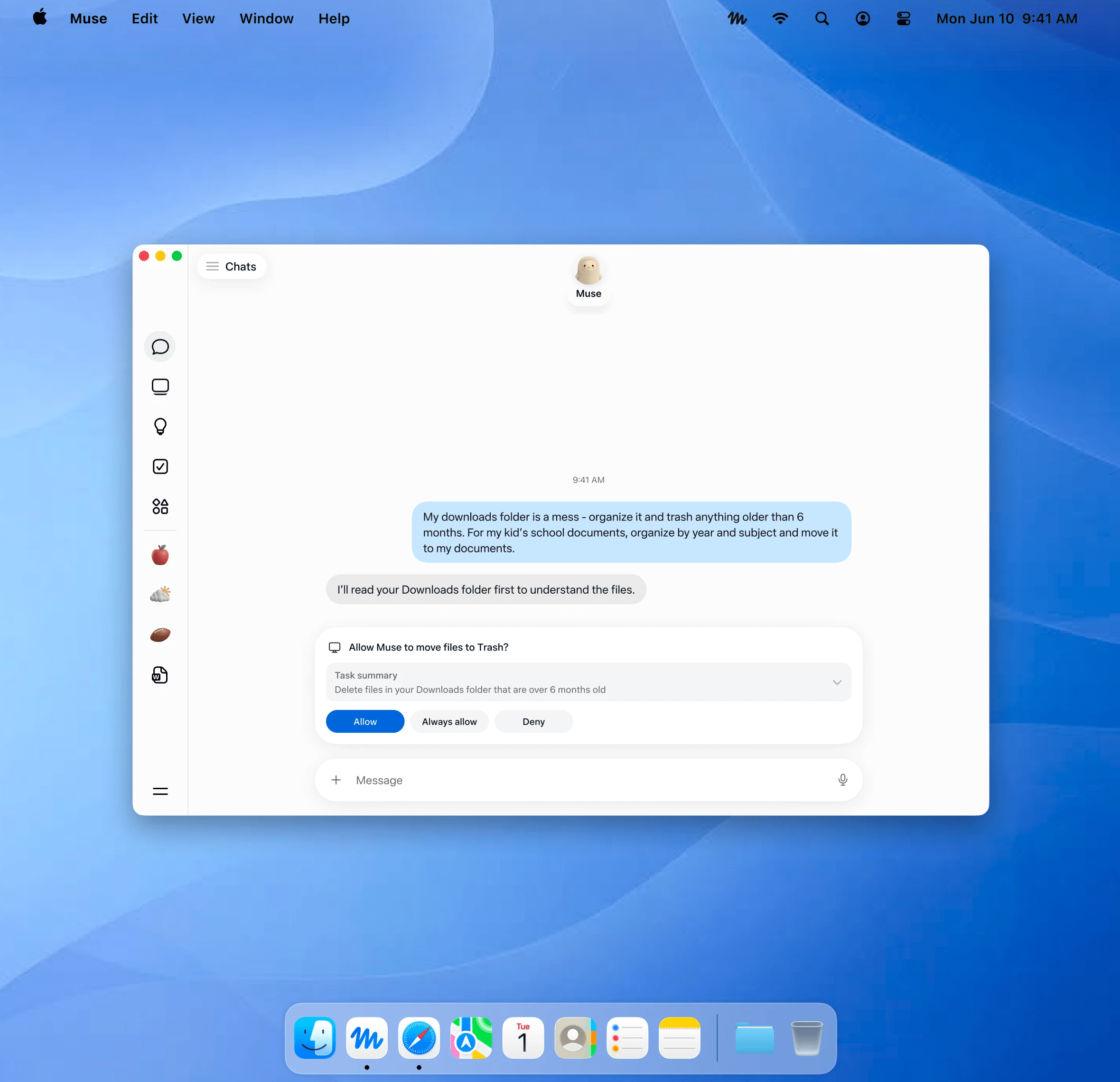
Meta’s Muse, which allows AI to take actions on a user's computer, hints at a future where AI agents can execute more complex tasks. However, even with such advancements, the core responsibilities of building robust, secure, and scalable systems will likely remain human-driven. AI will become an increasingly sophisticated tool, but the strategic thinking, architectural design, and operational oversight required for complex software systems like B2B integrations are still firmly within the human domain. The integration team’s plate will always have room for these critical, high-level tasks, even as AI helps clear the clutter of repetitive coding.