The Unmistakable AI Signature
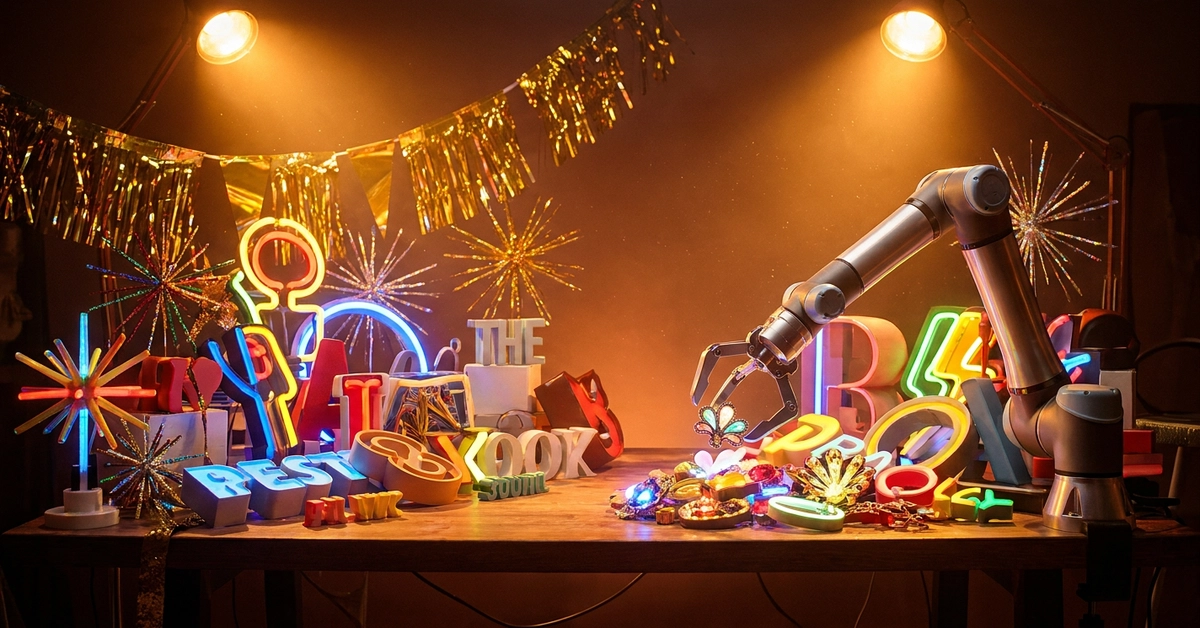
Remember Word Art? That garish, rainbow-gradient, arched text that adorned nearly every school flyer in the 1990s? Today, we’re witnessing a similar phenomenon, but instead of text effects, it’s entire websites being generated by artificial intelligence. The tell-tale signs are already apparent, and frontend developers are the first to notice. They describe AI-generated designs as “sloppy,” lacking a discernible reason for their aesthetic but immediately recognizable as cheap or uninspired. This isn't a new human instinct; we’ve long been able to spot generic clip art, stock handshake photos, and generic swoosh logos, categorizing them as low-budget before conscious thought kicks in. The comparison to the Word Art era is more accurate than many would like to admit.
The core issue lies in the current limitations of AI’s design capabilities. While AI can assemble components and follow basic prompts, it often struggles with nuanced design principles, brand identity, and the subtle emotional resonance that human designers bring. This leads to a visual sameness that undermines uniqueness and perceived quality. The AI, trained on vast datasets of existing web designs, tends to default to the most common patterns and elements, inadvertently creating a sea of similar-looking websites. This homogenization is precisely what happened with Word Art – a tool meant for creative expression became a ubiquitous, unoriginal cliché.
Consider the process: a user inputs a prompt, and the AI scours its training data for relevant layouts, color schemes, and typography. The result is often a functional, but soulless, replica of existing trends. There’s a distinct lack of originality, a missing spark that comes from a designer’s deliberate choices and understanding of user experience beyond mere functionality. This problem is exacerbated by the rapid adoption of these tools. As more businesses and individuals turn to AI for quick website creation, the pool of visually similar outputs grows, reinforcing the very patterns the AI relies on. This creates a feedback loop where AI-generated designs become increasingly indistinguishable from one another, much like the predictable output of Word Art.
Why Everything Looks the Same
The uniformity in AI-generated websites stems from several factors inherent in current AI models and their training data. A study from 2025, cited in a January 2026 Medium article, indicated that over 80% of AI-generated web designs exhibited a predictable pattern of layout, color palette, and element placement. These models are trained on massive datasets of existing websites. When prompted, they don't truly *design* in the human sense; they identify and recombine common features and structures that appear frequently in their training corpus. This means that if a particular layout or color scheme is prevalent in the training data, the AI is highly likely to reproduce it, leading to an uncanny resemblance across different AI-generated sites.
This reliance on existing patterns is analogous to how Word Art functions. Users select from a limited set of pre-defined styles, fonts, and effects. The tool doesn't enable true typographic innovation; it offers variations on a theme. Similarly, AI website generators, while more sophisticated, operate on a principle of pattern matching and recombination. The output may be technically competent, but it lacks the bespoke quality that a human designer crafts through an understanding of branding, target audience, and emotional impact. The “sloppy” feel developers detect isn't necessarily a technical flaw but a deficit in intentionality and unique aesthetic decision-making.
Furthermore, the speed and cost-effectiveness of AI generation encourage its use for projects where a unique brand identity is not the primary concern. Small businesses, startups with tight budgets, or individuals needing a quick online presence are drawn to these tools. While this democratizes web creation, it also floods the digital landscape with designs that prioritize expediency over originality. This widespread adoption reinforces the very trends that make AI designs predictable, creating a self-perpetuating cycle of visual monotony. The danger is that this homogenization could dilute brand distinctiveness and make it harder for businesses to stand out in an increasingly crowded digital space.
The User Experience Deficit
Beyond aesthetics, the “sloppy” perception often relates to underlying user experience (UX) issues. AI-generated sites might follow basic usability heuristics but often miss the mark on creating intuitive, engaging, or emotionally resonant journeys. Developers can often “feel” when a site wasn’t thoughtfully constructed. This intuition comes from years of interacting with well-designed interfaces and recognizing the subtle cues that indicate a deliberate, user-centered approach versus an automated, pattern-based one. A site might have clear navigation, but the way information is presented, the micro-interactions, or the overall flow can feel slightly off, leading to a subconscious rejection by the user.
This is where the Word Art analogy truly holds up. Word Art was functional – it made text large and colorful – but it rarely contributed to sophisticated document design. It was a shortcut that often detracted from the overall professionalism. Similarly, AI-generated websites can be functional, but they often lack the polish and strategic design thinking that elevates a site from merely existing to actively engaging and converting users. The AI might not understand the psychological impact of specific color combinations, the hierarchy of information presented, or the flow of a user’s attention in the same way a seasoned designer does. This results in a user experience that feels adequate but rarely delightful or memorable.
The challenge for AI developers is to move beyond mere pattern replication. True innovation would involve AI that can understand and apply design principles, adapt to specific brand identities, and even generate novel aesthetic approaches. Until then, the trend of generic, easily identifiable AI-generated websites will likely continue, a digital echo of the Word Art era, prompting a critical look at the true value of automated design.
What is the Long-Term Impact on Web Design?
The current state of AI-generated websites raises significant questions about the future of web design. Will this era of design homogenization lead to a backlash, a renewed appreciation for human creativity and bespoke design? Or will efficiency and cost savings continue to drive adoption, leading to a web where distinctiveness becomes a rare commodity? The surprising detail here is not the technical capability of AI to generate websites, but the immediate and widespread recognition of its stylistic limitations, mirroring a cultural moment from decades past. If you’re a founder looking to build a distinct brand, relying solely on current AI tools might be a strategic misstep. The challenge for AI developers and designers alike is to find a balance where AI enhances, rather than replaces, the human touch in creating unique and effective digital experiences.