The Ambitious Goal of OopsCalorie
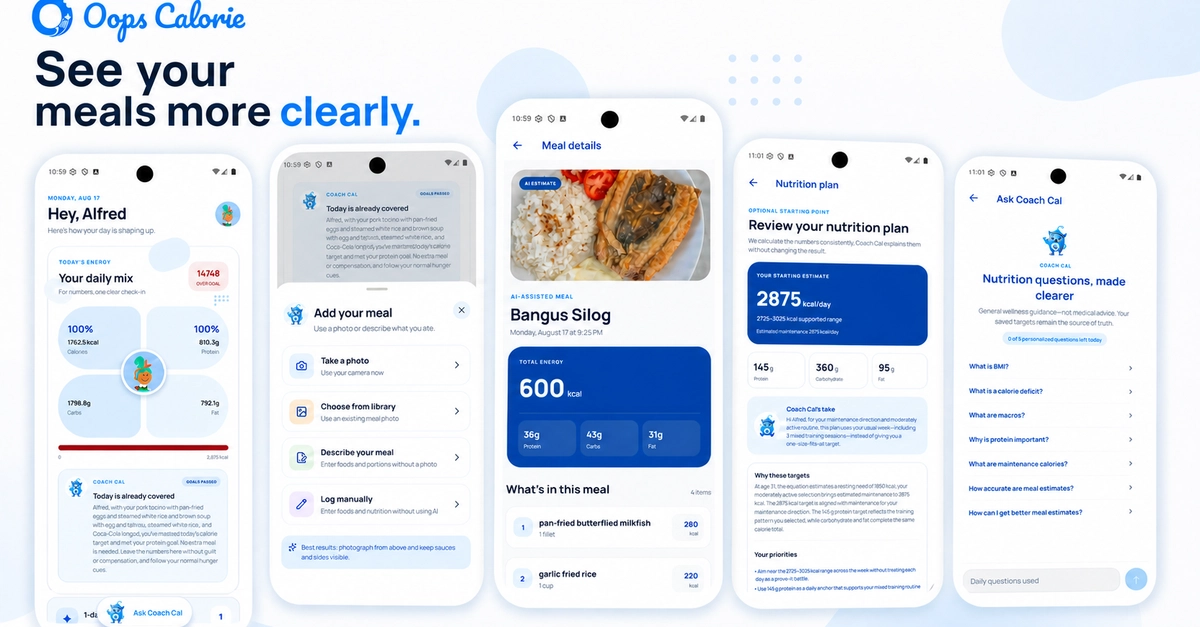
Building an AI-powered calorie and meal tracking application, aptly named OopsCalorie, sounds like a straightforward proposition. The envisioned workflow is simple: a user logs their meal, either by typing it in or snapping a photo. An AI then identifies the dish, estimates its nutritional content (calories and macronutrients), and saves the entry. This elegant process, however, encounters significant hurdles when confronted with the rich and diverse culinary landscape of specific cultural cuisines. The initial design, likely trained on a broad, Western-centric dataset, falters when faced with dishes that deviate from its established parameters.
The core challenge lies in the AI's training data. If the models powering OopsCalorie were predominantly fed images and descriptions of common North American or European meals, they would naturally struggle with dishes from other regions. This isn't a failure of the AI's intelligence, but a reflection of the data it was given to learn from. It's akin to teaching a student about apples and oranges and then expecting them to identify a durian or a jackfruit without any prior exposure.
When AI Gets Filipino Food Wrong
The reality of OopsCalorie's development hit home during testing with Filipino food. The discrepancies were not subtle; they were often hilariously off the mark. One particularly striking example involved dinuguan, a savory stew made from pork offal, blood, and spices. The AI, with unwavering confidence, identified this distinctly Filipino dish as champorado, a sweet chocolate rice porridge. While both dishes can be dark and served in a bowl, their ingredients, flavor profiles, and culinary contexts are worlds apart. The AI’s misidentification highlights a fundamental lack of nuanced understanding, a failure to differentiate based on more than superficial visual similarities.
The confusion didn't stop there. Another test case involved bagnet, a popular deep-fried pork belly dish, crispy and savory. The AI's identification? Lumpiang Shanghai, a type of spring roll. The visual and textural differences between a slab of crispy pork belly and small, fried spring rolls are immense. This repeated pattern of misidentification underscores a critical issue in AI development: the need for culturally specific datasets and fine-tuning. Algorithms trained on generalized data often fail to capture the unique characteristics and variations within diverse global cuisines. The developer's reaction, a simple yet profound "Bro. Not even close," encapsulates the absurdity and the underlying technical challenge.
These errors are not merely amusing anecdotes; they represent a significant obstacle for any AI system aiming for global applicability. For a meal-tracking app like OopsCalorie, accurate identification is paramount. Incorrectly identifying dinuguan as champorado could lead to wildly inaccurate calorie and macro estimations, potentially misleading users about their nutritional intake. If the AI suggests a sweet dessert's nutritional profile for a savory stew, the app's core utility is compromised.
The Broader Implications for AI and Cultural Data
The OopsCalorie experience is a microcosm of a much larger challenge in AI development: the problem of data bias and cultural generalization. Most large-scale AI models, particularly those for image recognition and natural language processing, are trained on datasets that are disproportionately representative of Western cultures and languages. This can lead to AI systems that perform exceptionally well on tasks related to the dominant training data but falter significantly when applied to less represented groups or specific cultural contexts.
For developers building AI applications intended for a global audience, this presents a clear imperative: diverse and representative training data is not optional; it is essential. This means actively seeking out and curating datasets that reflect the vast array of human experiences, including diverse cuisines, languages, and cultural practices. For Filipino food, this would involve gathering extensive images and descriptions of dishes like adobo, sinigang, lechon, and, of course, dinuguan and bagnet, ensuring they are correctly labeled and contextualized.
The OopsCalorie team faces a choice: either accept the limitations of their current AI model and focus on regions where it performs well, or invest significantly in expanding and diversifying their training data. The latter is the path toward building a truly inclusive and useful AI application. It requires a commitment to understanding and representing the world in all its culinary complexity. The humor in the AI mistaking dinuguan for champorado is a gentle reminder that while AI can process vast amounts of data, it still needs human guidance and culturally informed datasets to truly understand the world's richness.
What nobody has addressed yet is the cost and effort required to build and maintain these culturally specific, high-fidelity datasets for every niche cuisine an app might want to support. For a side project, it's a steep climb; for a large enterprise, it's a strategic necessity with significant R&D investment.
Looking Ahead for OopsCalorie
The journey of OopsCalorie highlights a critical point for anyone building AI products: localization and cultural relevance are not afterthoughts. They are core components of successful AI deployment. The developers behind OopsCalorie are learning this lesson firsthand, turning humorous mishaps into valuable insights. Their ongoing work will likely involve either fine-tuning existing models with specific Filipino food data or exploring entirely new model architectures that are more adept at handling nuanced cultural variations. The success of OopsCalorie, and many similar AI applications, will hinge on their ability to bridge the gap between generalized AI capabilities and the specific, often complex, realities of diverse human cultures.