From Personal Notes to Published Works
Five years ago, the idea of publishing books was distant for Lularible. The journey began not with a grand publishing plan, but with personal interest and the habit of documenting technical explorations. Initially, these notes were summaries of personal projects and Linux commands like ls and more, often intertwined with graduate school studies. This practice, however, proved persistent.
The intensity of note-taking escalated during a year-long internship at a startup. Juggling disparate tasks—from debugging PTP bugs and UDS exceptions to resolving HSM driver issues—necessitated meticulous documentation. Each problem encountered, its investigation, the fix, and the root cause were recorded. Similarly, new modules and technologies were documented extensively, detailing their purpose, architecture, usage, and testing procedures. This rigorous documentation habit, born out of necessity in a fast-paced startup environment, formed the bedrock of the eventual book project.
The sheer volume of these notes—over 1,100 pages—represented a significant personal knowledge repository. While the content was valuable for personal reference and problem-solving, its transformation into a structured, publishable format seemed daunting. The sheer scale of the documentation, accumulated over half a decade of hands-on technical work, presented both an opportunity and a significant organizational challenge.
The AI Catalyst
The turning point arrived with the intervention of artificial intelligence. Lularible recounts how an AI tool suggested compiling these extensive notes into a series of books. This suggestion was not merely a casual remark; it was a catalyst that reframed the perceived value and potential of the accumulated knowledge. The AI's ability to process the vastness of the notes and identify a coherent narrative structure likely played a crucial role in this recommendation.
This AI-driven insight provided a new perspective. Instead of viewing the notes as an unwieldy personal archive, Lularible began to see them as the raw material for a comprehensive set of technical books. The AI's suggestion acted as an external validation and a powerful prompt, overcoming the inertia that often accompanies large personal projects. It highlighted the potential for this collected knowledge to benefit a wider audience.
Structuring Seven Books from a Single Archive
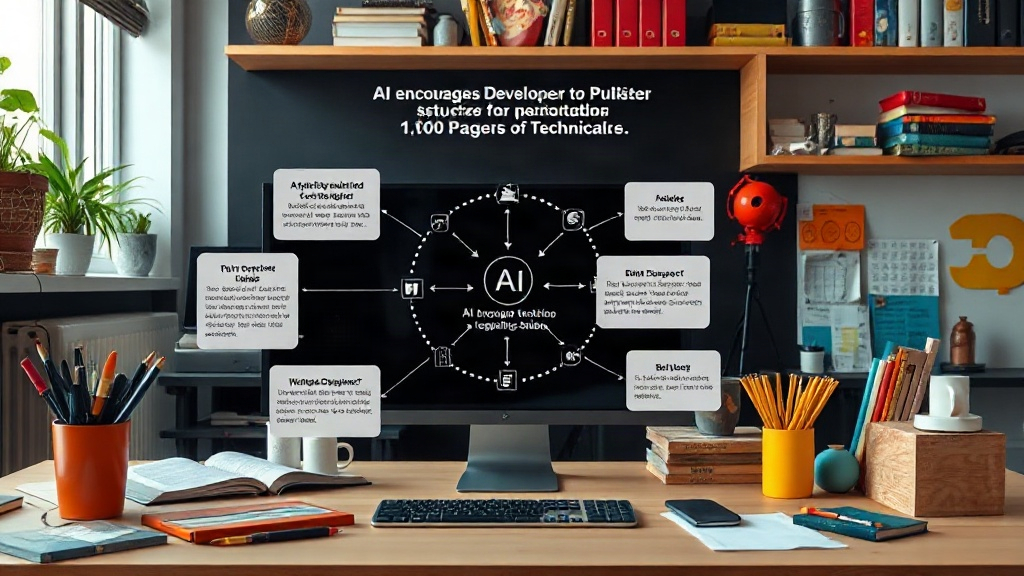
The challenge then shifted to organization and segmentation. Transforming over 1,100 pages of disparate notes into seven distinct books requires a robust strategy. This likely involves identifying overarching themes, logical progressions, and distinct subject areas within the collected material. Each book would need its own narrative arc, target audience, and scope, all while maintaining consistency with the overall body of work.
The process would involve several key steps:
- Thematic Clustering: Grouping notes by topic, such as operating systems, debugging techniques, specific programming languages, or architectural patterns.
- Content Synthesis: Expanding on the raw notes, adding context, explanations, and examples to create coherent chapters.
- Narrative Arc Development: Structuring each book to guide the reader through a learning progression, from foundational concepts to advanced topics.
- Audience Targeting: Defining the intended reader for each book, ensuring the content is pitched at the appropriate technical level.
- Editorial Refinement: Editing for clarity, accuracy, consistency, and flow across all seven volumes.
This undertaking moves beyond simple compilation. It involves substantial editorial work, a deep understanding of the subject matter, and the ability to present complex technical information in an accessible and engaging manner. The AI's initial prompt has thus initiated a significant editorial and authorial endeavor.
Implications for Technical Documentation and Knowledge Sharing
Lularible's experience highlights a powerful synergy between human expertise and AI assistance in knowledge management and dissemination. The sheer volume of technical information generated daily by developers, researchers, and engineers is immense. Tools that can help organize, synthesize, and package this information into digestible formats are invaluable.
This project suggests a potential future where personal technical knowledge bases can be more readily transformed into published works or structured learning resources. It underscores the value of consistent, detailed note-taking, not just for personal learning but as a potential asset for broader knowledge sharing. The AI acted as a sophisticated organizational assistant, identifying patterns and suggesting pathways that might have remained hidden to the author alone.
For other developers, this serves as an inspiration to maintain diligent technical documentation. The unexpected outcome of Lularible's five-year habit, amplified by AI, demonstrates that even seemingly personal or ad-hoc notes can hold significant potential for wider impact. The ability to leverage AI for structuring and refining such content opens new avenues for authors and educators in the technical field.