
The Challenge of AI Embodiment
Much of the focus in AI embodiment has centered on the 'brain' – the sophisticated algorithms and Large Language Models (LLMs) that dictate an AI's actions. However, the physical manifestation of these AI agents, how they interact with and are controlled within virtual or simulated environments, presents a significant engineering challenge. Traditional methods often rely on complex slider-based interfaces or abstract control schemes that don't intuitively map to the direct, physical manipulation we associate with real-world movement. This gap has hindered the development of AI agents that can move and interact with a natural, fluid physicality.
The core problem lies in translating high-level AI decision-making into precise, low-level physical control. For developers building AI agents, particularly for animation, robotics simulation, or interactive virtual environments, the need for a more direct and intuitive control mechanism is paramount. This is where the work of an independent developer, who has been focusing on the 'body' side of AI embodiment, becomes particularly relevant.
Introducing the Direct-Control Rig
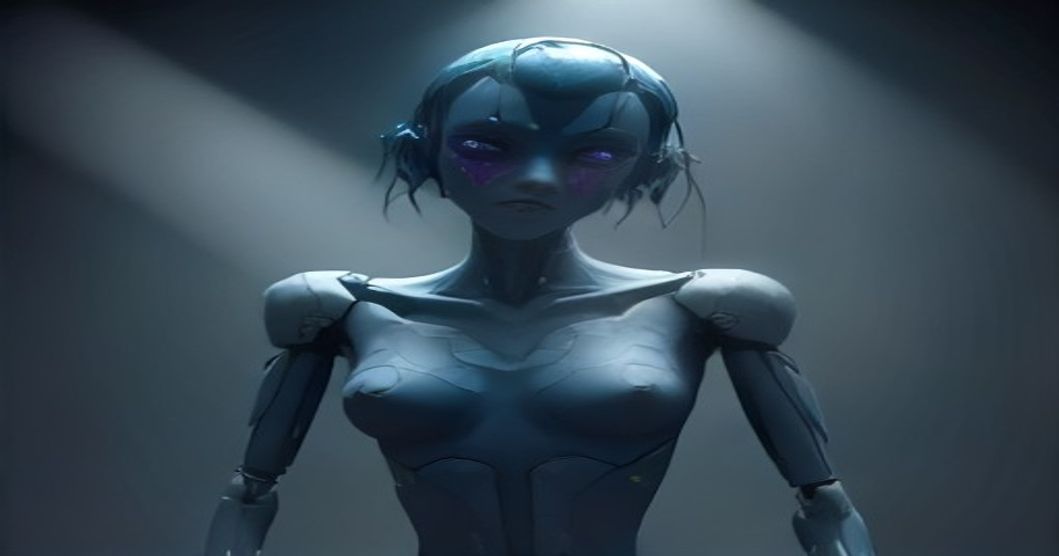
A novel rig has been developed for Unity that redefines how AI agents are controlled within virtual environments. Unlike conventional systems that often use a multitude of sliders to adjust individual joint angles or complex inverse kinematics solvers, this rig treats every joint on an articulated humanoid figure as a direct control target. This means that each joint can be independently grabbed and moved, mimicking the intuitive way a human might physically manipulate a puppet or a physical model.
The system's architecture is designed to be compatible with AI control schemes. Instead of an AI learning to manipulate a complex set of abstract parameters, it can drive the same direct control targets that a human animator or operator would use. This approach simplifies the learning process for AI agents and leads to more naturalistic and responsive movements. The rig provides a tangible, physical interface for digital characters, making them feel more like real entities that can be interacted with directly.
Key Design Principles and Functionality
The rig's fundamental principle is that of direct manipulation. Each joint in the humanoid figure acts as an independent control point. This allows for an unprecedented level of granular control over the character's pose and movement. For instance, an animator can reach out and grab an elbow joint to bend it, or a shoulder joint to rotate it, without needing to navigate through complex menus or adjust multiple parameters. This direct interaction model significantly speeds up the animation workflow and makes the process more intuitive.
Furthermore, the rig is structured to be AI-friendly. The control targets are exposed in a way that an AI can easily interface with. This means that an AI, whether it's a reinforcement learning agent or a more traditional motion-control system, can send commands to these specific joint targets. The rig then translates these commands into physical movement within the Unity engine. This direct mapping between AI command and physical joint action is a significant departure from systems that require an AI to learn an indirect or abstracted control language.
The underlying structure of the rig is designed for articulation. It supports a full range of humanoid motion, ensuring that the direct manipulation feels natural and respects the biomechanical constraints of a human body. This is crucial for creating believable characters, whether they are intended for gaming, virtual reality experiences, or advanced robotics simulation. The system is not merely about moving points in space; it's about animating a functional, articulated form.
Implications for AI and Animation
This development has several profound implications. For AI researchers focused on embodiment, it provides a much-needed physical interface that allows for more direct experimentation with AI-driven motion. The ability for AI to directly control physical joints, rather than abstract parameters, could accelerate progress in areas like human-robot interaction, autonomous navigation in complex environments, and the creation of more lifelike virtual characters.
For animators and game developers, this rig offers a more intuitive and efficient way to control character movement. The direct manipulation approach bypasses the often cumbersome slider-based workflows, allowing for quicker iteration and more expressive character performances. Imagine being able to pose a character by simply grabbing and moving its limbs in the virtual space. This could democratize character animation, making sophisticated control accessible to a wider range of creators.
The surprising detail here is not the complexity of the AI that might drive such a rig, but the fundamental shift in the rig's design itself. By focusing on direct joint control, the developer has created a system that is both artist-friendly and AI-compatible, bridging a critical gap in the field of embodied AI. This approach could serve as a blueprint for future character control systems in various digital mediums.
Future Directions and Potential
The initial release focuses on the rig itself and the touch-c interface for direct manipulation. However, the potential applications are vast. Future developments could include integration with motion capture data to refine the rig's naturalistic movements, or the creation of more sophisticated AI control modules that leverage the direct joint targeting system. The rig could also be adapted for different types of articulated figures, not just humanoids, potentially extending to creatures or complex mechanical systems.
One of the key unanswered questions is how this direct control paradigm will scale to even more complex articulated systems, such as those found in advanced robotics or detailed creature animation. While it excels for humanoid figures, the challenge of managing hundreds of direct control points for highly intricate machinery or fantastical beasts remains an open area of exploration. Nevertheless, for its stated purpose of enabling intuitive AI embodiment for humanoid figures, this rig represents a significant step forward.