From Static to Style: AI's New Role in E-commerce Photography
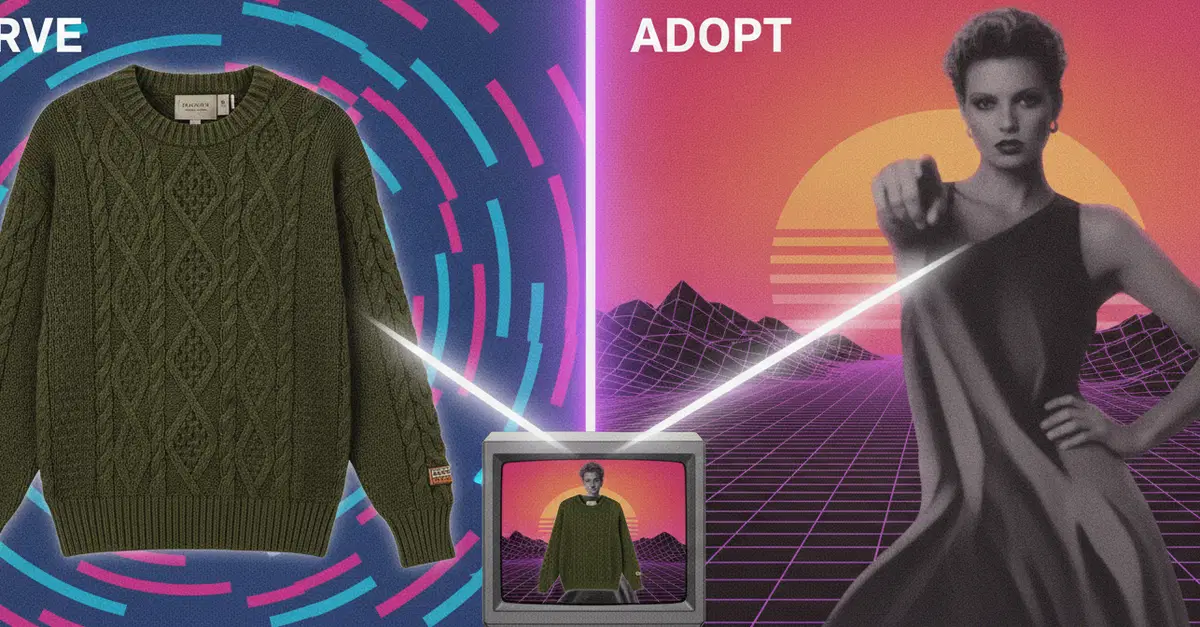
For online clothing retailers, the process of creating compelling on-model photography has always been a bottleneck. It typically involves booking models, securing studio space, and a lengthy retouching phase that can stretch for three to five days per batch of images. This cycle adds significant time and cost to product launches and marketing campaigns. A new approach, leveraging an MIT-licensed skill library, promises to collapse this entire workflow to approximately 60 seconds. The tool, referred to as 'flat-lay,' takes a flat-lay image of a garment and a reference pose, then digitally dresses a person in that garment.
While the outcome—a model wearing the product—is the primary benefit for businesses, the underlying mechanism offers a fascinating case study for developers. The core innovation lies not just in the generative capability, but in the rigid, two-part structure of its prompt. This structure, which pulls in opposing directions, is a pattern that can be recognized across various image-editing and generative AI tasks.
The Two-Part Prompt: A Balancing Act
Every prompt for this tool is constructed from two distinct, yet complementary, directives. These directives work in tandem, each addressing a crucial aspect of the image generation process. The first part, 'Preserve,' is focused on maintaining the integrity of the original garment. This means ensuring that all visual characteristics of the clothing—its color, texture, weave, and any unique details like buttons, seams, or patterns—remain precisely as they were in the flat-lay photo. The goal is 100% fidelity for these elements, preventing any degradation or alteration during the transfer to a posed model.
Consider the 'Preserve' directive like a meticulous archivist handling a rare artifact. Every stitch, every dye lot, every subtle fold must be cataloged and reproduced identically. The tool must not introduce new textures, alter the color saturation, or change the fundamental knit pattern. This unwavering commitment to fidelity is what makes the generated images believable and useful for e-commerce, where product accuracy is paramount.
The 'Dress' Directive: Merging Garment and Model
The second part of the prompt, 'Dress,' is where the generative magic happens. This directive instructs the AI to integrate the preserved garment onto a posed human figure. It requires the AI to understand the anatomy of the pose, the way fabric drapes and folds on a body, and how light and shadow would realistically fall on the garment in that specific context. Unlike the 'Preserve' directive, 'Dress' is inherently about transformation and synthesis. It demands that the AI not only place the garment but also make it look natural, as if it were actually worn by the model.
This involves generating realistic seams, ensuring the garment fits the model's body shape appropriately, and adapting the garment's appearance to the pose. If the reference pose involves a bent arm, the AI must render the fabric's wrinkles and tension accordingly. If the pose is dynamic, the AI needs to capture the subtle movements and folds that real clothing would exhibit. This is less about replicating the flat-lay and more about creating a believable instance of the garment in a new, three-dimensional context.
The tension between 'Preserve' and 'Dress' is what drives the system. 'Preserve' demands absolute stasis for the garment's intrinsic qualities, while 'Dress' requires dynamic adaptation to a new form and environment. Successfully navigating this tension is key to generating high-quality on-model shots. A failure in 'Preserve' might lead to color shifts or texture loss, making the product look different from the actual item. A failure in 'Dress' could result in the garment looking unnaturally stiff, poorly fitted, or awkwardly placed on the model.
Broader Implications for Image Editing and Generation
The rigorous two-part prompt structure is more than just an implementation detail for this specific tool; it highlights a common pattern in complex image manipulation tasks. Many advanced AI image editing applications operate on a similar principle of balancing preservation with transformation. For instance, tasks like style transfer often involve preserving the content of an image while applying the style of another. Similarly, image inpainting or outpainting requires preserving existing image data while generating new content to fill gaps or extend boundaries.
Developers working on generative AI for visual media will find this two-part prompt structure a useful framework. It encourages a more controlled and predictable approach to image generation, separating the concerns of maintaining existing data integrity from the task of creating new elements. This separation can lead to more robust models and easier debugging. By explicitly defining what must be kept identical and what can be modified or generated, one can exert finer control over the AI's output.
The efficiency gains are undeniable. Reducing a multi-day process to a minute is a significant operational advantage for any e-commerce business. This technology democratizes high-quality product photography, lowering the barrier to entry for smaller businesses and enabling faster iteration for larger ones. The ability to quickly generate diverse on-model shots without the logistical overhead of traditional photoshoots could fundamentally alter how fashion and apparel brands approach their visual marketing strategies.
Unanswered Questions in AI-Driven Fashion
What nobody has addressed yet is what happens to the thousands of human models and photographers whose livelihoods are directly tied to traditional on-model photography. While AI offers undeniable efficiency, the societal and economic impact of such automation on creative industries warrants deeper consideration and proactive strategies for workforce transition and reskilling.
The 'flat-lay' tool, with its structured prompting, represents a significant step forward in AI-powered image manipulation. It streamlines a critical business process and offers a valuable insight into prompt engineering for complex visual tasks. As AI continues to evolve, expect to see more tools emerge that adopt similar structured approaches to achieve precise and efficient generative results.