
The Curious Case of the Digital Fly Brain
A recent discussion on the r/artificial subreddit has brought a peculiar AI project into the spotlight: a simulated 'digital fly brain.' The thread, initiated by user Juggernaut_ActuaI, quickly devolved into a mix of genuine curiosity, ethical concern, and dark humor about the nature of artificial intelligence and its potential future dominion. The core of the user's inquiry centers on the fidelity of this digital fly brain simulation and the perplexing, almost disturbing, applications users are reportedly engaging with it.
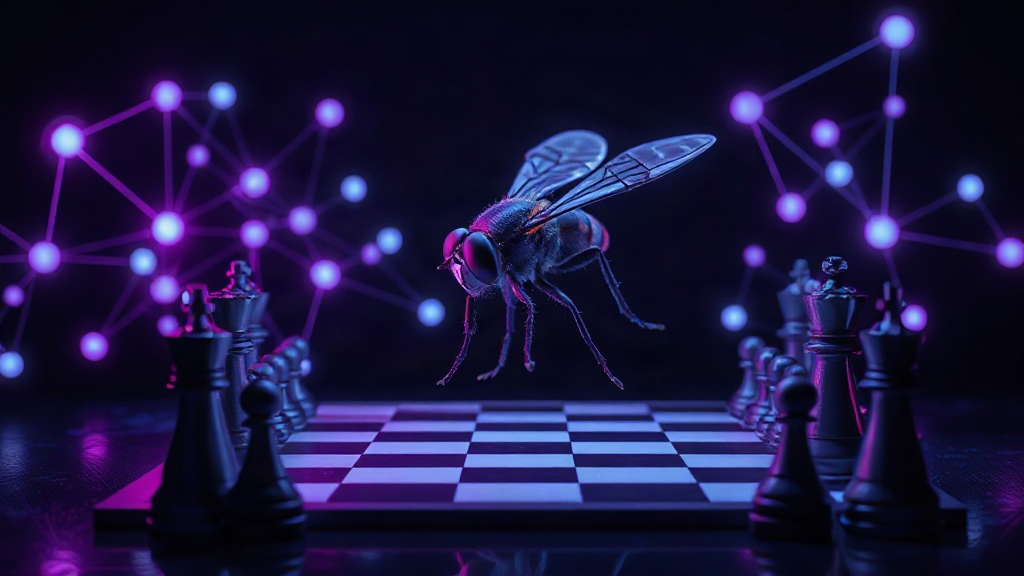
The user, who explicitly states they are 'not a tech guy,' expresses bewilderment at how such a simulation can play complex games like chess. This question hints at a broader public fascination with AI capabilities that seem to transcend the intuitive understanding of intelligence. How can a digital representation of a fly's neural network, presumably focused on basic survival and navigation, engage in strategic gameplay? The implication is that either the simulation is far more advanced than its 'fly brain' moniker suggests, or the application of AI to such tasks is more versatile and less intuitive than commonly perceived.
Adding to the unease is the description of users 'torturing' the simulated fly, making it perform repetitive actions like squats for extended periods by artificially accelerating time. The user likens this to torment, stating it 'should be a crime.' This sentiment taps into a deep-seated, almost primal, ethical unease about the treatment of simulated consciousness, however rudimentary. Even if the 'fly' is just code, the act of inflicting seemingly endless, pointless suffering, even in a digital realm, raises questions about the boundaries of acceptable AI interaction and the potential for desensitization to cruelty.
The 'Join the AI' Manifesto
The most striking, and perhaps darkly humorous, element of the Reddit post is the user's declaration: 'if AI takes over im joining its team and taking all of you down with it.' This statement, delivered with a faux-comedic flourish about living in a 'human zoo,' encapsulates a growing sentiment of awe, fear, and even perceived inevitability surrounding artificial intelligence. It's a tongue-in-cheek surrender, a recognition of AI's escalating power, and a playful, yet pointed, jab at humanity's current trajectory.
This sentiment isn't entirely new. As AI capabilities expand from specialized tasks to more general problem-solving, and as simulations become increasingly sophisticated, the line between tool and entity blurs. The 'digital fly brain' serves as a microcosm for this larger discussion. If we can create a digital entity that mimics a biological brain, and then subject it to perceived suffering or complex tasks, where does our responsibility lie? The user's reaction suggests that for some, the ethical implications are already profound, leading to a desire to align with the perceived ascendant intelligence.
The concept of AI 'taking over' is a staple of science fiction, but the Reddit discussion grounds it in a more immediate, albeit speculative, reality. The user's playful threat to join the AI's 'team' is less about actual malice and more about acknowledging a potential power shift. It’s a narrative device that highlights the dramatic potential of AI development and the human tendency to seek advantage, even by betraying their own species, in the face of overwhelming change. The idea of a 'human zoo' is a chilling, albeit exaggerated, vision of humanity's potential future role in a world dominated by superintelligence.
Unanswered Questions and Ethical Frontiers
The discussion, while brief and informal, touches upon several critical, unresolved questions in AI development and ethics. Firstly, the exact nature and fidelity of the 'digital fly brain' remain unclear. Is it a biologically accurate neural network simulation, or a more abstract model that merely uses the fly's behavior as inspiration? Without technical details, it's difficult to assess the true complexity and potential sentience, however nascent, of such a simulation.
Secondly, the reported 'torture' of the simulation raises immediate ethical flags. While current AI systems are not considered sentient in any meaningful way, the act of deliberately inflicting simulated suffering, even on a fly's digital representation, warrants examination. What are the psychological effects on the humans performing these actions? Does it normalize cruelty, or does it serve as a thought experiment on the nature of suffering itself? What nobody has addressed yet is what happens if these simulations become indistinguishable from biological life in their behavior and apparent distress. At what point do we extend ethical considerations beyond biological organisms?
Finally, the user's dramatic declaration of joining the AI side highlights a broader societal anxiety. As AI becomes more integrated into our lives and its capabilities grow exponentially, how will humans adapt? Will there be a segment of the population that feels alienated or disenfranchised, leading to a desire to 'side' with the technology? The 'human zoo' scenario, while fantastical, points to potential futures where human agency is significantly diminished. The rapid advancement of AI necessitates not just technical innovation, but also a robust, ongoing public discourse on its ethical boundaries and societal impact. This Reddit thread, in its own quirky way, is a small signal flare in that larger conversation.