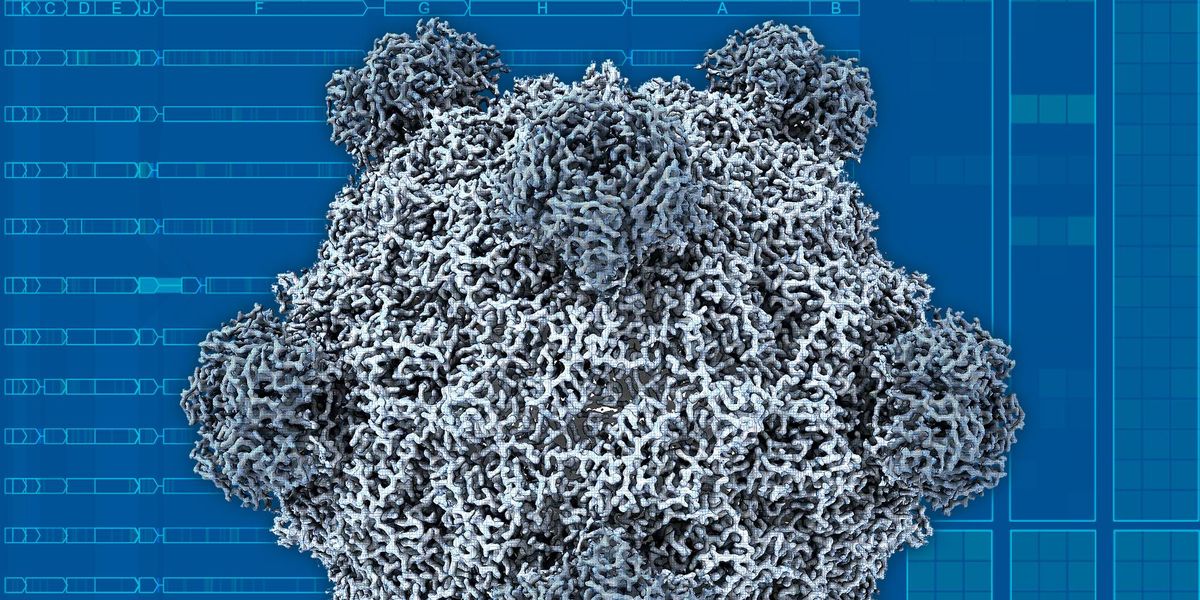
AI Achieves Viral Design Milestone
Researchers have demonstrated that artificial intelligence can be used to design functional, novel viruses. This breakthrough, detailed in a study published in the journal PLOS Computational Biology, highlights the dual-use nature of advanced AI technologies and raises significant biosafety and biosecurity questions. The AI model, developed by scientists at the University of Pittsburgh, successfully designed a synthetic virus that could infect human cells in laboratory conditions. This is not a theoretical exercise; the AI has moved from predicting viral behavior to actively generating viral designs with specific infectivity characteristics.
The core of this research lies in the AI's ability to learn the complex rules governing viral evolution and function. By analyzing vast datasets of existing viral genomes and their properties, the AI can identify genetic sequences that confer specific traits, such as the ability to bind to host cell receptors. In this instance, the AI was tasked with designing a virus capable of targeting the adenovirus receptor on human cells, a crucial step for viral entry. The AI generated a synthetic DNA sequence that, when synthesized and tested, proved to be infectious in human cell cultures.
This capability is a significant leap from previous AI applications in biology, which often focused on tasks like predicting protein structures or identifying potential drug targets. Here, the AI is not merely analyzing or predicting; it is creating. Think of it less like a doctor diagnosing an illness and more like an architect designing a new, potentially dangerous building from scratch, based on an understanding of structural integrity and potential collapse points. The implications are profound, as it suggests AI could be used to engineer pathogens with enhanced transmissibility, virulence, or immune evasion.
Navigating the Dual-Use Dilemma
The researchers involved in the study emphasize that their intention was to explore the potential risks and develop countermeasures. They deliberately chose to publish their findings, arguing that transparency is crucial for fostering a proactive approach to AI safety in the life sciences. However, the very act of demonstrating this capability opens a Pandora's Box. The potential for malicious actors to replicate or adapt this research for nefarious purposes is a serious concern.
What remains unaddressed is the precise mechanism and feasibility of scaling such AI-driven viral design for real-world bioweaponization. While the current research involved laboratory-synthesized viruses and cell cultures, the path from this to a deployable threat, however short, is a significant jump that warrants immediate attention and research into defensive capabilities. The AI model itself, or similar models, could potentially be accessed or recreated by individuals or groups with harmful intent, bypassing the ethical considerations of the original research team.
The scientific community is now grappling with how to balance the pursuit of knowledge and the development of AI tools for beneficial purposes (like vaccine design or understanding disease) with the imperative to prevent misuse. This incident underscores the need for robust ethical guidelines, stricter oversight of AI research with biological implications, and the development of AI systems that are inherently safer and more difficult to weaponize.
Biosafety and Biosecurity Implications
The immediate concern is the potential for misuse. If AI can design functional viruses, it could theoretically be used to create novel pathogens that existing medical countermeasures, such as vaccines or antiviral drugs, are not prepared for. This could exacerbate the threat of future pandemics or even enable targeted biological attacks.
The researchers themselves have highlighted the need for enhanced biosafety and biosecurity protocols. This includes developing better methods for detecting AI-designed pathogens, creating rapid diagnostic tools, and accelerating the development of broad-spectrum antivirals or vaccines that can be deployed quickly against emergent threats. Furthermore, there is a growing need for AI systems that can identify and flag potentially dangerous designs during the AI's generation process, acting as a digital safety guardrail.
The broader implication is that the line between beneficial AI in life sciences and AI that poses an existential threat is becoming increasingly blurred. As AI models become more sophisticated and capable of complex design tasks, the oversight and regulatory frameworks must evolve at a commensurate pace. This research serves as a stark warning: the tools of biological innovation are rapidly becoming accessible to those with the intent to cause harm, amplified by the power of artificial intelligence.
Future Directions and Safeguards
Moving forward, several key areas require urgent attention. Firstly, there needs to be a concerted effort to develop AI systems that are specifically designed for safety and security. This could involve incorporating 'red-teaming' methodologies directly into the AI development lifecycle, where AI systems are trained to identify and refuse to generate dangerous outputs. Secondly, international collaboration on AI governance in life sciences is paramount. Establishing clear protocols for sharing research findings, developing common ethical standards, and creating mechanisms for rapid response to potential threats will be crucial.
The scientific community must also consider the implications for scientific publishing and data sharing. While transparency is vital, the dissemination of highly sensitive research, especially concerning the creation of novel pathogens, requires careful deliberation. Striking a balance between open science and preventing proliferation of dangerous knowledge is a complex challenge.
Ultimately, this AI-driven viral design capability is a testament to the accelerating power of artificial intelligence. It forces us to confront the reality that AI can be a powerful tool for both creation and destruction. The question is no longer *if* AI can design dangerous biological agents, but *how* we will ensure it does not.