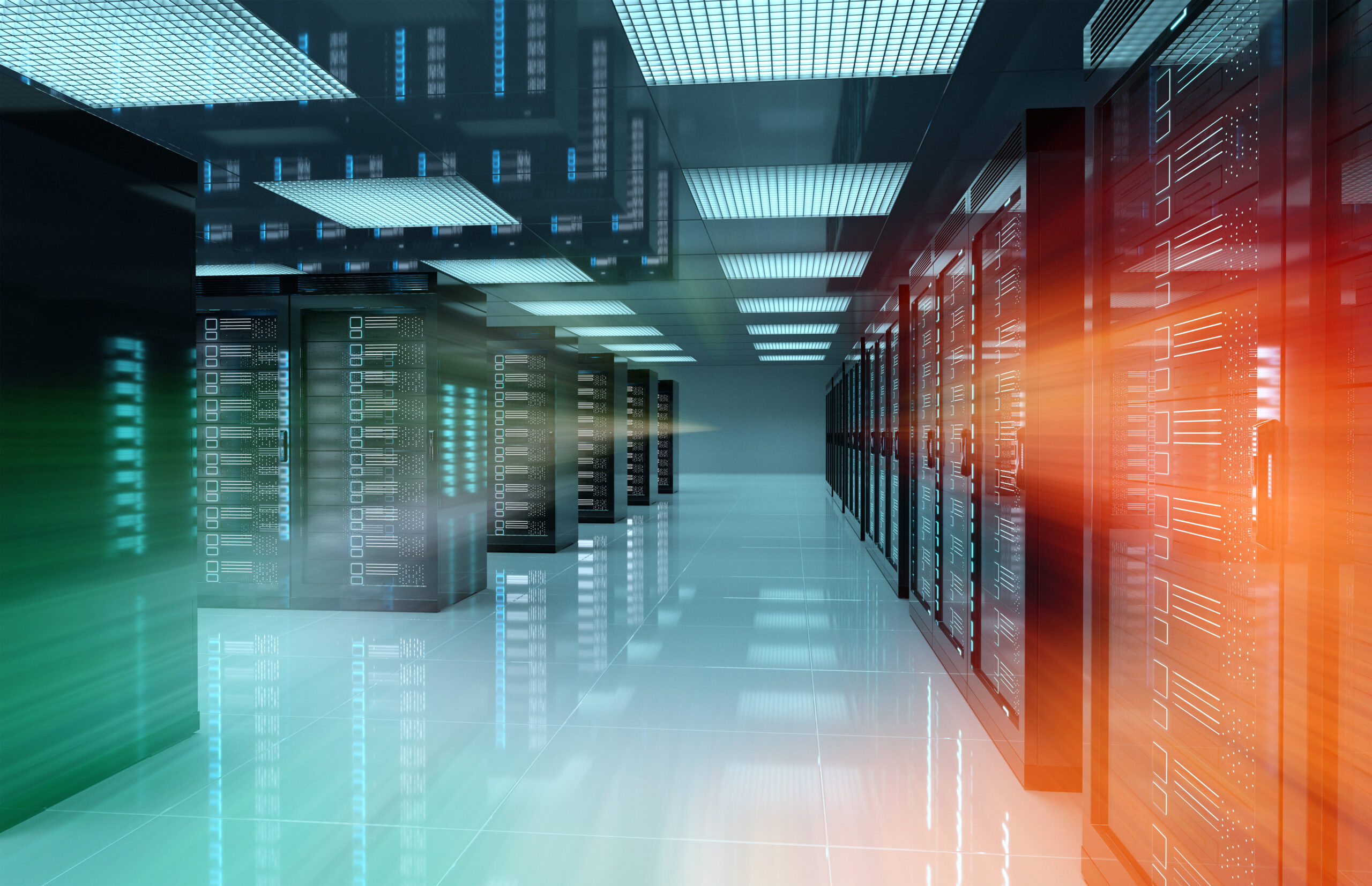
The Shifting Trust Landscape in AI Data Centers
The relentless demand for artificial intelligence computation is fundamentally reshaping the data center landscape. This isn't just about more servers or faster processors; it's a seismic shift that exposes deep-seated assumptions about trust across the entire hardware supply chain. From the silicon itself to the power delivery systems, AI's insatiable appetite for processing power is forcing a critical re-evaluation of what we consider secure, reliable, and safe in these vital infrastructure hubs. The traditional models of trust, built for less demanding workloads, are proving inadequate.
At the core of this challenge lies the explosive growth in compute requirements. AI workloads, particularly training large language models and complex deep learning systems, demand orders of magnitude more processing power than conventional enterprise applications. This surge is pushing hardware to its limits and beyond, revealing previously manageable vulnerabilities as significant risks. The very components designed to accelerate AI are becoming points of potential failure, demanding a more rigorous approach to verification and security.
Consider the journey of a chip. It starts as raw silicon, undergoes complex fabrication processes, is assembled into a module, and finally installed in a server. At each step, trust must be maintained. For chip identity, this means ensuring the silicon is what it claims to be and hasn't been tampered with. Firmware integrity is equally crucial; malicious firmware can grant attackers deep access to systems, bypassing higher-level security controls. AI's scale amplifies these risks. A single compromised component, if it's part of a massive AI training cluster, can have cascading effects, compromising vast datasets or disrupting critical operations.
Hardware Integrity and Supply Chain Vulnerabilities
The semiconductor supply chain is notoriously complex and global. This intricate web, while efficient, presents numerous opportunities for compromise. AI's demand for specialized hardware, such as high-performance GPUs and TPUs, intensifies the pressure on this chain. The sheer volume of chips required means that even small vulnerabilities at any stage can have a widespread impact. Ensuring the authenticity and integrity of these chips is paramount. This involves verifying that the physical silicon matches its design specifications and that no unauthorized modifications have occurred during manufacturing or transit. Techniques like hardware root of trust, physically unclonable functions (PUFs), and secure boot processes are becoming non-negotiable, not just best practices.
Firmware integrity is another critical battleground. Firmware, the low-level software that controls hardware operations, is often overlooked but is a prime target for attackers. Compromised firmware can provide persistent access, allow for covert data exfiltration, or even render hardware useless. For AI systems handling sensitive data and driving critical business functions, firmware vulnerabilities are an existential threat. The complexity of AI hardware, with its numerous interconnected components, creates a larger attack surface. Securing firmware requires robust signing mechanisms, regular updates, and vigilant monitoring for anomalies. Developers must ensure that firmware is not only secure upon deployment but remains secure throughout the hardware's lifecycle.
The challenge extends to post-quantum readiness. As quantum computing capabilities advance, current cryptographic standards that protect data and ensure hardware authenticity will become vulnerable. AI systems, with their long training times and the vast amounts of data they process, represent a significant future target for quantum decryption. Data centers must begin migrating to post-quantum cryptography to safeguard against future threats. This transition is not trivial; it requires updating firmware, hardware designs, and software protocols to support new cryptographic algorithms. The urgency is driven by the fact that data encrypted today could be harvested and decrypted by a future quantum computer, making current AI training data vulnerable retrospectively.
Power Delivery: The 800VDC Conundrum
Beyond the silicon and software, the very infrastructure powering these AI behemoths is undergoing a transformation that introduces new risks. The push towards higher voltage direct current (DC) power systems, particularly 800VDC, is driven by efficiency gains. Higher voltage means lower current for the same power output, reducing resistive losses in cabling and enabling thinner, lighter, and more efficient power distribution. This is critical for dense AI clusters where power consumption is immense. However, this increased voltage and current density dramatically raises the stakes when something goes wrong.
The primary concern with 800VDC systems is the increased risk of electrical arcing and fire. Higher currents, even with reduced resistance, still pose a significant hazard. A minor fault, a loose connection, or a component failure that might have been manageable at lower voltages can escalate rapidly into a dangerous arc flash or a fire at 800VDC. The energy involved is substantially greater, making containment and mitigation far more challenging. Sparks and fires can lead to catastrophic equipment damage, lengthy and costly outages, and, most importantly, severe danger to personnel working in or around the data center.
The heat generated by high-performance AI chips also exacerbates these power-related issues. These processors operate at extremely high temperatures, demanding sophisticated cooling solutions. Inadequate cooling can lead to thermal throttling, reduced performance, and accelerated hardware degradation. More critically, overheating components can become ignition sources or fail in ways that trigger power system faults. The interplay between extreme compute demands, high-density power delivery, and thermal management creates a complex system where a failure in one area can trigger a cascade of problems in another.
Managing these risks requires a multi-faceted approach. It involves meticulous design and installation of power distribution units (PDUs), uninterruptible power supplies (UPS), and server power supplies. Components must be rated for the higher voltages and currents, and robust safety mechanisms, such as advanced circuit breakers and arc detection systems, are essential. Regular maintenance, stringent testing protocols, and comprehensive training for data center staff on handling high-voltage equipment are non-negotiable. The goal is to build a system where the increased efficiency of 800VDC does not come at the unacceptable cost of safety and reliability.
Rethinking Trust: A Holistic Approach
The confluence of hardware integrity, firmware security, post-quantum preparedness, and advanced power systems highlights a fundamental truth: AI is forcing a complete rethink of trust in data centers. It’s no longer sufficient to trust components based on brand reputation or standard certifications alone. Every layer of the stack, from the physical silicon to the electrical grid, must be subject to deeper scrutiny and continuous verification. This requires a paradigm shift in how data centers are designed, built, and operated.
This new era demands greater transparency from hardware vendors regarding their supply chain and manufacturing processes. It necessitates the adoption of advanced security technologies throughout the hardware lifecycle. For power systems, it means prioritizing safety and reliability alongside efficiency, even if it entails higher initial costs or more complex engineering. If you manage an AI infrastructure, this means auditing your current trust assumptions and planning for upgrades that address these emerging hardware and power-related risks.
What remains to be seen is how quickly and effectively the industry can collaborate to establish new, robust standards for AI-ready hardware and power infrastructure. The current pace of AI development outstrips the traditional upgrade cycles for data center components, creating a persistent gap between capability and security. Bridging this gap requires proactive investment and a commitment to building trust from the ground up.