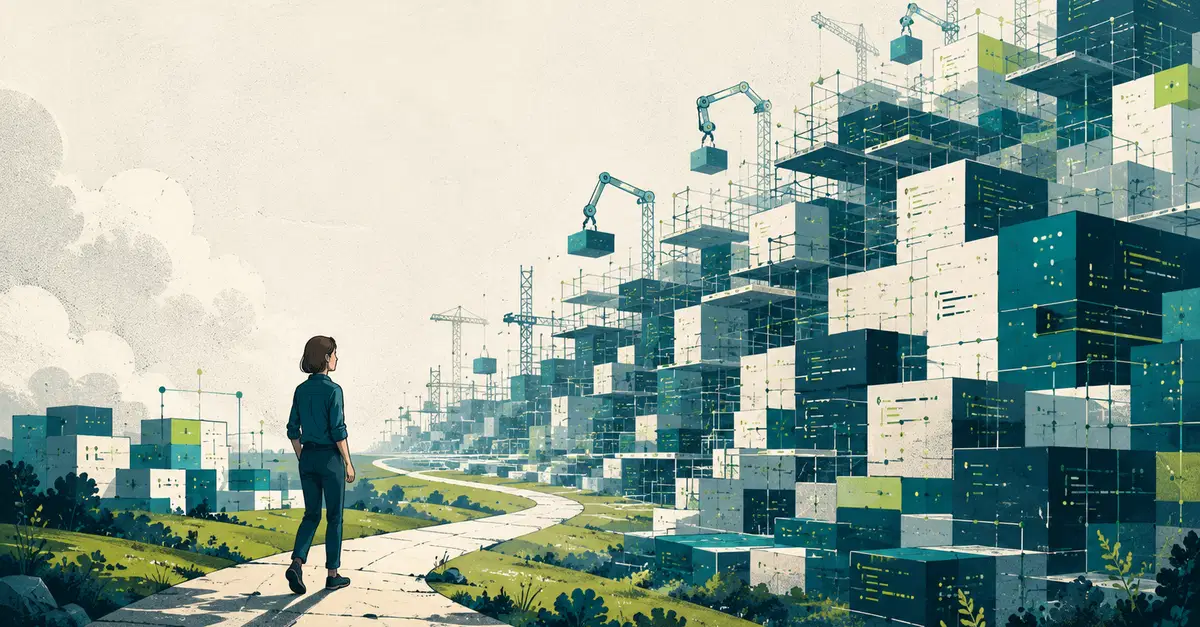
The Promise: AI as a Debt Eraser
For years, developers have grappled with technical debt. It’s the accumulated cost of shortcuts, hasty decisions, and outdated technologies that slow down development and increase the risk of bugs. Think of it like a house with a leaky roof and outdated wiring; you can keep patching it, but eventually, a major renovation is needed, or the problems will compound. Historically, tackling this debt meant significant engineering effort, often deprioritized in favor of new feature development. This created a growing backlog of unaddressed issues.
The advent of sophisticated AI code generation tools, like GitHub Copilot and others, has introduced a new paradigm. These tools can write code, suggest refactors, and even identify potential bugs. The core promise is that AI can dramatically accelerate the process of cleaning up legacy code. Imagine an AI agent systematically identifying inefficient algorithms, outdated libraries, or redundant code blocks and proposing — or even executing — the necessary refactoring. This could democratize code maintenance, allowing teams to tackle debt that was previously too costly or time-consuming to address.
The argument is straightforward: if AI can generate new code cheaply and quickly, it can also rewrite existing code cheaply and quickly. This shifts the cost-benefit analysis of addressing technical debt. What once required weeks of developer time might now take hours or days of AI-assisted work. This could free up engineering resources to focus on innovation rather than maintenance, leading to faster product cycles and more stable systems.
This perspective suggests a future where AI acts as a powerful scrubbing tool, systematically identifying and rectifying the accumulated imperfections in our software systems. It's the dream of a perpetually clean codebase, where technical debt is not a looming threat but a manageable, or even vanishing, concern.

The Peril: AI as the Ultimate Debt Accumulator
However, a counterargument is emerging, one that views AI not as a debt eraser but as a potential amplifier. The core concern here is that the very ease and speed with which AI generates code could lead to an exponential increase in *new* technical debt, or worse, make the *entire codebase* the technical debt.
Consider the implications of developers increasingly relying on AI to generate code snippets, entire functions, or even complex modules without fully understanding the underlying logic or potential side effects. This is akin to a builder using cheap, pre-fabricated components without verifying their structural integrity or long-term durability. The immediate benefit is speed, but the long-term cost could be immense.
The X post that sparked this debate highlights this very issue: "The technical debt is the whole codebase now." This isn't just hyperbole; it reflects a genuine concern that AI, in its current state, can produce code that is syntactically correct but semantically flawed, inefficient, or difficult to maintain. Developers might accept AI-generated code at face value, especially when under pressure to deliver quickly. This acceptance, without rigorous scrutiny, means that the flaws, inefficiencies, and architectural compromises inherent in AI-generated code become the new form of technical debt.
Furthermore, if AI agents become the primary means of writing code, and if these agents are trained on vast datasets that include existing technical debt, they may inadvertently perpetuate and even scale these issues. The AI might learn to replicate common anti-patterns or suboptimal solutions because they are prevalent in its training data. This creates a self-reinforcing cycle where AI-generated code, intended to be efficient, becomes the source of new, pervasive debt.
The challenge is that AI can generate code that *looks* right, masking underlying issues until they manifest as performance problems, security vulnerabilities, or unmaintainable systems down the line. Unlike human-generated debt, which often arises from specific conscious decisions or constraints, AI-generated debt could be more insidious, woven into the fabric of the codebase at an unprecedented scale.
Navigating the New Landscape
The reality is likely a hybrid. AI will undoubtedly accelerate the refactoring of existing technical debt. Teams will leverage these tools to clean up legacy systems more efficiently than ever before. However, this capability must be paired with a heightened awareness of the new forms of debt AI can introduce.
Developers will need to shift their focus from simply writing code to critically evaluating and guiding AI-generated code. This means developing new skills in prompt engineering, code verification, and understanding the architectural implications of AI-assisted development. The role of the developer evolves from a pure coder to an architect, a curator, and a quality assurance specialist for AI-generated output.
For companies, the strategy must involve robust AI governance. This includes establishing clear guidelines for AI code generation, implementing rigorous testing and review processes for AI-produced code, and investing in tools that can detect and quantify AI-introduced technical debt. It's not enough to simply adopt AI tools; organizations must build processes around them to ensure code quality and long-term maintainability.
The question is not whether AI will impact technical debt, but *how*. The potential for AI to both alleviate and exacerbate technical debt presents a critical challenge for the software development industry. Those who proactively address this duality, by embracing AI for cleanup while diligently managing its generative pitfalls, will be best positioned to navigate this evolving landscape.

What nobody has addressed yet is the long-term economic impact on the software development job market. If AI can both write and fix code so efficiently, how does this reshape the demand for traditional software engineering roles, and what new roles will emerge to manage this AI-driven development lifecycle?