The Compliance Conundrum in AI Development
Organizations building AI systems face a growing challenge: ensuring their creations meet a complex web of regulatory demands. The European Union's AI Act, the NIST AI Risk Management Framework (AI RMF), and the ISO/IEC 42001 standard all point toward a common expectation: AI systems must be meticulously documented, tested, and auditable. Many companies still approach compliance as a purely documentation-centric exercise, a separate task performed after development is complete. This approach is fundamentally flawed and increasingly untenable.
Treating compliance as a late-stage add-on creates significant friction. It leads to rework, missed deadlines, and ultimately, non-compliant systems that carry substantial legal and reputational risks. The core problem is that compliance is too often seen as a policy document rather than an engineering property. This perspective shift is critical: compliance must be woven into the fabric of AI development from inception through deployment and ongoing operation.
The preceding posts in the "Trust the Machine" series explored three key engineering challenges: understanding the AI systems in an environment, containing autonomous agents, and governing the data underpinning AI. Regulatory compliance is the discipline that ties these elements together, often acting as the primary driver for implementing robust engineering practices. Without embedding compliance into the engineering pipeline, organizations will continue to struggle with the demands of AI governance.
Integrating Compliance into the AI Lifecycle
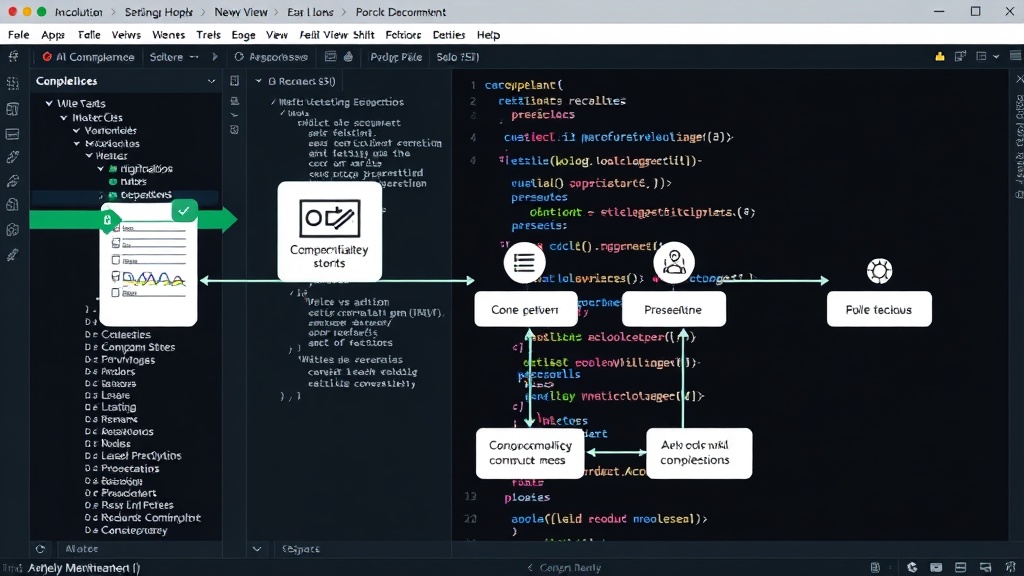
Making compliance an engineering property requires a fundamental shift in how development teams operate. Instead of viewing compliance as a hurdle to clear at the end of a project, it must be treated as a continuous requirement throughout the AI lifecycle. This means embedding checks, controls, and documentation requirements directly into the development, testing, and deployment pipelines.
Consider the process of developing a high-risk AI system under the EU AI Act. This isn't just about writing a policy document stating the system is safe. It involves:
- Risk Assessment: Integrating automated risk assessment tools into the development environment that flag potential issues based on model architecture, training data, and intended use cases.
- Data Governance: Ensuring that data used for training and inference is properly labeled, anonymized where necessary, and its provenance is tracked. This can be automated through data pipelines that enforce quality and privacy checks.
- Model Validation: Building automated testing frameworks that perform rigorous validation against predefined performance metrics and ethical guidelines. These tests should be part of the CI/CD pipeline, failing builds that don't meet compliance thresholds.
- Documentation Generation: Automating the creation of technical documentation, audit logs, and risk assessments as the system is developed. This ensures that documentation is always current and reflects the actual state of the system.
- Post-Deployment Monitoring: Implementing continuous monitoring systems that track model performance, detect drift, and identify potential biases or unfair outcomes in real-time. Alerts should trigger automated remediation or manual review processes.
This approach treats compliance not as a discrete phase, but as a set of engineering requirements that must be satisfied at every stage. It transforms compliance from a burdensome administrative task into an integral part of building reliable, trustworthy AI systems.
The Engineering Mindset for Compliance
Adopting an engineering mindset for compliance means leveraging the same principles that drive software development: automation, continuous integration, version control, and testing. For AI, this extends to managing data, models, and their behavior.
Automation is Key: Manual compliance checks are slow, error-prone, and do not scale. Automating risk assessments, data validation, model testing, and documentation generation frees up human resources for more complex oversight and strategic decision-making. Think of it less like a manual audit of a company's books and more like a continuous, automated financial health check running in the background.
CI/CD for AI: The principles of Continuous Integration and Continuous Deployment (CI/CD) are directly applicable. A compliant AI system requires a CI/CD pipeline that incorporates compliance gates. A model cannot be deployed if it fails automated fairness tests or if its training data provenance is not properly logged. This ensures that compliance is built-in, not bolted on.
Data as a First-Class Citizen: The data used to train AI models is a critical component of compliance. Tracking data lineage, ensuring data quality, and managing privacy are all engineering challenges. Data versioning, automated data validation pipelines, and robust access controls are essential components of a compliant AI system.
Testing Beyond Accuracy: Compliance requires testing AI systems not just for accuracy, but for fairness, robustness, transparency, and security. Developing comprehensive testing suites that cover these dimensions, and integrating them into the CI/CD pipeline, is paramount. This moves beyond traditional software testing to encompass the unique risks associated with AI.
The Future: Compliant by Design
The trend is clear: regulatory bodies are demanding greater accountability for AI systems. Organizations that continue to treat compliance as a post-development task will find themselves increasingly exposed to risks. The future of AI development lies in building systems that are compliant by design. This means embedding regulatory requirements into the engineering process, leveraging automation, and treating compliance as a core engineering property.
This shift benefits not only the organization by reducing risk and avoiding penalties but also fosters greater trust among users and the public. When compliance is an inherent part of the development pipeline, AI systems are more likely to be secure, fair, and reliable. The challenge is significant, but the path forward is through rigorous engineering practices applied consistently across the entire AI lifecycle.