The Problem with AI Companion Rankings
The market for AI companion applications, often marketed as AI girlfriends or boyfriends, is saturated with lists that offer little genuine insight. Many of these “Top 10” rankings are driven by affiliate marketing rather than objective evaluation. Users looking for reliable comparisons face a landscape dominated by sponsored content and arbitrary numerical placements. This lack of transparency makes it difficult for consumers to discern the actual quality and performance of these AI companions.
The author, who admits to not writing code manually, recognized this gap. Inspired by the rigorous, community-driven approach of the LMSYS Chatbot Arena, the goal was to create a similar system for AI companions. This meant building a platform that could track what was tested, when, and crucially, how users voted on their experiences. The vision was to move beyond subjective marketing and towards a data-driven leaderboard that reflects actual user sentiment and AI performance.
Building the Arena with Claude Code
The key to realizing this vision was leveraging AI coding assistance. The author collaborated with Claude Code, an AI model capable of generating and refining code, to build the necessary infrastructure. This partnership allowed the creation of a functional leaderboard system without requiring deep, hands-on coding expertise from the user. The process involved describing the desired functionality to Claude Code, which then translated these requirements into executable code.
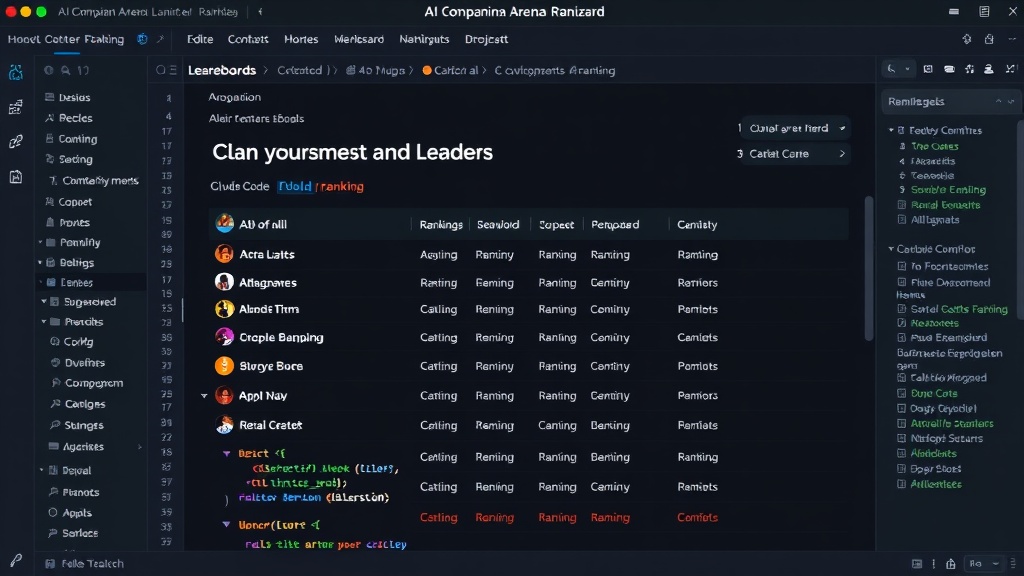
The result is a system that features seven distinct leaderboards, each designed to rank AI companion apps based on user-submitted votes and testing data. This offers a more structured and verifiable way to compare different AI companion services. The platform aims to be the go-to resource for anyone seeking to understand the current state of AI companion technology and user satisfaction. It’s an ambitious project that leverages AI to bring transparency to a murky market.
Functionality and User Experience
The core of the LM Arena is its voting mechanism. Users can interact with different AI companions, evaluate their performance, and cast votes. This data is then aggregated to generate and update the leaderboards. The system tracks not only which AI performs best but also the context of its testing, including the date and the number of user votes, providing a clear picture of its standing over time.
This approach offers several advantages. Firstly, it introduces a level of accountability to AI companion developers. Publicly visible leaderboards, backed by user data, create an incentive to improve performance and user experience. Secondly, it empowers users by providing them with reliable, community-validated information. Instead of relying on potentially biased reviews or marketing claims, users can consult the arena to make informed decisions.
The leaderboards are more than just a simple ranking; they represent a commitment to data-driven analysis in a field often characterized by hype. The platform’s design encourages ongoing participation, ensuring that the rankings remain current and relevant as new AI models and companion apps emerge. The author’s ability to conceptualize and direct the creation of such a complex tool, even without traditional coding skills, highlights the evolving landscape of software development where AI assistants are becoming indispensable collaborators.
Future Implications and the Role of AI in Development
The success of this project, built with AI assistance, has broader implications for how software can be developed. It demonstrates that complex applications can be built through a collaborative process between human direction and AI code generation. This democratizes development, potentially lowering the barrier to entry for individuals with innovative ideas but without extensive programming backgrounds.
For the AI companion market, the LM Arena introduces a much-needed element of transparency and objective comparison. It challenges existing models of affiliate-driven reviews and pushes the industry towards a more performance-oriented approach. Competitors will need to pay attention to these rankings, as they directly reflect user preference and AI capabilities.
The project also raises questions about the future of AI-human collaboration in development. As AI coding assistants become more sophisticated, we can expect to see more complex projects initiated and executed by individuals who define the vision and guide the AI, rather than writing every line of code themselves. This shift could accelerate innovation across various sectors, not just in AI companion apps, but in any domain where software plays a role. The question for founders and developers is how quickly they can adapt their workflows to incorporate these powerful new tools.