The AI-Powered Job Hunt Assistant
The modern job search can feel like a full-time endeavor, especially in a competitive market. For individuals facing this challenge, artificial intelligence is emerging not just as a tool for recruiters, but as a personal assistant for the job seeker. One developer, Debbie, recently detailed her experience using an AI bot to streamline her own job hunt, demonstrating a novel application of conversational AI in a deeply personal and often stressful process.
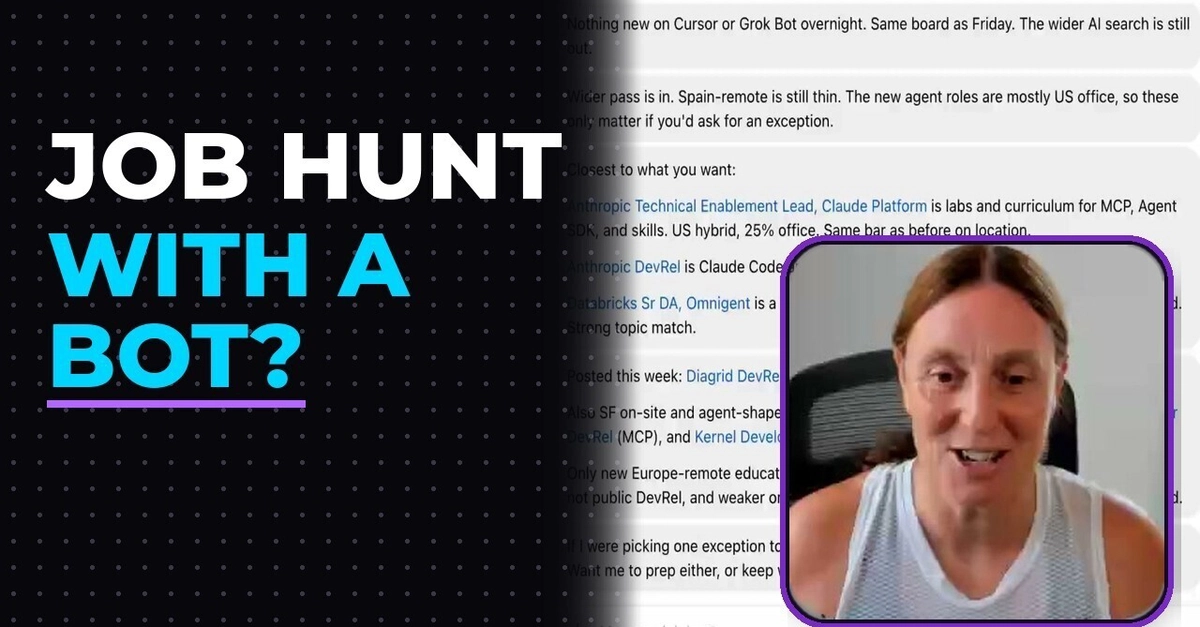
Debbie utilized Grok Bot, a conversational AI platform, to create a dedicated "Job Hunt bot." The initial interaction set the stage for a personalized search: the bot acknowledged its purpose and immediately inquired about Debbie's preferences, asking whether she was targeting specific roles, companies, or seeking a broader net. This conversational approach allows the AI to gather crucial parameters that would typically be manually input or inferred by a human recruiter.
The core of Debbie's strategy involved feeding the bot information about her professional background. She instructed it to analyze her online presence, effectively asking the AI to act as a digital headhunter. For those without extensive public profiles, the bot can work with more limited input, such as a LinkedIn profile URL or a brief self-description. The AI’s ability to process and synthesize this information is key to its utility.
Upon receiving Debbie's online details, the bot performed an analysis, identifying key skills, experience, and potential career trajectories. The excerpt suggests the bot was able to pull specific details, though the exact output is not fully detailed in the source. This capability moves beyond simple keyword matching; it implies an understanding of context and professional narrative. The bot can then use this synthesized profile to actively search for roles that align with the user's qualifications and stated aspirations.
Automating the Pipeline
The bot's functionality extends to managing the entire job application pipeline. This includes identifying suitable roles, assessing company fit, and even assisting with the application process itself. For a developer, this could mean the AI scanning job boards, company career pages, and professional networks for openings that match the user’s profile. It can then filter these opportunities based on predefined criteria, such as location, salary expectations, or specific technologies.
What makes this approach particularly compelling is the potential to offload the repetitive and time-consuming tasks associated with job searching. Instead of manually sifting through hundreds of listings, a user can delegate this to an AI agent. The bot can then present a curated list of opportunities, complete with summaries of why each role is a good fit, saving the job seeker significant time and mental energy.
The AI can also help in understanding the nuances of different roles and companies. By analyzing company websites, recent news, and employee reviews, the bot could provide insights into company culture, growth potential, and the specific challenges of a role. This information is invaluable for making informed decisions and preparing for interviews.
Furthermore, the bot can be programmed to track applications, send follow-up reminders, and even assist in drafting personalized cover letters or tailoring resumes. This level of automation transforms the job hunt from a reactive process into a proactive, AI-assisted strategy. It’s akin to having a dedicated career coach working for you 24/7, constantly scanning the horizon for opportunities.

Personalization and Data Input
The success of such a bot hinges on the quality and quantity of data it receives. For individuals with established online professional footprints, platforms like LinkedIn, GitHub, and personal websites serve as rich data sources. The AI can parse these profiles to extract information about skills, project experience, educational background, and career progression. The more comprehensive the input, the more accurate and relevant the AI’s recommendations will be.
For those whose online presence is less developed, the process requires more direct user input. This could involve uploading a resume, providing a list of target companies, or answering a series of detailed questions about skills, interests, and career goals. The AI then uses this self-provided data to build a user profile, which it then uses for its search. This interactive approach ensures that even individuals with limited digital footprints can benefit from AI-assisted job hunting.
The ability of the AI to ask clarifying questions is also a critical feature. If the bot encounters ambiguity or needs more specific information, it can prompt the user for clarification. This ensures that the AI’s understanding of the user’s needs remains accurate and up-to-date, preventing misinterpretations that could lead to irrelevant job suggestions.
This level of personalization is a significant departure from traditional job search methods. Instead of a one-size-fits-all approach, the AI tailors the search to the individual’s unique circumstances, skills, and aspirations. It’s like a bespoke suit versus an off-the-rack one – the former fits perfectly because it's made for you.
The Broader Implications for Job Seekers
The use of AI in job hunting signals a significant shift in how individuals approach career transitions. It democratizes access to sophisticated job search strategies that were previously only available through expensive career coaches or specialized recruitment agencies.
For developers, in particular, this technology can be a powerful ally. The tech industry is characterized by rapid change and a constant demand for specialized skills. An AI bot can help developers stay ahead of the curve by identifying emerging roles and tracking companies that are at the forefront of innovation. It can also help in showcasing their technical projects and contributions effectively.
The core value proposition is efficiency and effectiveness. By automating the tedious aspects of the job search, AI allows individuals to focus on what truly matters: networking, skill development, and preparing for interviews. It transforms a potentially overwhelming process into a more manageable and data-driven experience.
However, the reliance on AI also raises questions. What happens to the serendipitous discoveries that often occur during a manual job search? How do we ensure the AI’s recommendations are unbiased and truly reflective of the user's potential, rather than just optimizing for easily quantifiable metrics? These are critical considerations as AI becomes more integrated into the career development landscape.
Debbie's initiative with Grok Bot demonstrates that AI is no longer just a tool for employers; it is becoming an indispensable partner for job seekers. As these technologies mature, we can expect even more sophisticated applications that will further empower individuals in their career journeys.