The Unseen Workforce Behind AI's Exponential Growth

The artificial intelligence revolution, fueled by ever-larger language models and complex neural networks, is not just a story of algorithms and GPUs. It's also a story of concrete, copper wire, and a critical shortage of skilled tradespeople. Major AI companies, from hyperscalers to specialized AI startups, are engaged in an unprecedented recruitment drive for electricians, carpenters, and other construction professionals. The goal: to build and expand the sprawling data centers that house the computational power required for AI. Estimates suggest that over 10,000 such roles need to be filled in the next 18-24 months to meet the projected demand. The sheer scale of data center construction is staggering. A single hyperscale data center can require hundreds of thousands of miles of cable and intricate power distribution systems. This translates directly into a colossal need for electricians capable of installing and maintaining these complex electrical grids. Similarly, the physical infrastructure of these facilities, from server racks to the buildings themselves, demands a significant carpentry workforce for construction and fit-out. This isn't a typical construction boom. The specialized nature of data center electrical systems, which require extreme reliability and precision to avoid costly downtime, means standard certifications are often insufficient. Companies are actively seeking individuals with experience in high-voltage systems, industrial electrical work, and data center-specific infrastructure. The need is so acute that some companies are reportedly offering signing bonuses upwards of $10,000 and significantly above-market wages to attract talent.
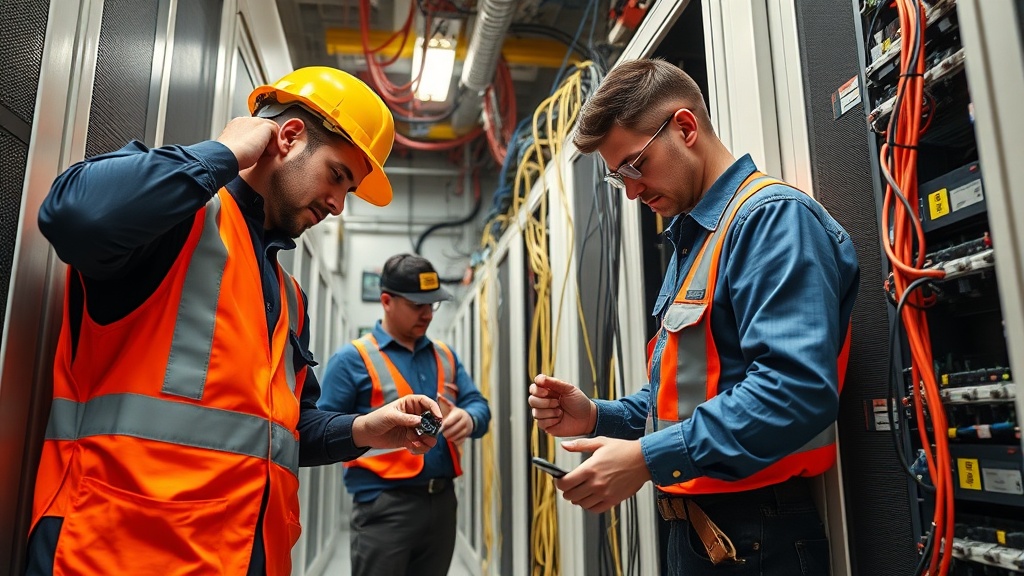
Electricians meticulously install complex wiring within a new AI data center facility.

Why the Sudden Demand? The AI Compute Crunch

The exponential growth in AI model training and inference is the primary driver behind this surge. Large language models like GPT-5 and its successors, along with advanced image generation and scientific simulation tools, require massive amounts of processing power. This power is housed in data centers, and the current infrastructure is struggling to keep pace. Building a new data center is a multi-year undertaking. From site selection and permitting to construction and final commissioning, the process is lengthy and capital-intensive. AI companies, accustomed to rapid software development cycles, are finding themselves bottlenecked by the physical realities of hardware deployment. This has led to an urgent push to accelerate data center construction, which, in turn, has amplified the demand for skilled labor. The problem is exacerbated by a pre-existing shortage in the trades. Decades of declining enrollment in vocational programs and a societal push towards four-year college degrees have thinned the ranks of experienced electricians and carpenters. Now, the AI industry is competing not only with traditional construction but also with other burgeoning sectors like renewable energy infrastructure for this limited pool of talent. Companies are responding by investing heavily in training programs. Some are partnering with community colleges and trade schools to develop specialized curricula focused on data center operations. Others are launching internal apprenticeship programs, fast-tracking workers with related experience into data center roles. This represents a significant shift in talent acquisition strategy, moving beyond traditional recruitment to active workforce development.

The Carpenter's Role in the Digital Frontier

While electricians are often the focus due to the critical power demands, carpenters are equally vital. They are responsible for the physical construction of the data center buildings, the installation of server racks, the creation of secure environments, and the precise fitting of specialized cooling systems. The structural integrity and environmental controls of a data center are paramount, and carpenters play a key role in ensuring these are met. The construction of a modern data center involves more than just erecting walls. It includes the installation of raised floors, the precise placement of heavy server racks that require robust framing, and the construction of secure areas for sensitive equipment. Carpenters with experience in industrial settings, particularly those familiar with precise measurements and structural considerations, are in high demand. The trend of building modular data centers, which can be assembled more quickly, also requires skilled carpenters for on-site assembly and customization. This demand extends to both new builds and retrofits. As companies race to expand capacity, they are often repurposing existing industrial spaces, which requires significant carpentry work to adapt them for data center use. This includes building out clean rooms, installing specialized fire suppression systems, and ensuring compliance with stringent environmental and safety regulations. What remains unanswered is the long-term sustainability of this recruitment strategy. Relying on a shrinking pool of skilled tradespeople, even with increased wages and training, may prove to be a temporary fix. The fundamental issue is the pipeline of new trades professionals entering the workforce, which has not kept pace with industrial demand for decades. AI companies are effectively accelerating the consumption of an already limited resource. Will this create a sustained bidding war for talent, or will it force a more fundamental rethinking of vocational training and workforce development at a national level?

Beyond Recruitment: The Future of Data Center Labor

The current scramble for electricians and carpenters highlights a broader challenge for the AI industry: its reliance on physical infrastructure and the human labor to build and maintain it. As AI continues its rapid advancement, the demand for compute power will only increase, putting further strain on data center capacity. This situation presents a clear opportunity for vocational training institutions and for individuals looking for stable, well-paying careers. The demand is not expected to abate anytime soon, as AI adoption continues to spread across industries. Companies are not just hiring for immediate needs; they are building teams for the long haul. The implications extend to the supply chain for construction materials as well. The sheer volume of lumber, steel, and electrical components required for data center construction could eventually strain those supply chains, potentially driving up costs for all types of construction projects. This is a cascading effect that underscores the profound impact AI is having on the physical economy, far beyond the digital realm. For those in the trades, this is a moment of significant leverage. The skills they possess are directly enabling the next wave of technological innovation. The challenge for the industry is to ensure that this demand translates into sustainable career paths and a robust, long-term workforce capable of supporting the AI era.