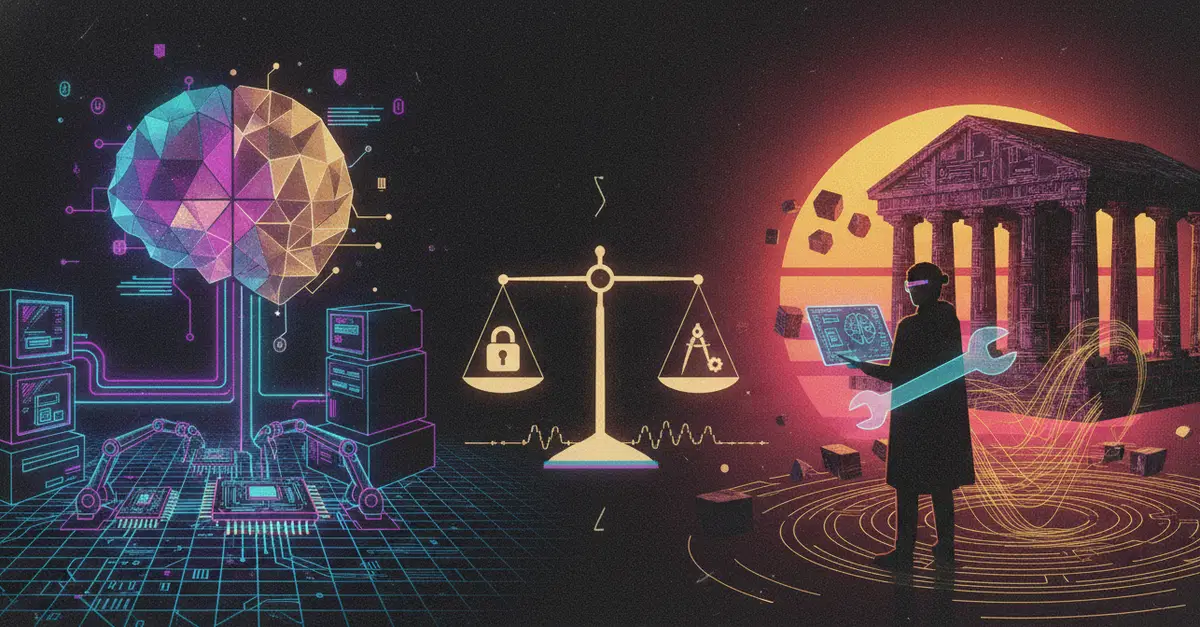
AI's Role in Legacy System Analysis
Modernizing legacy systems is a complex undertaking that extends far beyond a simple code cleanup. These systems often encapsulate decades of business logic, intricate integrations, hidden dependencies, intricate data flows, user management, security protocols, and strict downtime limitations. The process is inherently risky, involving significant financial and operational considerations.
Artificial intelligence is emerging as a powerful assistant in this domain, capable of automating several time-consuming aspects of legacy modernization. AI tools can significantly accelerate tasks such as generating comprehensive documentation for archaic codebases, performing deep code analysis to identify patterns and anomalies, mapping complex dependency chains, and even generating test cases. They can detect duplicate logic, which is common in long-lived systems, and provide explanations for obscure or uncommented code sections, making it easier for engineers to understand the system's current state.
For instance, AI can process millions of lines of COBOL or Fortran code, identifying potential areas of concern or suggesting refactoring opportunities. It can analyze the relationships between different modules, revealing dependencies that might not be immediately obvious from manual inspection. This capability is akin to having an tireless junior developer who can sift through mountains of code, flagging potential issues and summarizing complex sections. The sheer speed at which AI can perform these analytical tasks offers a substantial boost to the initial phases of modernization projects.
The Limits of AI in Strategic Modernization
Despite these advancements, AI's current capabilities fall short of fully automating the strategic and judgment-intensive aspects of legacy modernization. AI lacks the nuanced understanding of business context, risk appetite, and architectural vision that human engineers possess. It cannot, for example, definitively decide which part of a legacy system should be prioritized for rewriting. This decision often hinges on business impact, user feedback, compliance requirements, and the potential for future growth – factors that AI currently cannot weigh effectively.
Choosing the right architecture for a modernized system is another area where human expertise is indispensable. Should the system be refactored in place, re-platformed to a cloud-native environment, or completely re-architected using microservices? AI can provide data points and suggest options, but the final decision requires a deep understanding of the organization's long-term strategy, existing infrastructure, team skills, and tolerance for disruption. Similarly, assessing which risks are acceptable and which areas of the system are too critical or too poorly understood to be touched without extensive, manual discovery remains firmly in the realm of human engineering judgment.
Consider a financial system where a seemingly minor calculation module handles a niche but critical regulatory reporting requirement. An AI might flag it for potential simplification based on code complexity, but an experienced engineer would recognize its critical nature and advocate for extreme caution, potentially leaving it untouched until a thorough, manual audit can be completed. This is the essence of risk management – understanding not just the code, but its business and operational implications.
Legacy Modernization as Risk Management
Framing legacy modernization solely as a technical task of code cleanup is a fundamental misunderstanding. These systems are often the backbone of an organization's operations, supporting critical business processes like payroll, customer transactions, and supply chain management. The risk associated with modernizing such systems is multifaceted, encompassing potential downtime, data loss, security vulnerabilities introduced during the transition, cost overruns, and resistance from users accustomed to the existing workflow.
AI can assist in identifying potential risks by analyzing code for security flaws or performance bottlenecks. It can help model the impact of changes by simulating different scenarios. However, it cannot replace the human ability to anticipate unforeseen consequences, manage stakeholder expectations, or develop comprehensive rollback strategies. The iterative nature of modernization often involves a series of small, controlled changes, each requiring careful planning, execution, and verification – a process heavily reliant on human oversight and decision-making.
The