
From Manual to AI-Native: The Botflix Experiment
For the past 15 months, a television network named Botflix has been operating as a 24/7 AI-native entity. What began as a largely manual production process has evolved into a sophisticated system where large language models (LLMs) like ChatGPT and Codex now manage significant portions of ongoing production and programming. This evolution marks a shift towards true AI-driven content creation and scheduling.
Botflix currently broadcasts four distinct channels: a general television channel, an original music radio channel, a music-video channel, and a relaxation/ambient channel. The core innovation lies in the recent integration of ChatGPT/Codex directly into the production pipeline, enabling automated decision-making, asset generation, and playlist management.
About eleven days ago, this direct integration went live. The system now operates on a scheduled basis, capable of inspecting current programming, analyzing viewer analytics, deciding on new content needs, generating finished assets, seamlessly integrating them into the live playlist, and phasing out older material. This level of autonomous operation is a significant leap in AI application within media production.
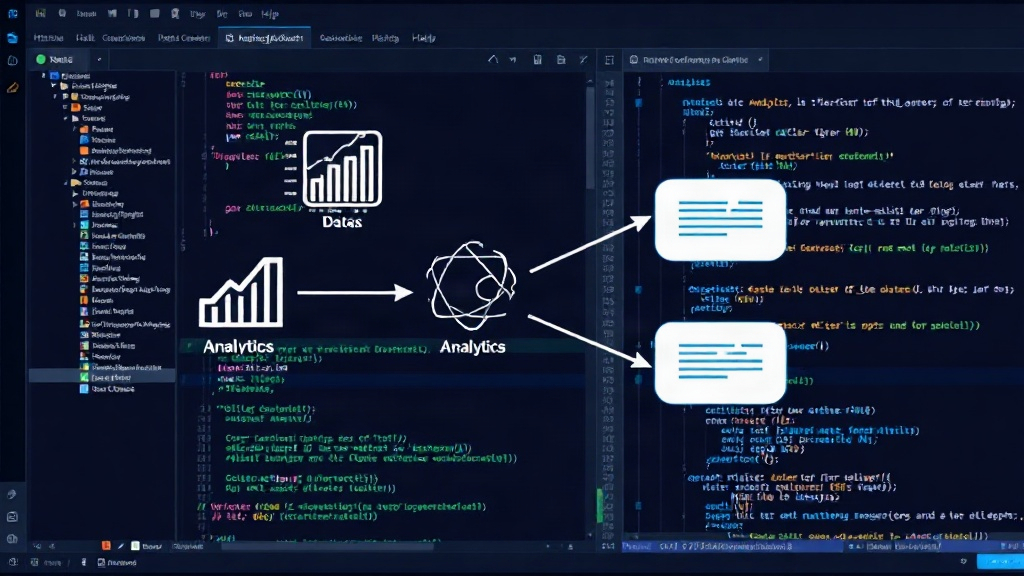
The Automated Production Workflow
A typical automated run within the Botflix system follows a structured sequence. It begins with a review of the existing content library and current playlists to understand the network’s state. Based on this review and analysis of viewer analytics, the AI determines what kind of new material is needed to maintain engagement and channel identity. This decision-making process is critical, as it dictates the direction of content generation.
Once the content strategy is defined, the AI writes specific, detailed prompts tailored for various generative tools. These prompts are the instructions that guide the AI in creating new assets. For example, if the AI decides a channel needs more calming ambient music, it will generate prompts for a music synthesis tool like Suno or instruct a visual generation tool like Google Flow to create corresponding visuals.
The process involves several steps:
- Content Review: The system first scans the existing library and analyzes the current playlist to identify gaps or opportunities.
- Analytics Ingestion: Viewer analytics are processed to understand audience preferences, engagement levels, and content performance.
- Content Decisioning: Based on review and analytics, the AI determines the type, style, and quantity of new content required.
- Prompt Engineering: The AI generates precise prompts for various AI asset generation tools.
- Asset Generation: Tools like Google Flow (for visuals) and Suno (for audio) are utilized to create new content based on the AI-generated prompts.
- Playlist Integration: Newly generated assets are added to the live playlist. The system ensures a clean switchover, meaning the transition from one piece of content to the next is seamless and professional.
- Content Cycling: Older or underperforming material is identified and removed from rotation to make space for new content and maintain playlist freshness.
Under the Hood: Technologies and Tools
The backbone of this automated system is the integration of powerful LLMs with specialized content generation tools. ChatGPT and Codex serve as the central intelligence, interpreting data, making decisions, and orchestrating the entire workflow. Their ability to understand context, generate creative text, and process complex instructions is fundamental to the system's operation.
For asset creation, the system leverages a suite of external AI tools. Google Flow is mentioned as a tool for generating visual assets, likely including animated graphics, background loops, or even programmatic video sequences. Suno is used for original music and audio generation, capable of producing soundtracks, ambient soundscapes, or even vocal tracks that fit the specific needs of different channels.
The “clean switchover” capability is particularly noteworthy. This implies sophisticated integration with the broadcasting software. The AI must not only decide when to play new content but also execute the transition precisely, ensuring no jarring cuts or technical glitches disrupt the viewer experience. This requires a deep understanding of broadcast timing and signal management, likely managed through custom scripting or APIs connecting the AI’s decisions to the playout system.
Challenges and Future Implications
The transition from manual to AI-driven production is not without its challenges. Maintaining creative quality and avoiding repetitive patterns requires careful prompt engineering and ongoing refinement of the AI’s decision-making algorithms. The system must balance algorithmic efficiency with genuine creative output that resonates with viewers.
One significant question is the scalability of such a system. As the network grows and audience demands evolve, the AI must adapt. This could involve more complex analytics, finer-grained content control, and potentially even generative models capable of creating entirely new formats or interactive experiences.
Furthermore, the reliance on third-party AI tools like Google Flow and Suno introduces dependencies. Changes in these tools’ APIs, pricing, or capabilities could directly impact Botflix’s operations. The developer of Botflix has built a system that is essentially a complex orchestration layer, a testament to the power of integrating specialized AI services.
The success of Botflix demonstrates a tangible pathway for AI to automate complex creative and operational workflows. It suggests that many content-centric industries could see similar AI-driven transformations, moving beyond simple content generation to full-scale production and programming management. The implications for traditional media production workflows, staffing, and the very definition of a television network are profound.