
The Genesis of TOCguide
Matthummeldev has successfully launched his first plugin on WordPress.org: TOCguide. This plugin offers a Gutenberg Table of Contents block, complete with an optional Reading Guide feature. Notably, it operates without requiring user accounts, tracking, or external APIs, emphasizing user privacy and independence. The plugin is currently live on WordPress.org, with its latest release being version 1.6.3.
This development marks a significant milestone for the developer, who acknowledges that shipping a product to the WordPress Plugin Directory traditionally involves a meticulous process of code review, documentation refinement, and packaging. For someone balancing a full-time job, freelance work, and family life, this could easily become a project that languishes indefinitely.
AI as a Catalyst for Shipping
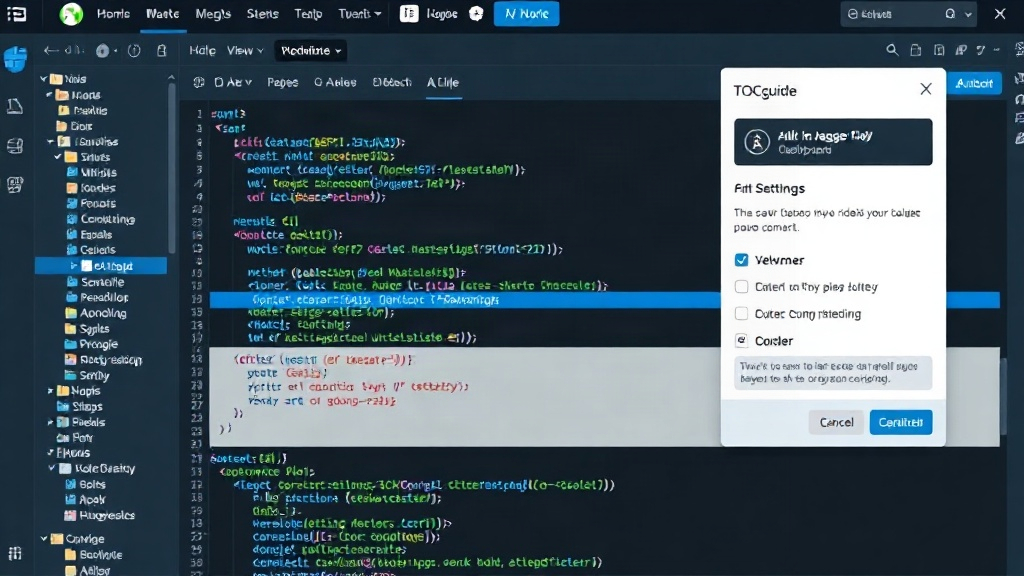
The decision to leverage AI tools was deliberate and strategic. The developer, a father of twins with a demanding schedule, recognized that traditional development workflows would likely prevent him from completing and publishing the plugin. AI, particularly the Cursor IDE, became instrumental in overcoming these time constraints. Cursor integrates AI capabilities directly into the coding environment, streamlining tasks that would otherwise consume valuable hours.
AI assisted in several key areas: writing boilerplate code, refactoring existing code, and even generating documentation and readme files. The process involved iteratively refining prompts and code suggestions, much like a pair programming session, but with an AI partner. This allowed for rapid prototyping and iteration, significantly reducing the time spent on repetitive or time-consuming aspects of plugin development. The AI didn't just generate code; it helped in understanding and optimizing it, leading to a more polished final product within a compressed timeframe.
The developer specifically highlighted the use of AI for tasks such as generating the plugin header, creating the initial structure for the Gutenberg block, and ensuring adherence to WordPress coding standards. This wasn't about replacing the developer's expertise but augmenting it, allowing him to focus on the unique logic and user experience of TOCguide rather than getting bogged down in the minutiae of plugin boilerplate and directory requirements.
Leveraging Git for Version Control
Alongside AI, robust version control with Git was essential. The developer used Git throughout the development process to track changes, manage different versions, and facilitate collaboration (even if that collaboration was primarily with AI-generated code). This ensured that he could revert to previous states if AI suggestions led to undesirable outcomes and maintain a clear history of the project's evolution. Git provided the safety net and organizational structure necessary for iterative development, especially when experimenting with AI-assisted coding.
The workflow involved committing changes frequently, allowing for granular tracking of progress. This practice is standard for experienced developers but is particularly valuable when integrating AI, as it provides distinct checkpoints to evaluate the impact of AI-generated code snippets or refactoring suggestions. The combination of AI for speed and Git for control formed the backbone of this efficient development cycle.
The WordPress.org Submission Process
Publishing on WordPress.org requires adherence to specific guidelines. The plugin must be well-documented, secure, and follow WordPress coding standards. The developer used AI to help generate the `readme.txt` file, which is crucial for the plugin's listing on the directory. This file includes descriptions, installation instructions, FAQs, and changelogs. AI assistance here meant that these essential documentation components were created quickly and accurately, aligning with WordPress.org's expectations.
The submission process itself, while not detailed step-by-step, implies that the final code, reviewed and refined with AI assistance and managed via Git, was packaged and uploaded according to the platform's procedures. The successful listing of TOCguide demonstrates that AI-powered development workflows can produce plugins that meet the rigorous standards of the WordPress ecosystem.
Why This Approach Matters
The success of TOCguide, developed with AI assistance, offers a compelling case study for other developers facing similar time constraints. It demonstrates that AI tools are not just for complex AI research but can be practical, everyday aids for software development, particularly for solo developers or small teams with limited resources. The ability to accelerate the development cycle from idea to published product is a significant advantage.
This approach democratizes plugin development, making it more accessible to individuals who might otherwise be deterred by the perceived time commitment. It shifts the focus from the tedium of manual coding and configuration to the higher-level tasks of design, logic, and user experience, with AI handling much of the heavy lifting. The resulting plugin is not a compromise in quality but a testament to efficient, modern development practices.