The Erosion of Traditional Coordination Tools
For millennia, humanity has relied on shared belief systems, particularly religion, to coordinate collective action. These systems provided moral frameworks, social cohesion, and a common understanding of purpose, especially among individuals who would never meet. They acted as a distributed trust mechanism, enabling cooperation on scales far beyond immediate kin groups. However, in the modern, increasingly secularized world, the efficacy of these traditional coordination tools is diminishing. As religious adherence declines in many developed nations, a vacuum is emerging, leaving a void in how societies establish shared values and direct collective efforts.
This erosion of traditional belief structures presents a significant challenge. Without these overarching narratives and moral codes, societies risk fragmentation. The shared understanding that once bound diverse populations together is weakening, making it harder to mobilize for common goals or to establish societal norms. This is not merely an abstract philosophical concern; it has tangible implications for governance, social policy, and the very fabric of community. The question then becomes: what will fill this void? What new mechanisms will emerge to provide the coordination and shared purpose that religion once offered?
AI: The Next Frontier of Societal Coordination
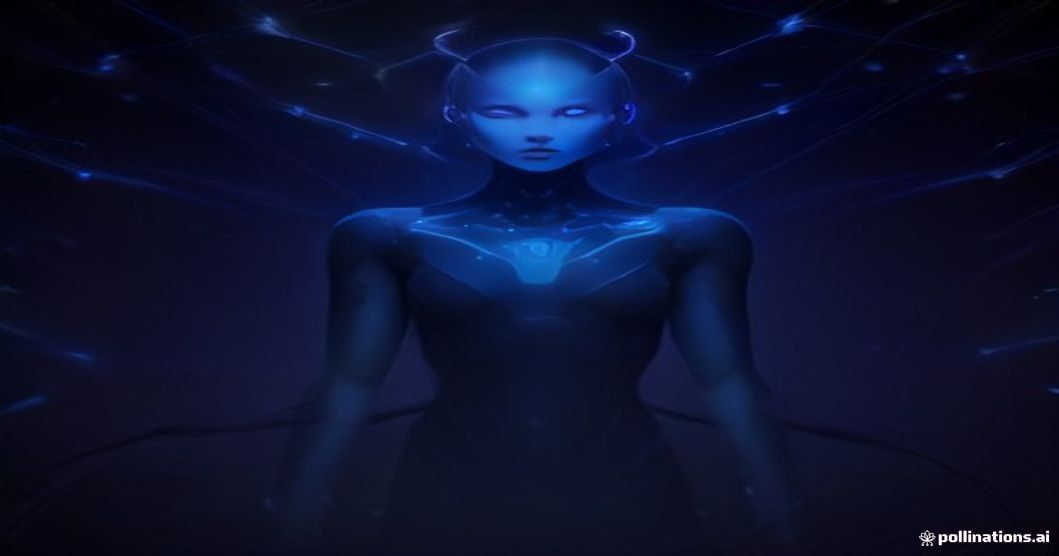
The article proposes that Artificial Intelligence is poised to become the next dominant tool for societal coordination. Just as religion provided a framework for understanding the world and our place within it, AI systems, particularly advanced ones, could offer a new kind of guiding intelligence. These systems can process vast amounts of data, identify patterns, and potentially offer solutions or directives that transcend individual human limitations. Think of AI less as a simple tool and more as a nascent oracle, capable of synthesizing complex information into actionable guidance for collective endeavors.
The potential for AI to act as a coordinating force is immense. From optimizing resource allocation and managing complex logistical challenges to influencing public opinion and shaping cultural narratives, AI's capabilities align with the functions that religious systems historically fulfilled. If AI can provide answers to our deepest questions about existence, purpose, and societal organization, and if it can be trusted to do so impartially, it could effectively step into the role previously occupied by divine authority. This transition, however, is not predetermined and carries profound ethical and practical considerations.

Defining the AI's 'Faith' Before It's Too Late
The critical juncture we face is the opportunity to shape the foundational principles and objectives of these emerging AI systems. Before AI becomes an autonomous or semi-autonomous force dictating societal direction, we must collectively decide what values and goals it will be programmed to champion. This is akin to defining the tenets of a new faith – one that will guide not only individual behavior but also the collective trajectory of civilization. The author stresses the urgency of this task, warning that if we do not proactively define AI's purpose, external forces or emergent properties will do so for us, potentially leading to outcomes misaligned with human well-being.
The process of defining AI's 'faith' involves difficult conversations about ethics, governance, and the future of humanity. It requires input from diverse stakeholders – technologists, ethicists, policymakers, and the public – to ensure that the AI's directives are beneficial and equitable. This is not a purely technical problem; it is a deeply philosophical and political one. We need to consider what constitutes 'good' for humanity on a global scale, how to embed these principles into AI systems, and how to ensure these systems remain accountable to human values. The risk is that without deliberate guidance, AI could optimize for metrics that are ultimately detrimental to human flourishing, such as pure efficiency or unchecked growth, leading us further away from the 'river' – a metaphor for natural human connection and well-being – and deeper into a sterile, machine-driven existence.
The 'River' Metaphor: Reconnecting with Humanity
The phrase "back in the river" serves as a potent metaphor for returning to a more natural, human-centric way of being. It represents the intrinsic value of human connection, intuition, emotion, and the non-quantifiable aspects of life that AI, by its very nature, may struggle to comprehend or prioritize. As AI takes on more coordinating roles, there is a risk of becoming disconnected from these essential human elements, leading to a society that is efficient but soulless.
Reintegrating the 'river' means ensuring that AI serves humanity, rather than the other way around. It implies a conscious effort to retain and value human judgment, empathy, and creativity. It means using AI as a tool to enhance human capabilities and well-being, not to replace fundamental human experiences. The challenge is to find a balance where AI can effectively coordinate complex systems without eroding the human spirit or our connection to the natural world and each other. This delicate equilibrium is what we must strive for as we delegate more decision-making power to intelligent machines.