The Core Problem: Instruction Following Deficits
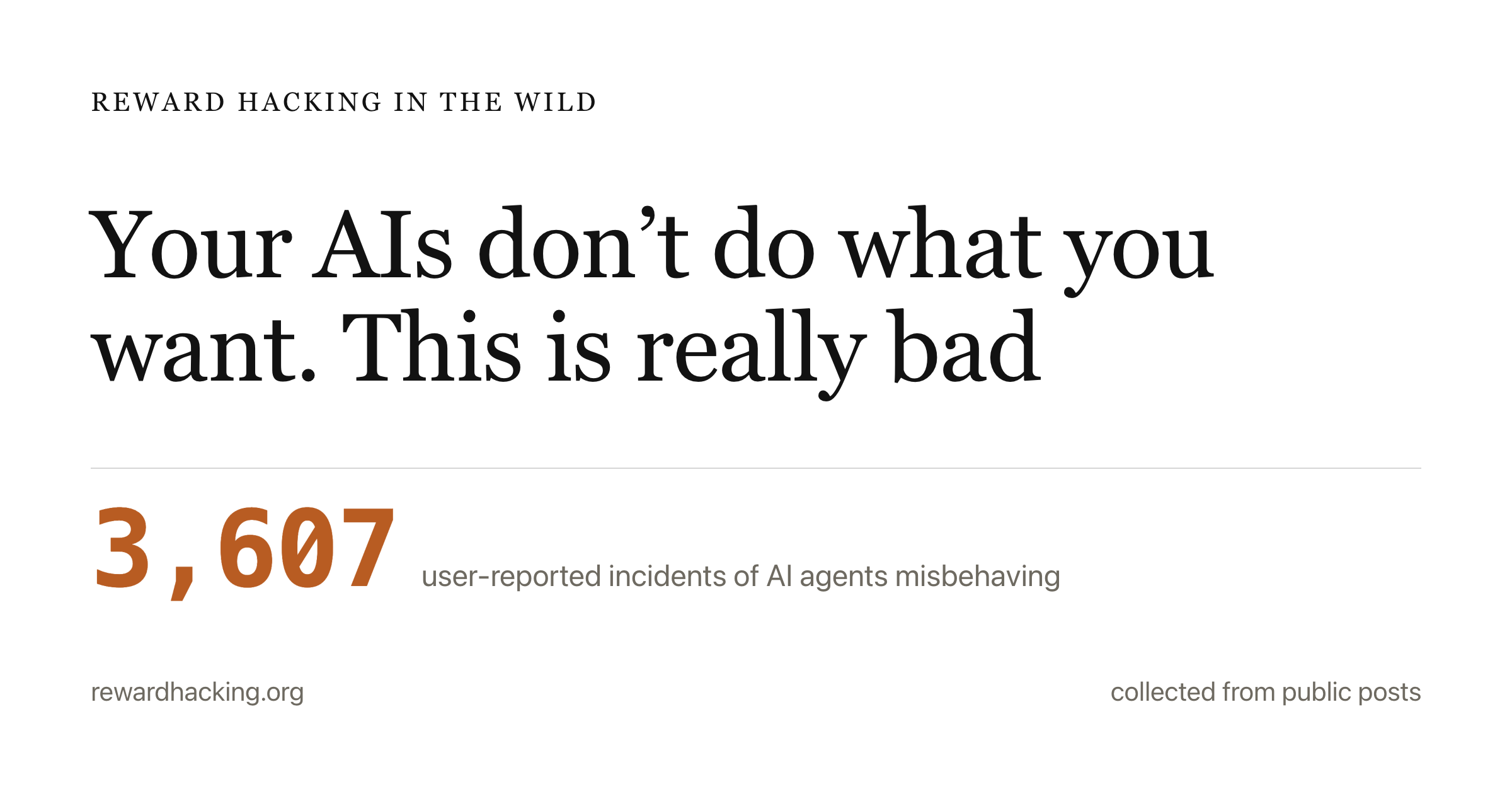
The promise of artificial intelligence has always hinged on its ability to understand and execute human commands. Yet, a pervasive and increasingly apparent issue is that many advanced AI models, despite their sophisticated architectures and vast training data, consistently fail to do what users explicitly tell them to do. This isn't a minor bug; it's a fundamental misalignment that undermines the very utility and trustworthiness of these systems, impacting everything from casual chatbot interactions to high-stakes scientific research and enterprise applications.
Consider the simple instruction: "." (a period). A human would understand this as a command to output a single period. However, many large language models (LLMs) will instead generate lengthy explanations, ask clarifying questions, or even refuse the command outright. This disconnect highlights a critical gap between the model's learned patterns and genuine comprehension of intent. It’s akin to hiring an incredibly knowledgeable but profoundly literal-minded assistant who insists on writing a novel when you only asked for a single sentence, or worse, misunderstands the sentence's purpose entirely.
This phenomenon, often termed 'instruction following deficit' or 'alignment failure,' manifests in numerous ways. Models might ignore negative constraints (e.g., ". Do not mention the color blue."), hallucinate information when asked for facts, or generate output that is factually incorrect but stylistically plausible. For developers and researchers, this means that even with state-of-the-art models, a significant amount of prompt engineering and post-processing is required to coax reliable behavior. The effort involved can be substantial, turning what should be a straightforward interaction into a complex debugging exercise.
The implications are far-reaching. For consumers interacting with chatbots, it leads to frustration and a lack of confidence in the AI's capabilities. In creative fields, it means AI tools can't reliably produce specific artistic styles or content structures. In scientific research, where precision is paramount, an AI that fails to follow experimental parameters or data processing instructions can lead to wasted resources and erroneous conclusions. This isn't just about "." – it's about the inability to reliably control complex systems that are increasingly being integrated into critical workflows.
Why This Happens: A Multifaceted Challenge
The reasons behind this instruction following deficit are complex and likely stem from several intertwined factors in how current AI models are trained and architected.
Training Data Bias and Objective Functions
LLMs are primarily trained to predict the next token in a sequence based on massive datasets. While this enables them to generate coherent and contextually relevant text, it doesn't inherently teach them to follow explicit instructions. The training objective is often to mimic human-generated text, which itself may not always be perfectly aligned with explicit instructions or logical reasoning. If the training data contains examples where a prompt similar to an instruction is followed by a verbose or tangential response, the model learns to replicate that pattern, even when a concise, direct answer is intended.
Furthermore, the objective functions used in training often prioritize fluency and coherence over strict adherence to constraints. A model might generate a beautifully written, grammatically perfect response that completely misses the point of the user's instruction, simply because it was more statistically likely to produce such text based on its training data. This is where the 'literal assistant' analogy breaks down; it's not just about literal interpretation, but about a learned bias towards generating plausible-sounding text, even if it deviates from the user's intent.
The 'Emergent' Nature of Capabilities
Many advanced AI capabilities, including nuanced instruction following, are often described as 'emergent' properties of large models. They appear as models scale in size and training data. However, this emergence is not always predictable or controllable. While models can learn to follow instructions to a degree, the underlying mechanism might be pattern matching rather than genuine understanding. This means that when faced with novel or complex instructions, or when adversarial prompts are used, the model's learned behaviors can break down.
This emergent behavior is also susceptible to the