The Evolution Beyond Single Chatbots
The common perception of Artificial Intelligence often defaults to a singular, all-knowing chatbot capable of answering any query. While powerful, this monolithic view falls short as software projects and business operations grow in complexity. A single AI, no matter how advanced, struggles to efficiently manage the disparate demands of a multifaceted system. This limitation is precisely why the latest update to MyZubster introduces a paradigm shift: the implementation of AI agents. These are not general-purpose AIs, but rather specialized assistants meticulously designed to excel at specific tasks within the project ecosystem.
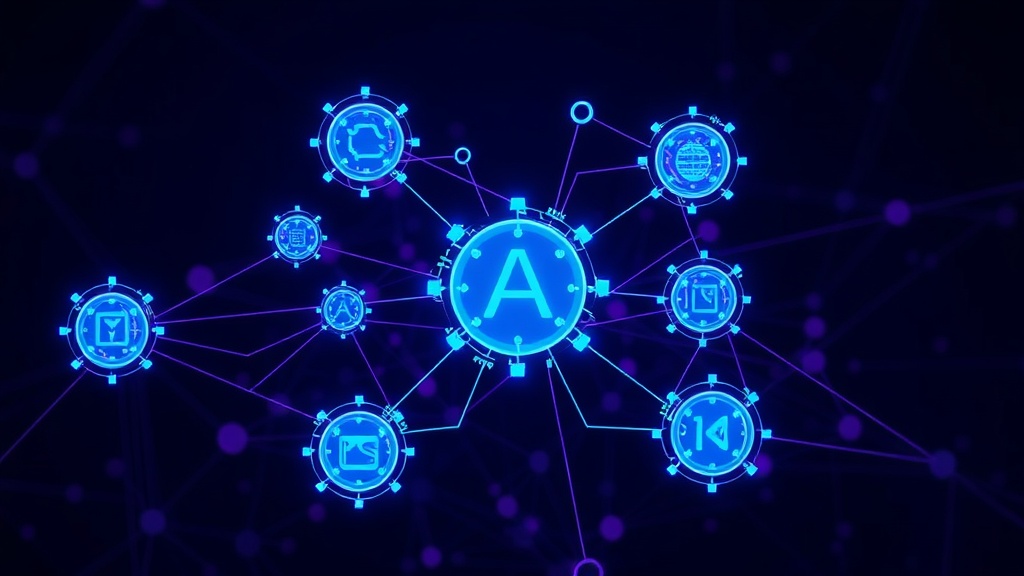
This strategic deployment is not about replacing human developers or operational staff. Instead, it’s about augmenting their capabilities by providing a team of digital collaborators. Think of it like scaling a human company: you wouldn't task your chief financial officer with drafting patent applications, nor would you expect your head of IT to negotiate complex legal settlements. Each role requires distinct expertise. The same principle now applies to AI within sophisticated software environments. MyZubster has moved from a singular AI assistant to a multi-agent system, with each agent assigned a clear, focused responsibility.
Defining the AI Agent's Role
An AI agent is fundamentally an entity designed to perceive its environment, make decisions based on that perception, and take actions to achieve a specific goal. In the context of MyZubster's update, this translates to agents that are trained and optimized for narrow, but critical, functions. For example, one agent might be solely responsible for monitoring system performance metrics, identifying anomalies, and generating alerts. Another could focus exclusively on code review, scanning for common bugs, security vulnerabilities, or adherence to coding standards. A third agent might handle user support queries, drawing from a specific knowledge base related to MyZubster's features.
The benefits of this modular approach are manifold. Firstly, it dramatically improves efficiency. By dedicating an agent to a single task, it can be fine-tuned and optimized to perform that task at a higher speed and accuracy than a generalist AI. This specialization prevents context switching overhead that plagues monolithic AI systems trying to juggle multiple distinct responsibilities. Secondly, it enhances reliability. If one specialized agent encounters an issue or requires an update, it doesn't necessarily bring down the entire system. Other agents can continue their work, isolating the problem and allowing for more targeted maintenance.
Specialization vs. Generalization: A Strategic Choice
The decision to implement specialized AI agents over a single, more generalized model is a strategic one, reflecting a mature understanding of AI capabilities and limitations. A general AI might be able to perform a wide range of tasks passably well, but it often lacks the depth of understanding or the optimized workflows that a specialist possesses. For instance, an agent designed for natural language processing might be exceptional at understanding user intent from support tickets, but it would be ill-suited for analyzing complex log files. Conversely, an agent built for data analysis could identify performance bottlenecks but would fail at generating human-readable summaries of user feedback.
This specialization allows MyZubster to build more robust and scalable AI-driven features. Developers can now integrate AI into specific workflows with greater confidence, knowing that the AI component is purpose-built for its role. This is akin to hiring specialists for a company rather than generalists. While generalists can adapt, specialists bring a level of proficiency and speed to their domain that is hard to match. The MyZubster update signifies a move towards more sophisticated AI architectures, where different AI modules work in concert, much like different departments in a well-run organization, each contributing its unique skills to the overall success of the project.
The Practical Implications for Users and Developers
For end-users of MyZubster, this means a more responsive and capable application. Tasks that previously might have been slow, error-prone, or even impossible with a single AI are now handled with greater precision. Whether it's faster issue resolution through a dedicated support agent, more insightful performance reports from a specialized monitoring agent, or more accurate code suggestions from a development assistant agent, the user experience is set to improve. The complexity of the underlying AI architecture becomes invisible, presenting a seamless and efficient interface.
For developers working on MyZubster, the impact is equally significant. They gain powerful, pre-built tools that can be integrated into their development lifecycle. Instead of building AI capabilities from scratch for every need, they can leverage these specialized agents. This frees up their time to focus on higher-level problem-solving and innovation. Furthermore, the modular nature of agent-based AI allows for easier updates, testing, and debugging. If a particular agent needs refinement, it can be worked on independently, minimizing disruption to other parts of the system. This approach fosters a more agile and efficient development process, ultimately leading to a better final product.
Future Directions and Unanswered Questions
The implementation of specialized AI agents by MyZubster is a clear indicator of a broader trend in AI development: the move towards distributed, multi-agent systems. As AI becomes more deeply embedded in complex software and business processes, the need for specialized, collaborative intelligences will only grow. This architecture allows for greater scalability, resilience, and task-specific optimization. However, several questions remain. How will these agents communicate and coordinate effectively as their numbers and complexity increase? What are the optimal strategies for designing and deploying such multi-agent systems to avoid emergent conflicts or inefficiencies? And critically, as these agents become more autonomous in their specialized domains, what new security considerations and oversight mechanisms will be necessary to ensure their actions remain aligned with overall project goals and ethical guidelines? The MyZubster update provides a glimpse into the future, but the full scope of managing and leveraging these sophisticated AI teams is still unfolding.