%22%20%2F%3E%0A%20%20%3C%2Fsvg%3E)
The Humanization of AI Agents
The conversation around Artificial Intelligence agents is undergoing a significant transformation. For years, the industry has fixated on pushing the boundaries of AI intelligence, measuring performance through increasingly complex benchmarks and leaderboards. However, a crucial shift is now underway. As organizations begin to deploy AI agents not as isolated tools but as integrated components within their workflows, the metrics that matter are changing. The focus is moving from how smart an AI agent is, to how dependable, accountable, and collaborative it can be. This mirrors the way we evaluate human employees; we rarely lead with intelligence scores, instead prioritizing reliability, teamwork, and adherence to organizational norms.
This evolution signals a maturation of the AI agent landscape. It suggests that the era of purely theoretical performance gains is giving way to a practical, operational phase. Companies are realizing that the true value of AI agents lies not just in their ability to perform a task, but in their seamless integration into existing systems and their predictable behavior within a larger operational context. This mirrors the early days of cloud computing, where the initial excitement about raw processing power quickly gave way to the critical importance of scalability, security, and manageability.
Emergence of Agent Operations Infrastructure
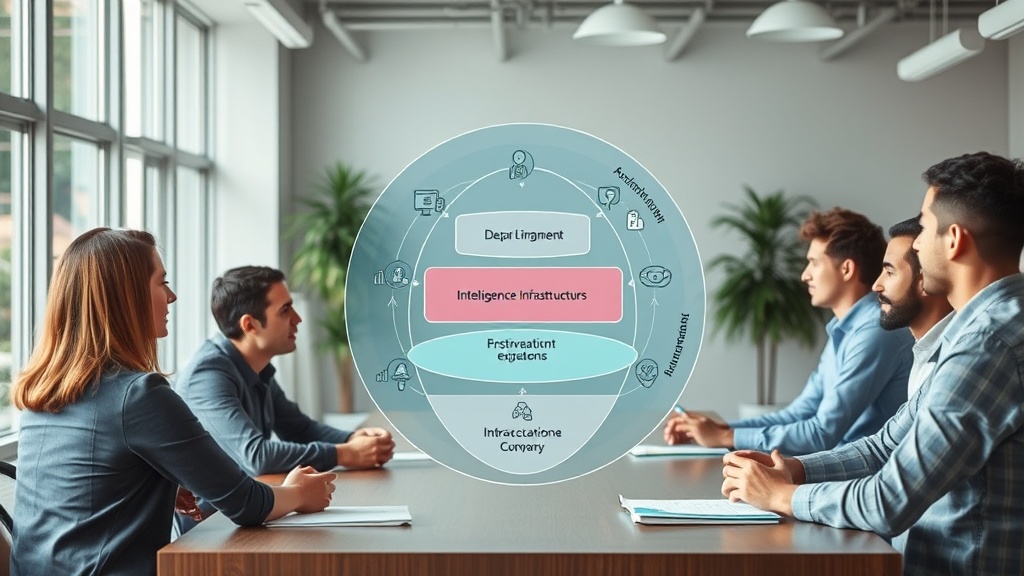
As organizations move from piloting a few AI agents to deploying dozens, or even hundreds, the operational challenges escalate dramatically. The simple act of selecting a cutting-edge model becomes secondary to managing its lifecycle in production. This is where the concept of 'Agent Operations' (AgentOps) comes into play. It encompasses a new layer of infrastructure and tooling designed to address the practical realities of running AI agents at scale. Questions around governance, deployment pipelines, granular permissions, comprehensive observability, and robust evaluation frameworks move to the forefront.
Consider the complexity of managing a human workforce. Each employee requires onboarding, defined roles, access controls, performance reviews, and integration into team structures. Similarly, AI agents, to be effective and safe within an organization, will need analogous systems. Governance ensures agents operate within ethical and legal boundaries. Deployment mechanisms enable reliable rollout and updates. Permissions control what data and systems agents can access, mitigating security risks. Observability tools provide insight into agent actions and decision-making processes, crucial for debugging and auditing. Finally, evaluation moves beyond static benchmarks to continuous assessment of real-world performance and impact.
Beyond Benchmarks: The Reliability Imperative
The shift in focus from intelligence to operations is not merely an academic distinction; it has profound implications for how AI agents are developed, deployed, and perceived. A highly intelligent agent that is unreliable, difficult to manage, or prone to unexpected behavior is of limited practical value in a production environment. Organizations need agents that can be trusted to perform their duties consistently, adhere to predefined rules, and integrate smoothly with other systems and human teams.
This doesn't mean that AI intelligence is no longer important. Advances in model capabilities will continue to be a driving force. However, the pathway to widespread adoption and value realization now hinges on our ability to manage these intelligent systems effectively. It’s akin to the transition from raw, unrefined materials to sophisticated manufacturing processes. The raw material (intelligence) is essential, but it’s the manufacturing process (operations) that turns it into a usable, valuable product.
The development of specialized tools and platforms for AgentOps is a natural consequence of this trend. We can expect to see a proliferation of solutions focused on areas like agent orchestration, monitoring, security, and compliance. These tools will abstract away much of the underlying complexity, allowing businesses to leverage AI agents more confidently and at a larger scale. This infrastructure layer will be critical for unlocking the full potential of AI agents, transforming them from experimental technologies into indispensable operational assets.
The Future: Agents as Team Members
The ultimate destination of this trend appears to be AI agents functioning not just as tools, but as genuine team members. This implies a level of integration and collaboration that goes beyond simple task execution. It suggests agents that can understand context, communicate effectively with humans and other agents, adapt to changing circumstances, and contribute to collective goals. Achieving this will require not only advancements in AI models but also robust operational frameworks that support this level of integration.
The questions surrounding AI agents are evolving. Instead of asking, "How much better can this model get?" the critical questions are becoming, "Can we deploy this agent safely and reliably?" "Does it integrate with our existing systems?" "Is it auditable and accountable?" and "Can it work effectively with our human teams?" Answering these questions requires a new set of tools, processes, and infrastructure – the domain of Agent Operations. This evolution is essential for moving AI agents from the fringes of experimentation into the core of business operations.