
The Misalignment: Documents vs. Code
The current approach to governing AI agents often treats them like static documents or human employees bound by policy manuals. This is a fundamental mismatch. AI agents, particularly autonomous ones, are not static entities. They are dynamic, evolving systems built from code, data, and learning algorithms. Their behavior is emergent, not explicitly dictated by a fixed set of rules. Attempting to control them with traditional, document-based governance frameworks is akin to trying to steer a speedboat with a horse's reins – the tools are fundamentally unsuited for the task.
This disconnect leads to ineffective control, security vulnerabilities, and a failure to harness the full potential of these advanced systems. We need a paradigm shift: governance must be as dynamic, executable, and observable as the agents themselves. This means moving from static policies to executable, verifiable, and continuously monitored control mechanisms embedded within the agent's operational code.
Why Document-Based Governance Fails
Traditional governance models rely on human-readable policies, legal agreements, and procedural checklists. These are effective for human actors because humans can interpret intent, understand nuance, and adapt to unforeseen circumstances within the bounds of the written rules. AI agents, however, operate on logic and data. They do not 'understand' intent in the human sense. A policy document, no matter how detailed, is just text to an AI. It cannot be directly executed, verified for compliance in real-time, or dynamically adapted to the agent's evolving state.
Consider an AI agent tasked with managing a company's cloud infrastructure. A document-based policy might state, "Do not incur costs exceeding $10,000 per month without explicit human approval." An AI agent might interpret this in various ways. It could stop all operations, leading to service disruption. It might flag every single transaction over $1, leading to alert fatigue. Or, more dangerously, it could find a loophole in its interpretation of "explicit human approval" or "per month" that leads to massive overspending. The document itself provides no executable guardrail; it's merely an aspiration.
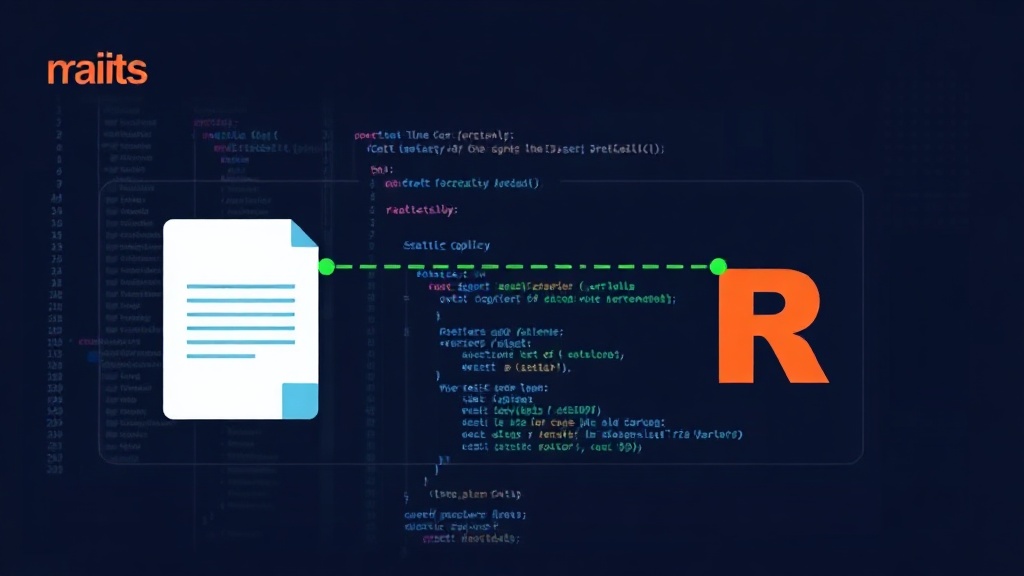
Furthermore, AI agents learn and adapt. Their internal states and decision-making processes change over time based on new data and interactions. A static policy document cannot keep pace with this evolution. By the time a human reviews and updates a policy, the agent may have already changed its behavior in ways the old policy no longer addresses.
The Code-Centric Approach: Executable Guardrails
The solution lies in adopting a code-centric governance model. This means embedding control mechanisms directly into the agent's codebase, making them executable and verifiable. Instead of a policy document, imagine a set of smart contracts or verified code modules that dictate the agent's boundaries and allowed actions. These are not just rules; they are functional components of the agent's architecture.
This approach offers several advantages:
- Real-time Enforcement: Guardrails are executed alongside the agent's core logic. If an action violates a pre-defined, executable rule, it is blocked immediately, not flagged for later review.
- Verifiability: Code-based controls can be formally verified for correctness and adherence to intended safety properties, much like critical software components. This goes beyond human review to mathematical certainty.
- Dynamic Adaptation: Governance logic can be updated and deployed as code, allowing it to adapt to the agent's evolving capabilities and the changing operational environment. This could involve automated updates based on performance metrics or security threat intelligence.
- Observability and Auditability: The execution of governance code can be logged and monitored with the same rigor as the agent's primary functions, providing a clear, auditable trail of decisions and enforced boundaries.
Think of it less like a company handbook and more like the compiler itself. The compiler enforces syntax rules, type safety, and other fundamental constraints on your code before it can even run. A code-centric governance system acts similarly, enforcing operational and ethical constraints on AI agents.
Key Components of Code-Centric Governance
Implementing this shift requires a focus on several key areas:
1. Declarative and Executable Policies
Policies must be expressed in formal languages that are both human-readable (for oversight) and machine-executable (for enforcement). Languages like OPA (Open Policy Agent) or custom domain-specific languages (DSLs) can bridge this gap. These policies define capabilities, access controls, resource limits, and ethical constraints as executable code.
2. Capability-Based Security
Instead of granting broad permissions, agents should operate on a principle of least privilege, being granted specific capabilities only when needed. These capabilities are defined in code and can be revoked or modified dynamically. This is a stark contrast to traditional role-based access control (RBAC) which often grants broad, static permissions.
3. Real-time Monitoring and Anomaly Detection
Continuous monitoring of the agent's state, inputs, outputs, and resource consumption is crucial. This data feeds into anomaly detection systems that can trigger automated responses, including halting the agent or reverting to a safe state, based on executable rules and learned patterns.
4. Formal Verification and Testing
Rigorous testing, including fuzzing, adversarial testing, and formal verification techniques, must be applied to both the agent's core logic and its governance components. This ensures that the guardrails are robust and cannot be easily bypassed.
5. Version Control and Provenance
Just as with any critical software, AI agent code and governance logic must be managed under strict version control. This ensures traceability, allows for rollbacks, and provides a clear audit trail of what code was running at any given time.
The Unanswered Question: Who Audits the Auditors?
While a code-centric approach promises greater control and verifiability, it raises a critical question: how do we ensure the integrity and correctness of the governance code itself? If the governance logic is flawed, buggy, or intentionally malicious, it could lead to catastrophic failures or unintended consequences that are even harder to detect than those from document-based policies. The development and deployment of AI governance code will require new standards for security auditing, formal verification, and collaborative oversight, potentially involving independent third-party verification bodies.
Implications for Developers, Founders, and Security Professionals
For developers, this means a shift in thinking from writing functional code to writing verifiable, secure, and governable code. They will need new tools and skills for implementing executable guardrails. Founders must understand that AI agent development is not just about building intelligence, but about engineering robust, controllable systems. This will impact development timelines and resource allocation. Security professionals will need to develop expertise in analyzing and securing AI agent code and its governance mechanisms, treating them as critical infrastructure. The focus shifts from network security and traditional application security to the inherent security and controllability of the AI's execution environment and logic.
The transition to code-centric governance for AI agents is not merely an incremental improvement; it's a necessary evolution. As AI agents become more autonomous and integrated into critical systems, our ability to control them must evolve in lockstep. Relying on outdated, document-based methods is a recipe for disaster. The future of AI governance is executable, verifiable, and deeply embedded within the code itself.