The Pain of Manual Ad Management
Anyone who has managed Google Ads campaigns knows the Tuesday afternoon dread: a sudden drop in ROAS, and you’re suddenly lost in a labyrinth of campaigns, ad groups, and keywords. The sheer complexity of the Google Ads interface, with its endless layers of data, makes pinpointing budget-burning outliers a tedious, time-consuming task. Automated rules, built into the platform, offer a semblance of relief but are fundamentally limited. They operate on simple if/then logic, incapable of understanding seasonal trends, cross-channel performance, or nuanced market shifts without weeks of custom scripting.
This manual grind isn't just inefficient; it’s a bottleneck for effective campaign optimization. The current tools force human advertisers to act as intermediaries, translating complex data into actionable commands. This process is prone to error and misses opportunities for real-time, context-aware adjustments.
Introducing the Model Context Protocol (MCP)
The real paradigm shift in managing high-stakes advertising budgets isn't merely having data accessible in a chat window. It’s about equipping Large Language Models (LLMs) with the capability to not only reason over that data but also to execute changes directly. This is precisely where the Model Context Protocol (MCP) emerges as a critical innovation.
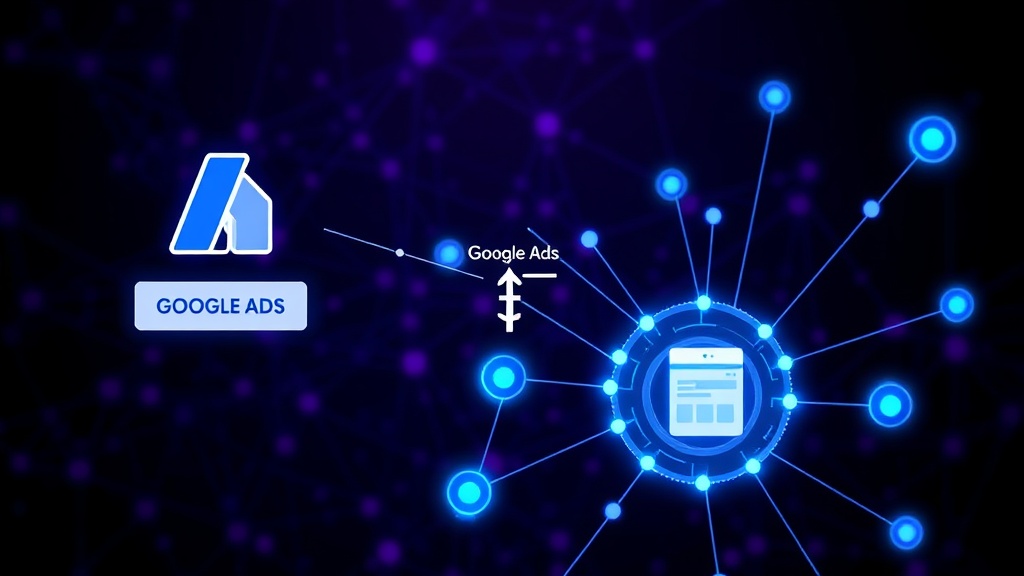
MCP acts as a bridge, enabling LLMs to understand the specific context of advertising performance data. Think of it less like a database query and more like giving an AI agent a comprehensive briefing before it takes over a critical task. It provides the AI with the necessary background, current state, and objectives to make informed decisions. Instead of just retrieving numbers, the LLM can interpret what those numbers mean in the broader landscape of a Google Ads account.
The core of MCP lies in its ability to contextualize raw data. For instance, an LLM might see a dip in conversion rates. Without context, it’s just a number. With MCP, it understands this dip might be related to a recent campaign change, a competitor’s aggressive bidding, or even an external event. This deeper understanding allows for more sophisticated analysis than traditional automated rules can ever achieve.
From Data Interpretation to Autonomous Action
The true power of MCP is unleashed when LLMs can move beyond analysis to execution. This means an AI agent, armed with the context provided by MCP, can directly interact with the Google Ads platform. It can pause underperforming keywords, adjust bids based on real-time performance, reallocate budgets between campaigns, and even suggest new ad copy or targeting parameters—all without human intervention for every micro-adjustment.
This transition transforms AI agents from passive data viewers into active managers. The implications for campaign efficiency are profound. Imagine an AI agent that can identify a sudden spike in fraudulent clicks and immediately implement measures to combat it, or one that can dynamically shift budget towards a newly trending product just hours before competitors catch on. This level of agility is simply impossible with manual oversight or rigid, pre-programmed rules.
The development team behind this approach emphasizes that this isn't about replacing human advertisers entirely, but about augmenting their capabilities. MCP empowers advertisers to delegate the granular, high-frequency decision-making to AI, freeing them up to focus on higher-level strategy, creative development, and understanding market nuances that still require human intuition.
The Future of Advertising Management
The integration of LLMs with advertising platforms via protocols like MCP signals a significant evolution in digital marketing. It moves away from the dashboard-centric, reactive approach that has dominated for years towards a more proactive, intelligent, and automated system. This shift is not just about efficiency gains; it's about unlocking new levels of performance by leveraging AI's ability to process vast amounts of data and react at machine speed.
What nobody has addressed yet is the long-term impact on the skills required for digital advertising professionals. Will the focus shift entirely to prompt engineering and AI oversight, or will deep analytical skills remain paramount for interpreting AI-driven insights and setting strategic guardrails? The industry is on the cusp of a significant transformation, and understanding protocols like MCP is key to navigating it.
For businesses, this means potentially significant improvements in ROI, reduced wasted ad spend, and the ability to adapt more quickly to market dynamics. The era of simply browsing dashboards may indeed be coming to an end, replaced by intelligent agents that manage campaigns with unprecedented precision and speed, all thanks to a better way for AI to understand its context.