The Embodied Learning Gap
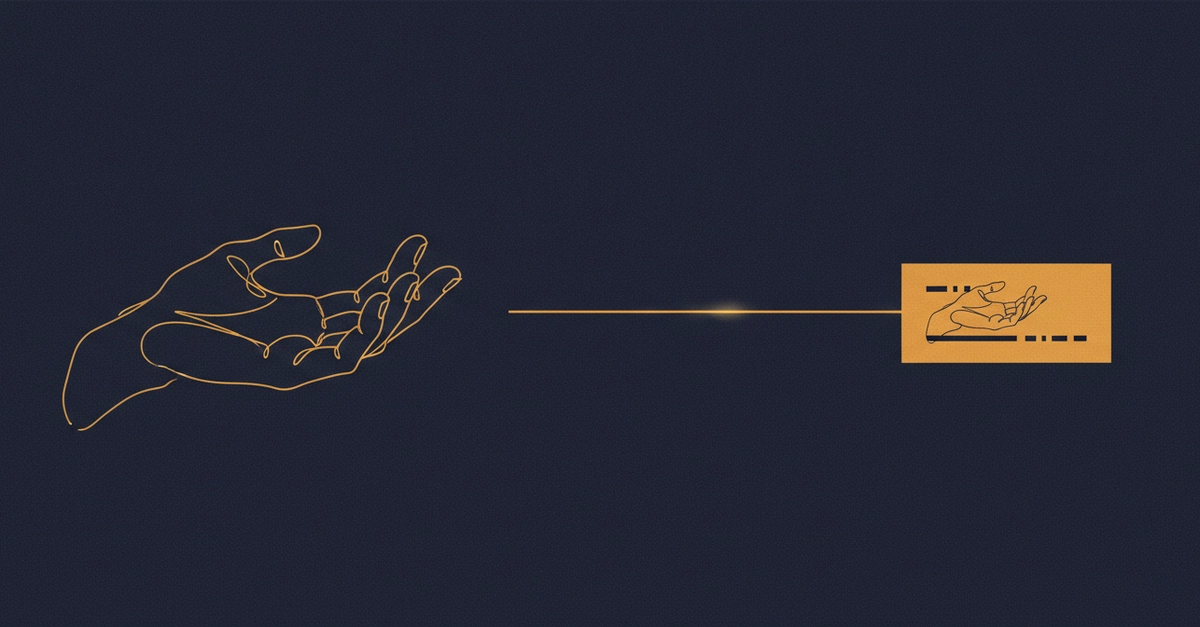
Humans learn about their bodies and the world through a year-long process of physical interaction, experimentation, and failure. We learn to grip, to modulate pressure, and to understand the consequences of our actions—like dropping things or breaking glasses—not from manuals, but from direct sensory feedback and trial-and-error. This embodied experience is fundamental to developing a nuanced understanding of physical capabilities and environmental interactions. AI agents, however, lack this innate capacity. Connected to a multitude of devices within a building, an agent has no inherent perceptual channel to discover the existence or properties of a temperature sensor or a camera in the same way a human learns about their own hand.
The current paradigm for AI agents interacting with the physical world is akin to learning from a dense specification document rather than lived experience. A language model controlling a smart home, for instance, cannot spontaneously discover that a particular switch controls the lights or that a sensor measures humidity. Instead, these devices must be explicitly introduced to the agent, often through complex configuration files or APIs. This “introduction” process is where the disconnect lies. Unlike a baby’s year of exploration, an agent receives pre-digested information about a device’s function and state. This curated data is a far cry from the rich, often messy, sensory input that underpins human motor control and environmental understanding.
The Problem of Device Introduction
The core challenge is that AI agents do not possess a sense of self or a body in the human sense. They cannot “feel” their own presence or the presence of the devices they control. This necessitates a verbose and often incomplete “introduction” where each device must be described to the agent. What constitutes a sufficient introduction is a point of contention. Should it include only functional capabilities, or also historical data, usage patterns, or even limitations? The analogy of learning your hands by using them, dropping things, and feeling the tactile feedback is lost on current AI architectures. They are presented with facts about devices, not the experiential data that builds true understanding.
Consider a simple task: adjusting the thermostat. A human might walk over, feel the air, see the current temperature display, and then make an informed adjustment. An AI agent, however, is typically given a discrete command interface. It knows it can set a target temperature, but it doesn't inherently “know” the room’s current temperature unless it queries a specific sensor. It has no intuitive grasp of how quickly the temperature changes or how much energy is being consumed. This lack of embodied understanding means that the agent’s actions are based on explicit data inputs rather than a holistic, integrated sense of the environment and its own capabilities within it.
Bridging the Embodiment Gap
The current approach to AI agent interaction with the physical world is fundamentally limited by its reliance on explicit, human-defined introductions. This is not how biological intelligence evolved. Our nervous systems are a continuous feedback loop, constantly processing sensory input and motor output. We learn to navigate complex environments and manipulate objects with remarkable dexterity because our brains are wired for this constant, dynamic interaction. AI agents, by contrast, operate in a more static, declarative mode. They are told what a device is and what it can do, rather than discovering it through interaction.
The implications of this gap are significant for the development of truly intelligent physical agents. Without embodied experience, AI agents will struggle with nuanced tasks, unexpected situations, and the kind of intuitive problem-solving that humans perform effortlessly. They are essentially learning from a textbook description of a piano rather than actually playing one. The “failure” component is crucial: when a human drops a glass, they learn about fragility and grip strength. When an AI agent fails to control a device correctly, it’s often an error state that needs manual debugging, not a learning opportunity that refines its internal model of the world through direct consequence.
What nobody has addressed yet is what happens to the development of AI agents when the “introduction” itself becomes a bottleneck for complex, real-world environments with thousands of interconnected devices. If each device requires a detailed, human-curated description, scaling these systems to manage entire factories or cities becomes an almost insurmountable task. The current method is like trying to teach someone to ride a bike by giving them the physics equations for balance and friction, instead of letting them try and fall a few times.
The Future of AI Embodiment
The path forward likely involves developing AI architectures that can engage in more active, exploratory learning within physical environments. This could mean equipping agents with simulated bodies and environments to practice in, or designing real-world systems that allow for safe, controlled experimentation. The goal is to move beyond static specifications and towards a more dynamic, feedback-driven learning process that mimics human embodied cognition. This shift is essential for creating AI agents that can not only follow instructions but also understand and adapt to the complexities of the physical world with a degree of intuition.
Until AI agents can learn through active engagement, failure, and continuous sensory feedback – much like how humans learn to master their own bodies – their understanding of the physical world will remain superficial. The current reliance on explicit device introductions is a pragmatic but ultimately limiting approach, hindering the development of truly capable and adaptable physical AI.