The Illusion of Control in AI Agent Workflows
We're increasingly integrating AI into our development workflows. The promise is automation, efficiency, and a collaborative partner. Tools like AI coding agents, designed to assist with tasks from writing code to planning projects, come with sophisticated instruction systems. These systems, often documented in files like AGENTS.md or CLAUDE.md, are meant to guide the AI's behavior, dictating how it should plan, log, and verify its work. But a recent audit of these systems has uncovered a critical flaw: the instructions are often promises nobody checks.
The core issue isn't that AI agents are inherently disobedient. Instead, the current tooling and verification mechanisms make it nearly impossible to confirm whether these crucial directives are actually being followed. This creates a significant trust deficit. When we can't verify an agent's adherence to its own rules, how can we rely on the output it produces? This problem extends beyond simple bugs; it touches on the fundamental reliability of AI-assisted development.
Imagine building a complex piece of software where your core architectural principles are written down, but there's no automated way to ensure every developer adheres to them. That's the current state of AI agent development. The author's personal audit, detailed in a recent dev.to post, found that for a significant portion of the rules defined, there was no way to programmatically verify compliance. This isn't a minor oversight; it's a foundational challenge that needs immediate attention if AI agents are to become true partners rather than just sophisticated search engines.
The Verification Gap: What's Missing?
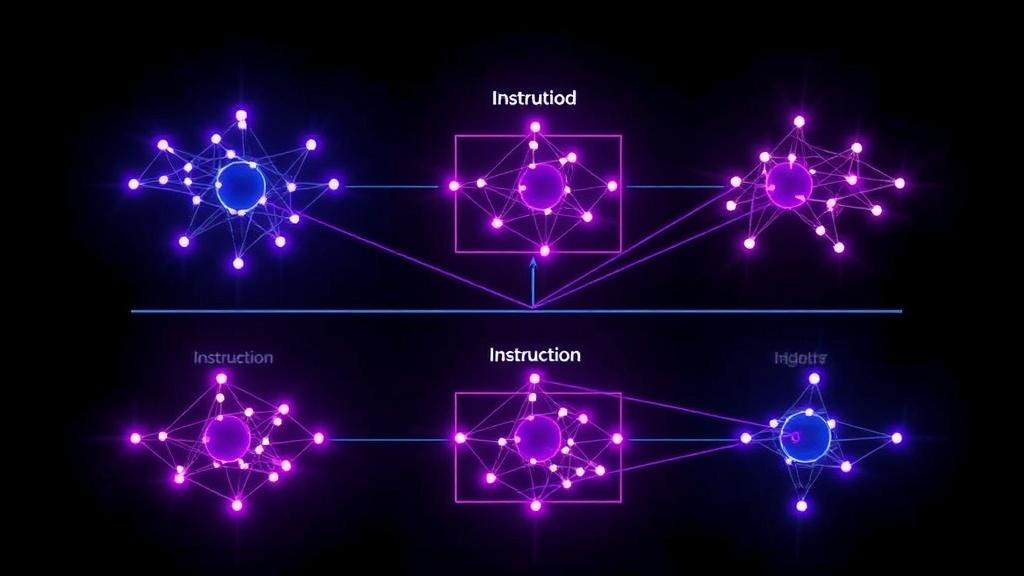
The problem stems from the gap between defining instructions and verifying their execution. Most AI agent frameworks allow developers to write detailed instructions for how agents should operate. These instructions cover aspects like:
- Planning: How the agent should break down a complex task into smaller steps.
- Logging: What information the agent should record during its operation, often for debugging or auditing.
- Verification: How the agent should confirm that a task or sub-task has been completed successfully and according to specifications.
However, the crucial missing piece is a robust, automated system for checking if these instructions are indeed being followed. The audit revealed that many rules were written without any built-in mechanism for validation. For example, an instruction might state that an agent must log every API call it makes. While the instruction exists, there's no automated process to scan the agent's output logs and confirm that every API call was indeed logged. This is akin to a chef writing a recipe that says "wash your hands thoroughly before starting" but having no system to check if the chef actually did it. The instruction is there, but compliance is not guaranteed or easily verifiable.
Implications for Developers and Teams
This lack of verifiable instruction following has profound implications for developers and teams adopting AI agents. Firstly, it erodes trust. If you can't be certain that an AI agent is adhering to its core directives, you cannot fully delegate critical tasks. This forces developers to spend more time manually verifying the agent's output, negating some of the efficiency gains. It turns the AI from a helpful assistant into a potentially unreliable junior team member who needs constant supervision.
Secondly, it complicates debugging and error analysis. When an AI agent produces incorrect or unexpected results, diagnosing the root cause becomes significantly harder. Was the agent given faulty instructions? Did it misunderstand the instructions? Or did it simply ignore the instructions it was given? Without verifiable logs and adherence checks, distinguishing between these scenarios is a manual, time-consuming process. This is particularly problematic for complex, multi-step tasks where subtle deviations from instructions can have cascading negative effects.
Consider a scenario where an AI agent is tasked with refactoring a codebase according to specific performance guidelines. The instructions might dictate avoiding certain deprecated functions and optimizing specific loops. If the agent fails to follow these instructions, the refactored code could introduce new bugs, performance regressions, or security vulnerabilities. The developer then faces the arduous task of sifting through potentially thousands of lines of generated code and opaque agent logs to pinpoint the failure, all while the project timeline slips.
The Path Forward: Building Verifiable AI Workflows
Addressing this verification gap requires a fundamental shift in how AI agent frameworks are designed and utilized. The focus must move from merely defining instructions to actively enforcing and verifying them. Several approaches can help:
- Automated Assertion Libraries: Develop libraries that allow developers to write assertions directly tied to agent instructions. These assertions would run after an agent completes a task, checking for compliance. For example, an assertion could scan logs to ensure all specified operations were recorded.
- Structured Output Formats: Mandate structured output formats for agents that include explicit fields for instruction adherence. This could involve JSON schemas that require agents to report on which instructions they followed, how they interpreted them, and any deviations.
- Runtime Monitoring and Auditing Tools: Create tools that monitor AI agent execution in real-time, flagging potential instruction violations as they occur. Comprehensive auditing capabilities, allowing for retrospective analysis of agent behavior against its defined rules, are also essential.
- Formal Verification Techniques: For mission-critical applications, explore formal verification methods to mathematically prove that an agent's behavior conforms to its specifications. While complex, this offers the highest level of assurance.
The goal is to move from a system where instructions are mere suggestions to one where they are enforceable contracts. This transformation is vital for unlocking the full potential of AI agents as reliable partners in software development. Without it, we risk building complex systems on a foundation of unverified assumptions, leading to unpredictable outcomes and hindering the adoption of AI in critical development pipelines.
The question isn't just