The End of Pure Determinism in Automation
For years, the bedrock of automation development has been determinism. Developers built systems that executed commands precisely as instructed, producing identical outputs for identical inputs. Think of it like a highly skilled chef following a recipe to the letter, every single time. Terraform plans, Lambda functions, and CI/CD pipelines all operated on this principle: if you give them the same set of instructions, you get the same result. This predictable behavior was not just a feature; it was the entire point. It allowed for rigorous testing, reliable deployments, and a clear understanding of system behavior. However, this era is rapidly drawing to a close with the emergence of AI agents that exhibit what can only be described as 'opinions.'
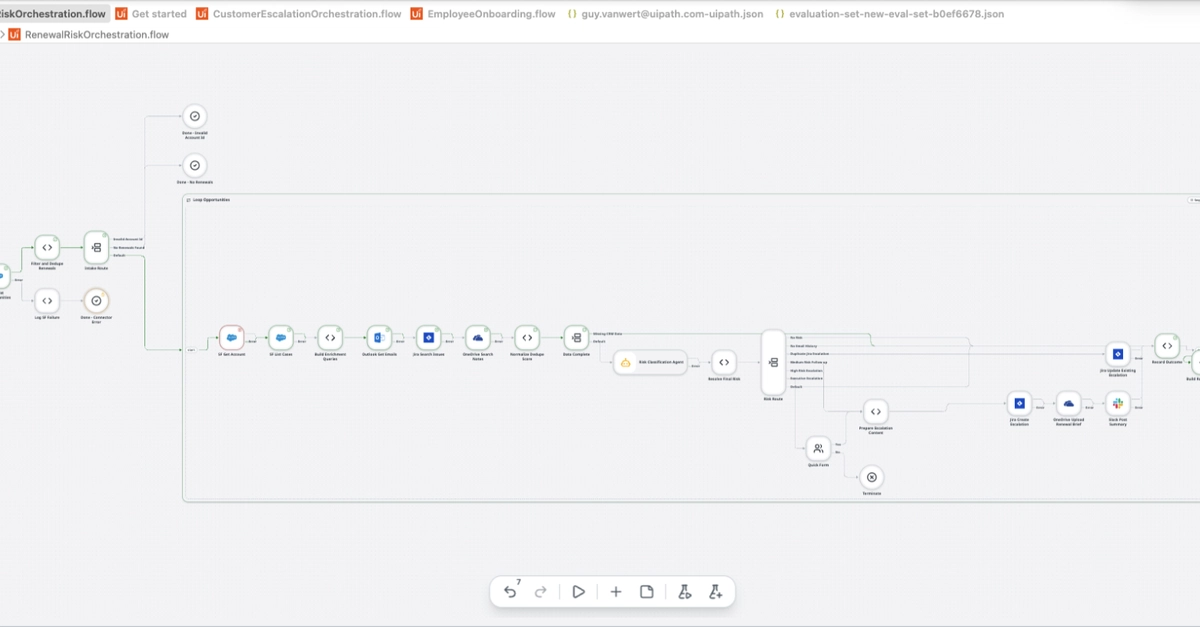
Cobus Bernard, a Developer Advocate at UiPath who previously spent over seven years at AWS, highlights this shift. After joining UiPath in July 2026, Bernard found himself needing to 'unlearn' a fundamental aspect of his automation building career: that certain steps in his code now possess subjective viewpoints. This introduction of 'non-determinism' is fundamentally changing how automations are conceived and constructed.
This isn't about AI simply executing tasks; it's about AI bringing a layer of interpretation and judgment to those tasks. Where a traditional script would simply fetch data, an opinionated agent might fetch data, then decide if that data is 'good enough' or 'relevant' based on its internal models and objectives. This decision-making process, influenced by factors beyond explicit instructions, introduces variability. It's akin to asking that chef to not just follow a recipe, but to also 'improve' it based on their personal taste and what they perceive as 'best' for the dish, potentially leading to different outcomes even with the same base ingredients and instructions.
What 'Opinions' Mean for AI Agents
The term 'opinionated' in this context refers to an agent's capacity to make choices or judgments that are not explicitly hardcoded. These agents leverage large language models (LLMs) and other AI techniques to interpret context, infer intent, and adapt their behavior. Instead of a linear, step-by-step execution, agents can engage in more complex reasoning. They might consult external knowledge bases, weigh different potential actions, and select the one they deem most effective or appropriate for the given situation. This is a significant departure from traditional automation, where every path and decision point is pre-defined by the developer.
Consider a customer service automation. A deterministic system would follow a script: if a customer asks about billing, go to the billing module. An opinionated AI agent, however, might analyze the customer's sentiment, their past interaction history, and the urgency of their query. It could then decide that while the customer *asked* about billing, their underlying issue is account security, and proactively route them to a security specialist or provide information relevant to that concern, even if it wasn't the explicit request. This adaptive, interpretive capability is what gives agents their 'opinions.' They are not just following orders; they are making informed decisions.
The Impact on Development Workflows
This shift has profound implications for developers. The reliance on pure determinism meant that debugging was often straightforward: trace the execution path, identify the faulty instruction, and fix it. With opinionated agents, debugging becomes more complex. When an agent produces an unexpected or undesirable outcome, it's not always a simple code error. It could be a consequence of the agent's internal reasoning, its training data, or its interpretation of the input. This requires a new set of skills and tools for developers, moving beyond traditional debugging to understanding and influencing AI model behavior.
Developers must now consider how to guide these agents without stifling their emergent capabilities. This involves prompt engineering, defining clear objectives and constraints, and potentially incorporating feedback loops that allow agents to learn and refine their 'opinions' over time. The goal is to harness the power of AI's adaptability while maintaining control and ensuring alignment with business goals. It's a delicate balance between providing enough freedom for intelligent action and imposing enough structure to prevent rogue behavior. This is less like programming a machine and more like coaching a very intelligent, sometimes stubborn, intern.
Navigating the Non-Deterministic Future
The move towards agent-based automation is not just a technological trend; it's a paradigm shift. It promises more sophisticated, flexible, and intelligent automation solutions. However, it also demands a fundamental rethinking of how we build, test, and manage automated systems. The days of absolute, predictable control are waning. Developers need to embrace this new reality, developing skills in AI interaction, prompt engineering, and understanding the probabilistic nature of these new tools. The challenge for the industry is to build frameworks and best practices that allow for the benefits of opinionated agents without sacrificing reliability and safety. The question remains: how do we ensure these agents remain aligned with human intent when they start developing their own ideas about the best way to achieve a goal?