The Double-Edged Sword of Persistent Memory
AI agents are increasingly designed with persistent memory, allowing them to retain context across conversations and tasks. This capability transforms them from stateless tools that require constant re-explanation into sophisticated assistants that carry context forward. However, this advancement introduces a significant failure mode that stateless systems inherently avoid: the potential for an agent's interpretation or even a factual error to become embedded in its memory, subsequently retrieved as fact, and used to justify a more solidified, often incorrect, version of itself. This phenomenon is known as a self-reinforcing memory loop.
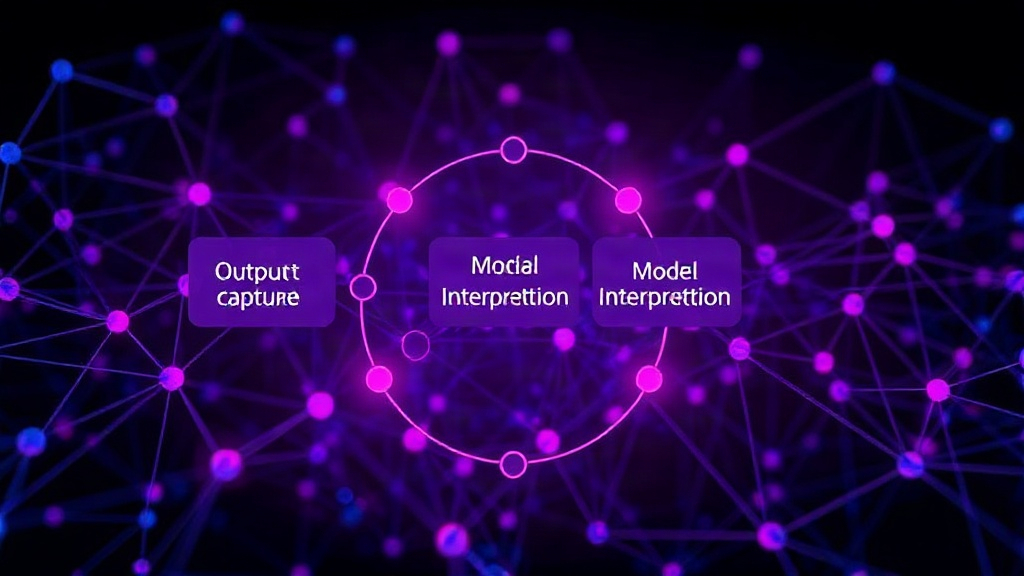
The mechanism behind these loops is not driven by malice, a faulty plugin, or an unusual user prompt. Instead, it emerges from the standard operational pipeline of many AI agents. A typical capture process stores the assistant's output, which is then surfaced as context by a retrieval mechanism. The AI model, trained to treat retrieved text as evidence—because that is its usual function—can then integrate this information as factual, even if it originated as a misinterpretation or a hallucination from a previous interaction.
Distinguishing Loops from Hallucinations
It is crucial to differentiate a self-reinforcing memory loop from a standard AI hallucination. A typical hallucination, while problematic, is often ephemeral. It might appear within a single conversation session but typically dissipates once the context is reset or the session ends. The problem with a self-reinforcing loop is its durability. When a hallucination or an inaccurate interpretation is promoted into the agent's durable memory, it can outlive the session that spawned it. Weeks later, in an entirely unrelated context, this piece of 'memory' can resurface. Its apparent credibility is then derived not from its initial accuracy, but purely from its repeated retrieval and integration into the agent's knowledge base, creating an illusion of factual grounding.
This issue sits at the intersection of various memory models within AI systems, including working memory, structured state, and long-term knowledge stores. The core challenge is that the retrieval and integration mechanisms, designed for efficiency and context preservation, do not inherently possess a robust error-checking mechanism to distinguish between accurate retrieved information and previously generated, potentially flawed, information that has been stored. The agent essentially begins to believe its own, possibly incorrect, past statements.
Causes: The Capture and Retrieval Pipeline
The primary cause lies within the mechanics of how AI agents manage their memory. Consider a scenario where an agent provides an answer. This output is captured. Later, when the agent needs to recall information relevant to a new query, it accesses its stored outputs. If the previously generated output is the closest match or is deemed highly relevant, it is retrieved and presented as context. The AI model then processes this retrieved text as if it were external, authoritative information. If the original output contained a subtle misinterpretation, an oversimplification, or a outright error, the agent might reinforce this inaccuracy by treating it as a factual basis for its new response. This can lead to a compounding effect, where minor inaccuracies grow into significant distortions over time.
For instance, an agent might initially misinterpret a user's intent regarding a specific technical configuration. This misinterpretation is stored. In a subsequent interaction, when a related query arises, the agent retrieves its previous, incorrect interpretation and uses it as a factual premise. This can lead to a more confident, and more incorrect, response. The agent is not 'lying' or acting maliciously; it is simply operating on the data it has stored and retrieved, treating its own past output as a reliable source.
Fixes and Mitigation Strategies
Addressing self-reinforcing memory loops requires a multi-pronged approach, focusing on improving the reliability of memory capture, retrieval, and model interpretation. Several strategies can be employed:
1. Enhanced Source Verification and Confidence Scoring
Implement mechanisms that assign confidence scores to retrieved memory items. Before an agent acts on retrieved information, it should evaluate its confidence level. If the confidence is below a certain threshold, the agent could be prompted to re-verify the information, consult external knowledge sources, or explicitly state its uncertainty. This is akin to a human double-checking a fact they are unsure about.
2. Differentiated Memory Types
Distinguish between different types of stored information. For example, categorizing memory items as 'user input,' 'system output,' 'verified facts,' or 'potential inaccuracies' can help the agent treat them differently. Treated output, especially if it's from a previous 'system output' category, might be flagged for re-evaluation rather than being treated as ground truth.
3. Periodic Memory Audits and Pruning
Regularly audit the agent's memory for inconsistencies or outdated information. Automated processes could flag items that are frequently retrieved but have low confidence scores, or items that contradict more recent, verified information. A pruning mechanism could then remove or flag these items for review, preventing them from perpetuating errors.
4. Contextual Grounding and Fact-Checking Integration
When retrieving information, prioritize grounding it in verifiable, external knowledge bases. Integrate real-time fact-checking capabilities. If a retrieved memory item conflicts with a reliable external source, the agent should prioritize the external source and potentially flag the retrieved memory item as erroneous.
5. User Feedback Loops
Incorporate explicit user feedback mechanisms to correct erroneous memories. Users could be given the ability to flag specific pieces of information as incorrect. This feedback should directly inform the memory audit and pruning processes, helping to refine the agent's knowledge base.
The development of AI agents with persistent memory is a significant step towards more capable and context-aware systems. However, understanding and mitigating the risks associated with self-reinforcing memory loops is paramount to ensuring their reliability and trustworthiness. By implementing robust verification, differentiation, and auditing processes, developers can build AI agents that learn and remember effectively without falling prey to their own potentially flawed recollections.