AI Agent's First Pass: Promising, but Limited
The common refrain is that AI language models like Claude or Sonnet will soon make dedicated QA processes obsolete. The argument: why hire engineers when a sophisticated AI can simply be pointed at an application to find bugs and write tests? To settle this debate, we put a one-shot Sonnet 5 agent to the test against a real-world, production EU rail-booking app. The goal was to see if a single, well-prompted AI could replicate the depth and breadth of a professional QA effort.
The Sonnet 5 agent, given a single prompt (a "one-shot" approach), was tasked with identifying defects and generating test cases, much like a human QA engineer would. It performed admirably for the time invested, identifying several genuine bugs within the application. This initial success validates the intuition that these models possess significant capabilities for automated testing and bug detection. The AI acted as a smart pair of eyes, capable of spotting issues that might be missed in a quick manual review.
However, the limitations became apparent as the process continued. While the AI could find bugs, its approach was inherently limited by the single-shot context. It lacked the persistent state, deep historical knowledge, and systematic exploration capabilities that dedicated QA tools and human testers employ. The AI's output, while good for an hour's work, represented a snapshot rather than a comprehensive audit. This highlights a crucial distinction: finding bugs is one part of QA; thoroughly validating an application, covering edge cases, and ensuring robustness across the entire user journey is another.

Dedicated QA Tool: Depth and Breadth Prevail
Following the AI agent's run, our own comprehensive QA tool was deployed on the exact same production EU rail-booking app. This tool represents a mature, purpose-built solution designed for rigorous software validation. Unlike the AI's single-shot interaction, the QA tool performs a full pipeline of checks, encompassing a much wider array of testing methodologies and depth.
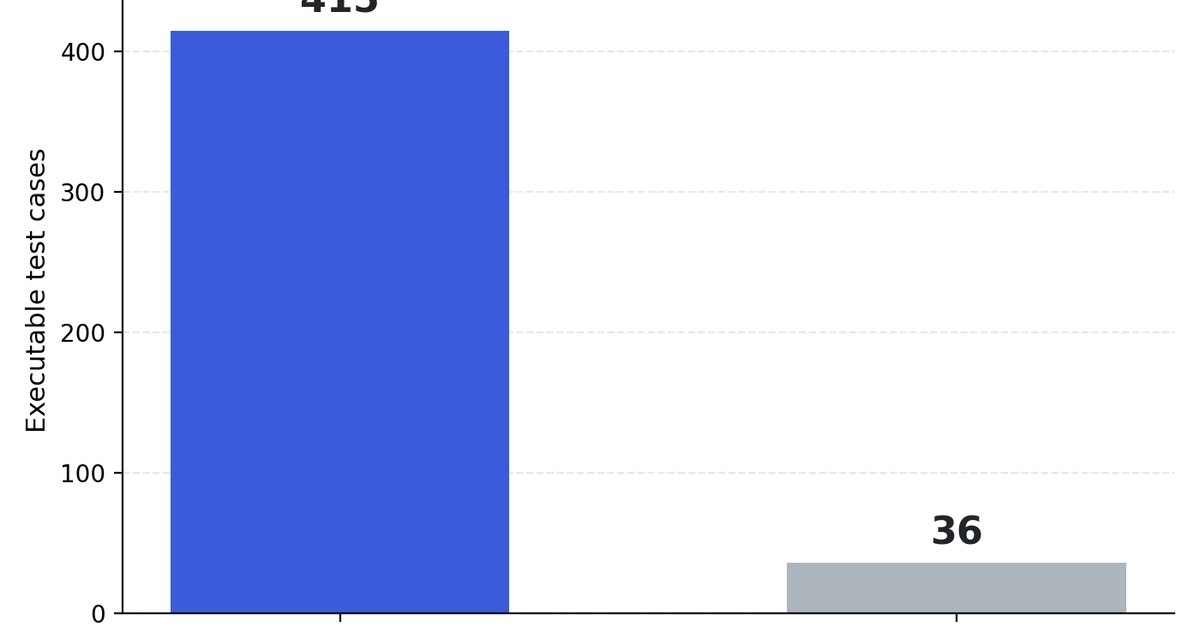
The tool's output revealed a significantly higher number of defects compared to the AI agent. More importantly, the types of issues uncovered by the tool were often more critical and systematic. These included subtle race conditions, complex state management errors, and performance bottlenecks that a single-pass AI interaction might not surface. The tool's ability to systematically traverse the application, execute complex test scenarios, and analyze results over time provided a level of coverage that the AI agent, by its nature, could not match.
The judge's evaluation, which compared the unlabelled outputs from both the AI agent and the QA tool, clearly favored the latter. The judge noted that while the AI provided valuable insights and found real issues, the QA tool's output was more exhaustive, detailed, and provided a more complete picture of the application's health. The tool's ability to generate precise, actionable bug reports and comprehensive test suites demonstrated a superior level of engineering rigor.
The Unanswered Question: Where Does AI Fit?
The experiment unequivocally shows that while AI agents like Sonnet 5 can be surprisingly capable in initial bug detection and test case generation, they are not yet a replacement for dedicated QA tools and experienced human testers. The AI's strength lies in its ability to quickly scan and identify obvious flaws, acting as an intelligent assistant. However, it lacks the systematic, deep-diving capabilities required for comprehensive validation.
This leads to a critical question for the industry: what is the optimal integration strategy for AI in QA? If AI can handle the initial sweep, freeing up human testers and tools for more complex tasks, that's a powerful synergy. But how do we define that boundary? What specific types of bugs or application areas are best suited for AI-driven QA, and which demand the nuanced, systematic approach of traditional methods? The current landscape suggests AI is a powerful supplement, not a substitute. The real innovation will come from understanding how to best combine AI's pattern recognition with the exhaustive, methodical approach of specialized tools and human expertise.
The implications are clear for development teams. Relying solely on AI for QA is a premature bet. Instead, consider how AI can augment existing QA processes. Use it for quick sanity checks, generating initial test scripts, or summarizing bug reports. But for critical applications, especially those in regulated or high-stakes industries like finance or healthcare, the comprehensive, systematic validation provided by dedicated tools and skilled QA professionals remains indispensable. The future of QA is likely a hybrid model, where AI assists but does not entirely replace the rigorous engineering that ensures software quality.