The 'Agent' Delusion: A Crisis of Definition
The AI landscape is awash with the term "agent." From simple functions calling tools to chatbots with memory, nearly every AI application is being labeled an agent. This semantic dilution, however, is more than just a naming convention; it's actively causing engineering teams to make critical mistakes. The gap between flashy demos and production-ready AI systems is wider than advertised, and the imprecise definition of an "agent" is a major contributor.
When a precise definition is lacking, teams fall into two traps: over-engineering simple workflows with unnecessary orchestration and under-engineering genuinely complex systems that require more sophisticated approaches. We've seen teams invest weeks in adding "agentic" capabilities to processes that would have been perfectly functional as a single, well-structured prompt. This isn't a minor semantic quibble; it's a fundamental misunderstanding of what constitutes agentic behavior and where it's truly needed.
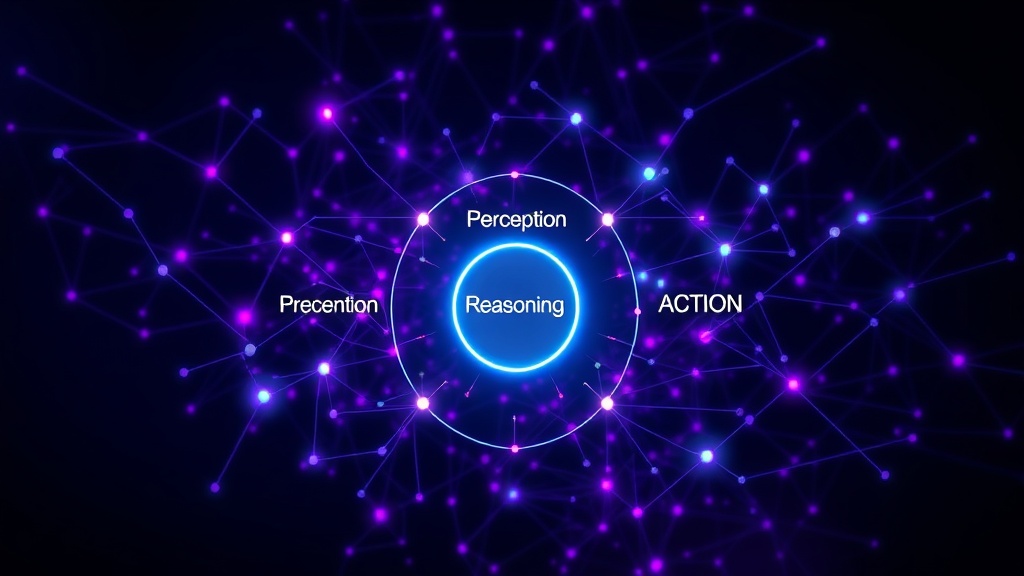
A more rigorous definition is essential. An agent, at its core, must possess three key attributes: Perception (the ability to sense and interpret its environment), Reasoning (the capacity to process information, make decisions, and plan), and Action (the capability to execute those decisions in the environment). Simply chaining function calls or adding memory to a chatbot does not inherently grant these capabilities. These components must be designed and integrated deliberately, not assumed through nomenclature.
Why Precise Definitions Matter for Engineering
The consequences of this definitional ambiguity are tangible. Teams are building systems that mimic agency without possessing its core attributes, leading to brittle, inefficient, and often costly solutions. Consider a scenario where a team builds a complex orchestration layer for a series of API calls that could be handled by a single, well-crafted prompt to a powerful language model. The result is a system that is harder to maintain, debug, and scale, all for the perceived benefit of being "agentic." This is akin to building a custom engine for a bicycle when all you need is a more comfortable seat.
Conversely, genuinely complex AI tasks that *do* require sophisticated agentic behavior—like autonomous research, complex problem-solving, or multi-step strategic planning—are sometimes treated with the same simplistic orchestration that would suffice for less demanding tasks. This leads to systems that fail when faced with novel situations or require capabilities beyond simple tool-use. The subtle differences in requirements between a task that benefits from a structured prompt and one that necessitates true autonomous reasoning are being blurred.
The current hype cycle around AI agents encourages a superficial understanding. Developers are pressured to adopt the latest buzzwords, often without a deep grasp of the underlying principles or practical engineering challenges. This creates a generation of AI practitioners who are adept at assembling pre-built components and following tutorials but lack the foundational understanding to design, build, and debug truly novel and robust AI systems.
The Shrinking Window for Foundational Expertise
This period of rapid innovation, particularly in the LLM and agentic AI space, represents a critical, albeit fleeting, window for developers to build deep, foundational expertise. The rapid pace of development means that the underlying principles and architectural patterns that are emerging now may soon become the established norms, making it harder for newcomers to enter and establish themselves without this foundational knowledge.
Building expertise requires more than just learning to use new APIs or frameworks. It demands a deep understanding of AI principles, including machine learning theory, cognitive architectures, reinforcement learning, and sophisticated prompt engineering techniques. It also requires hands-on experience in designing, implementing, and deploying complex AI systems, understanding their limitations, and troubleshooting their failures in real-world scenarios.
The danger is that the focus on superficial "agent" implementations will lead many to believe they are building advanced AI capabilities when they are merely creating slightly more complex automation. This misperception could cause them to miss the opportunity to develop the deeper skills needed to tackle the truly challenging problems in AI. By the time the industry coalesces around more precise definitions and robust architectures, the initial, formative period of exploration and learning will have passed, leaving those who focused on the surface-level trends playing catch-up.
What True AI Expertise Looks Like Now
True AI expertise today involves understanding the nuances of different LLM architectures, evaluating their strengths and weaknesses for specific tasks, and knowing when and how to fine-tune models. It means designing robust evaluation frameworks to measure performance beyond simple accuracy metrics, understanding failure modes, and implementing safety and ethical considerations from the ground up.
For developers aiming to build this expertise, the focus should shift from simply labeling systems as "agents" to understanding the core components of intelligent systems: perception, reasoning, planning, memory, and learning. This involves diving into the research papers, experimenting with different algorithmic approaches, and critically evaluating the trade-offs of various architectural choices. It means understanding how to integrate AI models with external tools and environments in a way that is reliable, scalable, and secure.
The current environment, while noisy, offers an unparalleled opportunity to learn and contribute. However, this opportunity is time-bound. The teams and individuals who invest in building deep, principled understanding now will be the ones leading the next wave of AI innovation. Those who are content with superficial implementations risk being left behind as the field matures and the bar for genuine expertise rises.
The window is open, but it is not staying open indefinitely. The time to move beyond the buzzwords and build genuine AI engineering capability is now.