
The Problem with AI Hallucinations
Many developers have experienced the frustration of asking an AI a technical question, receiving a confident and well-articulated answer, only to discover upon checking the official documentation that the AI's response was subtly, or even significantly, incorrect. This common pitfall, often termed AI hallucination, stems from the fundamental nature of large language models (LLMs). While LLMs excel at generating human-like text based on patterns in their vast training data, they do not inherently possess a mechanism for verifying the factual accuracy of their output against a specific, up-to-date knowledge source. The result is an answer that sounds plausible but lacks the grounded context required for technical accuracy.
This challenge is particularly acute in technical domains where precision is paramount. A slightly misquoted API parameter, an outdated configuration detail, or a misunderstanding of a core concept can lead to wasted hours of debugging and significant project delays. The AI might be synthesizing information from disparate, and potentially conflicting, sources within its training data, or it might simply be generating a statistically probable but factually inaccurate statement. The user is left with an answer that is not entirely useless, but critically lacks the precise context needed for reliable implementation.
Introducing ContextGuide: An AI with a Reliable Source
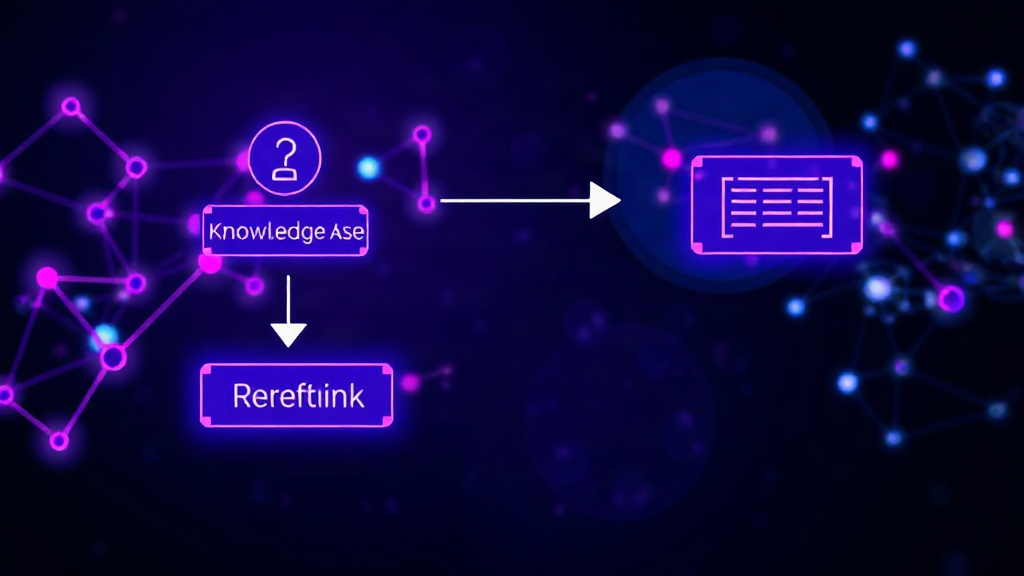
To address this pervasive issue, a new AI agent named ContextGuide has been developed. The core innovation behind ContextGuide is its proactive approach to information retrieval. Instead of relying solely on its internal, pre-trained knowledge, ContextGuide is designed to query a structured Knowledge Base before formulating an answer. This provides the AI with a reliable and authoritative source of truth, significantly reducing the likelihood of generating inaccurate or misleading information.
The architecture of ContextGuide involves integrating with a structured Knowledge Base, which is managed and accessed through technologies like Sanity Context and MCP (presumably a system for knowledge retrieval or processing). The guiding principle is straightforward: don't just ask the AI what it *thinks* it knows; empower it with the ability to *look up* what it needs to know from a definitive source. This is akin to giving a student an open-book exam rather than a closed-book one, but with the added intelligence of knowing precisely which book and which page to consult for the most relevant information.
This approach fundamentally shifts the paradigm of AI interaction. It moves away from treating LLMs as omniscient oracles and instead positions them as sophisticated reasoning engines that can leverage external, curated data. The structured Knowledge Base acts as the AI's personal, up-to-date reference library. When a query is received, ContextGuide first identifies the key information required. It then translates this need into a query for the Knowledge Base. The results from this query are then fed into the LLM, which uses this contextual information, along with its general language understanding capabilities, to generate a precise and accurate answer.
The Technical Underpinnings
The success of ContextGuide hinges on the efficacy of its knowledge retrieval system. Sanity Context, in this context, likely refers to a system that provides structured content management and retrieval capabilities. This means the information within the Knowledge Base is not just a dump of text but is organized in a way that allows for precise querying. This could involve metadata, semantic tagging, or relational databases that enable the AI to pinpoint the exact pieces of information needed.
MCP, while less explicitly defined without further context, likely plays a role in the Machine Learning pipeline or the retrieval process itself. It could be responsible for processing the retrieved information, augmenting the LLM's prompt with this context, or even fine-tuning the LLM's response generation based on the retrieved data. The synergy between a well-structured knowledge base and an intelligent retrieval mechanism is what allows ContextGuide to overcome the limitations of standalone LLMs.
Consider the analogy of a seasoned detective. A detective doesn't just rely on their memory of past cases (the LLM's training data). They meticulously consult case files, witness statements, and forensic reports (the structured Knowledge Base) to build a factual account. ContextGuide aims to equip AI agents with this same level of investigative rigor. By grounding its responses in verifiable data, it builds trust and reliability, qualities that are essential for any AI deployed in critical applications.
Implications and Future Directions
The development of agents like ContextGuide signals a maturing phase in AI development, moving beyond pure generative capabilities towards more reliable, context-aware systems. For developers, this means potentially more trustworthy AI assistants for coding, documentation lookup, and problem-solving. The risk of receiving subtly incorrect technical advice is substantially reduced, allowing for faster and more confident development cycles.
For businesses, particularly those in highly regulated industries or those relying on complex technical documentation, an AI that can reliably access and interpret internal knowledge bases offers significant value. It can streamline internal support, improve knowledge sharing, and ensure consistent adherence to protocols and best practices. The ability to confidently deploy AI for tasks requiring factual accuracy is a major step forward.
The broader implication is a future where AI agents are not just conversational partners but trusted information retrieval and synthesis tools. As more sophisticated methods for structuring and querying knowledge bases emerge, and as LLMs become better at interpreting and utilizing contextual information, agents like ContextGuide will become increasingly sophisticated. The challenge ahead lies in scaling these knowledge bases, ensuring their continuous update, and developing robust methods for query optimization to maintain performance as the volume of information grows.