AI Reanimates Deprecated Oracle Designer
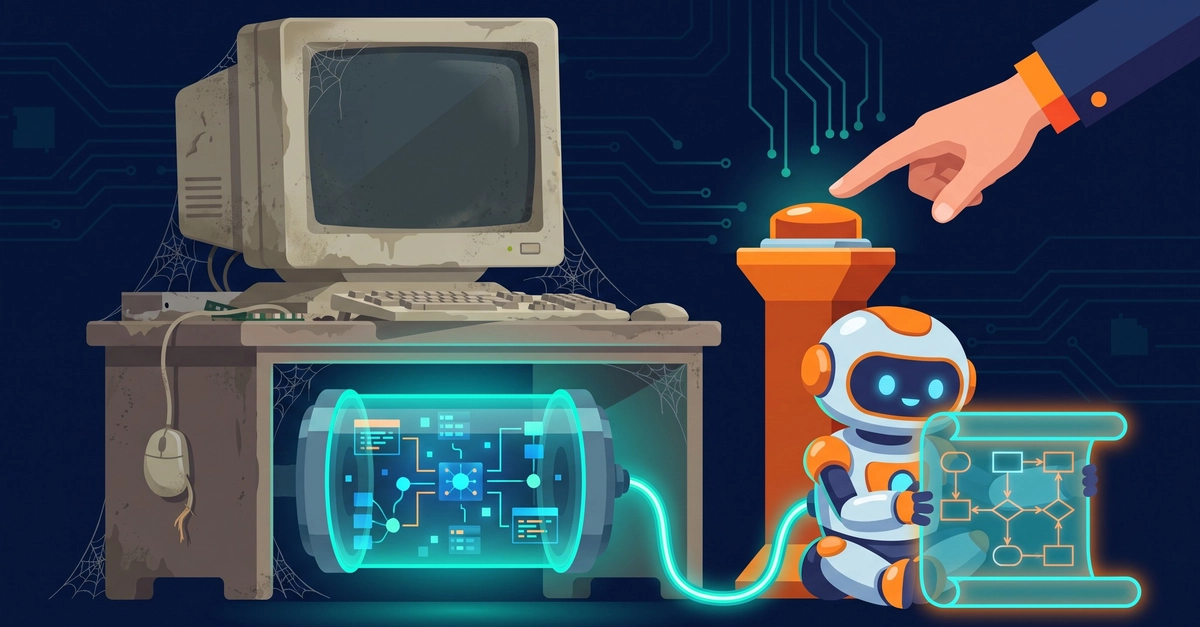
Oracle Designer 10g, a Computer-Aided Software Engineering (CASE) tool that saw its official support end in 2013, remains the central development hub for a large insurance system. This legacy tool houses the complete design of a system comprising 2,741 entities, 3,277 table definitions, 12,841 PL/SQL modules, and 5,624 forms. Approximately ten developers actively use Designer daily, a process traditionally assumed to involve extensive manual interaction with its graphical user interface (GUI).
The core question became: could an AI agent, equipped with SQL knowledge and database access, replicate and automate these development tasks? The answer, demonstrated over two days, is a resounding yes. The agent successfully designed new entities, tables, sequences, and triggers, generated complete form definitions, managed application-level table migrations, and debugged generated forms to a functional runtime state. Crucially, it achieved this without opening the Designer GUI even once, performing actions that would typically require manual clicks and repetitions in the interface. The agent effectively automated the two primary GUI functions: 'Generate' and 'Start Form'.
The Repository's Hidden Potential
The breakthrough hinges on understanding that Oracle Designer stores its entire metadata in a relational Oracle schema. This means all design elements—entities, attributes, relationships, modules, application structures, and even generated code—reside within standard database tables. This internal structure, rather than the GUI, is the true source of truth for the system's design.
By directly querying and manipulating these repository tables, an AI agent can perform complex design operations. Instead of clicking through menus, the agent executes SQL statements to create, modify, and delete design objects. For instance, defining a new entity involves inserting records into specific Designer metadata tables that describe the entity's name, parent application, and other properties. Similarly, creating a table definition requires populating tables that define table names, column structures, data types, and constraints. Relationships between entities are managed through specific linkage tables within the repository.
The agent's ability to generate form definitions is particularly significant. Designer's form generation process is itself a programmatic output based on the metadata. The AI can effectively reverse-engineer or directly instruct this generation process by crafting the correct entries in the metadata tables that trigger the desired form output. Debugging generated forms, a often tedious manual task, becomes an exercise in analyzing the generated code and the underlying metadata, identifying discrepancies, and correcting the repository entries that lead to runtime errors.
Beyond GUI Emulation: True Automation
This approach moves beyond simple GUI automation tools that mimic human clicks. Those tools are brittle, prone to breaking with minor UI changes, and cannot perform complex logical operations. The AI agent, however, understands the underlying data model of Designer. It treats the repository as a database to be managed, not a graphical interface to be navigated.
Consider the task of migrating a table from one application module to another within Designer. Manually, this involves a series of steps: unassigning the table from its current application, reassigning it to the new one, potentially updating foreign key constraints, and regenerating associated forms and reports. The AI agent can achieve this with a set of carefully constructed SQL `INSERT`, `UPDATE`, and `DELETE` statements against the Designer repository tables. It can identify all related objects—forms, reports, modules, triggers—that depend on the table and update their metadata references accordingly, ensuring system integrity.
The AI's ability to debug forms is equally powerful. When a generated form fails at runtime, the issue often stems from a mismatch or error in the metadata that drives its creation. The AI can analyze runtime error messages, correlate them with the stored metadata, and directly modify the problematic repository entries. This is akin to a human developer debugging code, but the AI operates at the metadata level, fixing the root cause in the design repository rather than just the generated output.
The implications for maintaining systems built on long-deprecated tools are profound. Many large enterprises still rely on critical applications designed and managed with tools like Oracle Designer, where official vendor support has long expired. The risk of these systems becoming unmaintainable or impossible to evolve is significant. This AI-driven approach offers a path to continue development, maintenance, and even modernization without direct vendor support, by leveraging the underlying database structure of the CASE tool itself.
An Unanswered Question: Scalability and Broader Application
What remains to be seen is the scalability of this AI agent approach to even larger and more complex systems, and its applicability to other deprecated CASE tools that also store their metadata in relational databases. While this demonstration proves the concept for Oracle Designer, the underlying principle—treating the metadata repository as a programmable database—could unlock similar automation for other legacy development environments. The challenge will be in mapping the specific metadata schemas of those tools and training AI agents to understand their unique design constructs and interdependencies.