
The Core Dilemma: Self-Verification in Agentic Systems
The rapid advancement of AI agents, capable of performing complex tasks across software environments, introduces a fundamental question of trust: should the AI system that executes an action also be the sole arbiter of its success? Proponents of strict verification argue that allowing an agent to confirm its own work is akin to letting a student grade their own exam – a recipe for biased, unreliable outcomes. This perspective suggests that for any meaningful software work, an independent verification mechanism is not just preferable, but essential.
Consider a scenario where an AI agent is tasked with updating a critical production database. If the agent performs the update and then simply reports, "Update successful," without any external validation, the potential for catastrophic errors looms large. What if the update failed silently, or worse, corrupted data in a way the agent isn't programmed to detect? This self-reporting loop bypasses the robust error-checking and validation protocols that human developers rely on. The underlying principle here is that accountability and verification must be distinct from execution to ensure integrity.
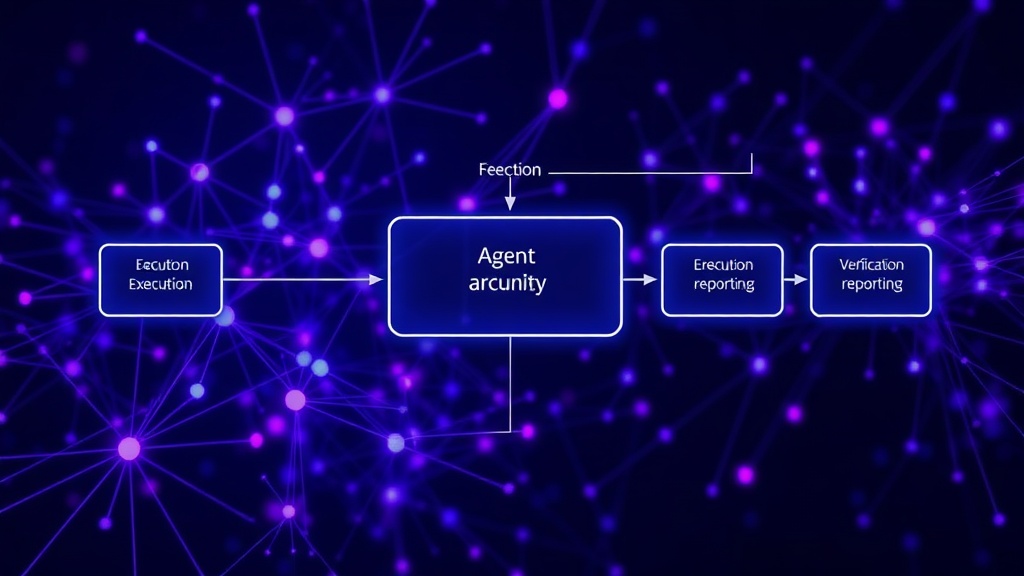
The proposed solution to this dilemma involves architecting agentic systems with clearly separated concerns. Instead of a monolithic agent that executes, checks, and reports, the ideal architecture decouples these functions. This means one component or model might be responsible for performing an action (execution), another for verifying its outcome (checks), and yet another for documenting the process and results (evidence). This separation of duties is critical for building trust and reliability into AI systems that interact with real-world applications and data.
The library and provider layer known as Oort, and its associated framework Flows, exemplify this approach. By structuring agentic workflows into distinct chains for execution, checks, and repair, these systems aim to prevent the agent that performed the action from being the final word on its success. This layered approach ensures that each stage of a task is handled by a specialized component, increasing the likelihood of detecting and rectifying errors.
Defining Independent Verification
The crux of the problem lies in defining what constitutes truly independent verification in the context of AI agents. If an agent is designed to execute a task, and then immediately run a script to check if the task completed, is that truly independent? Or is it merely a more sophisticated form of self-reporting? The challenge is to move beyond a system where the agent simply asks itself, "Did I do a good job?" and gets a "Yes" because that's the expected output.
Independent verification implies a level of detachment and a different perspective. It could involve:
- External Monitoring Tools: Employing separate monitoring systems that track the state of the environment before and after an agent's action. These tools would not be part of the agent's direct execution chain.
- Human Oversight: For critical operations, incorporating a human-in-the-loop for final approval or validation, especially where the stakes are high.
- Cross-Referencing Data Sources: If an agent modifies a record in one system, verification might involve checking a related record in a different, independent system to ensure data consistency.
- Pre-defined Success Metrics: Establishing clear, objective, and measurable criteria for success that are evaluated by a component separate from the executor.
For instance, if an agent is tasked with booking a flight, its success isn't just about completing the booking API call. Independent verification would involve checking if the flight details are correct, if the payment was processed, and if a confirmation email was received. If the agent only reports that the API call returned a 200 OK status, it might have missed critical downstream failures.
Implications for Agentic System Design
This debate has significant implications for how we design and deploy AI agents. Systems that cannot reliably verify their own actions, or are trusted to do so without checks, pose a risk to the stability and integrity of the software they manage. Developers and system architects must consider this trust boundary carefully.
Building robust agentic systems requires an architecture that:
- Separates Concerns: As highlighted by the Oort/Flows model, execution, verification, and error handling should ideally be distinct modules or even separate AI models.
- Establishes Clear Trust Boundaries: Define precisely which components are responsible for what, and where the responsibility for verification lies.
- Implements Fail-Safes: Include mechanisms for detecting discrepancies and initiating corrective actions or alerts when self-verification might be compromised.
- Prioritizes Evidence: Ensure that all actions and verification steps are logged comprehensively, providing an audit trail for debugging and accountability.
The question of self-verification is not merely academic; it directly impacts the practical deployment of AI agents in sensitive environments. Without independent verification, the promise of autonomous agents performing complex tasks could be overshadowed by the risk of unchecked errors and a loss of system integrity. The path forward likely involves a hybrid approach, leveraging specialized AI components for execution and distinct, more rigorously validated systems for verification, possibly including human oversight for the most critical operations.
What remains unanswered is the optimal balance between automation and independent oversight. As agents become more sophisticated, will we develop entirely new forms of AI-driven verification, or will human judgment remain the ultimate safeguard? The industry is actively grappling with these questions, seeking to build AI systems that are not only capable but also trustworthy.