
The Hidden Multiplier: Agent Loops
When the inference bill for your AI agent spikes, the immediate instinct is to blame the model provider. This is a common misdirection. The real culprit, responsible for bills that are often five times higher than expected, is not the per-token cost of the frontier model itself, but the underlying architecture and how agent loops are implemented. This is a critical insight for anyone shipping agentic systems into production.
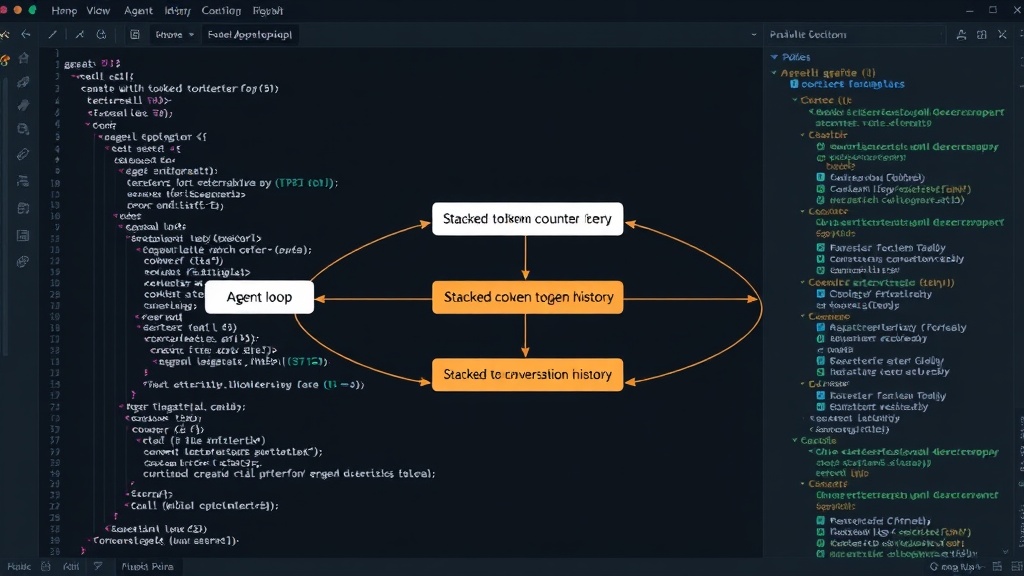
A seemingly simple task that a human might complete in two minutes can translate into dozens of individual calls for an AI agent. Most agent frameworks have a default behavior: they stuff the entire conversation history, including all previous tool calls and their outputs, into every new prompt sent to the model. What you might estimate as a 4K token task can easily balloon into 40 tool calls multiplied by an 8K context window, resulting in a staggering 320K tokens per task. When these calls are billed at frontier model rates, the per-call cost, which appears cheap in isolation, becomes the largest line item on your cloud bill.
The 80/20 of Inference: Tiered Model Usage
The key to controlling these escalating costs lies in understanding that not every step in an agent's workflow requires the most powerful, and therefore most expensive, frontier model. A significant portion of an agent's operations can be handled by less costly, more efficient models.
Consider the typical breakdown of tasks within an agentic system:
- ~80% of agent traffic is for routing, extraction, formatting, classification, and summarization. These are tasks that do not require complex reasoning or the cutting-edge capabilities of a GPT-4 or Claude 3 Opus. A smaller, cheaper model can perform these operations with high accuracy and significantly lower cost.
- ~20% of agent traffic involves complex reasoning, decision-making, or generating novel content. These are the tasks where a frontier model's power is truly necessary and justifies the higher cost.
By strategically deploying different model tiers based on the complexity of the task at hand, you can dramatically reduce the overall token expenditure. This tiered approach treats the agent's workflow as a spectrum of computational needs, rather than a uniform demand for the most advanced AI.
Optimizing Agent Architecture for Cost Efficiency
Beyond model tiering, several architectural adjustments can curb runaway token costs. The primary offender is the naive inclusion of the entire conversation history in every prompt.
Context Window Management
Instead of blindly appending every past interaction, implement intelligent context window management. This involves techniques like:
- Summarization: Periodically summarize older parts of the conversation. The summary, being much shorter than the full transcript, can be included in subsequent prompts, preserving essential context without the token overhead.
- Selective Inclusion: Only include the most relevant past turns in the prompt. This requires a routing or summarization step to identify what information is critical for the current decision.
- Memory Systems: Develop or utilize dedicated memory modules. These systems can store and retrieve specific pieces of information on demand, rather than relying on the LLM to sift through a massive context window for relevant details. Think of it less like a database and more like a very organised friend who happens to remember everything you told them in 2019, but only brings up the relevant bits when asked.
Tool Call Efficiency
The number of tool calls itself is a major driver of token consumption. Each tool call adds tokens for the prompt describing the tool, the arguments passed, and the output received. Optimize this by:
- Batching Tools: Where possible, design tools that can perform multiple related actions in a single call.
- Reducing Redundant Calls: Implement logic to avoid unnecessary tool invocations. If a piece of information has already been retrieved and is still relevant, the agent should be able to access it from its memory rather than fetching it again.
- Prompt Engineering for Tool Use: Refine prompts to be more concise when instructing the model to use tools. Clear, unambiguous instructions can reduce the need for follow-up clarification calls.
The Real Cost Driver: Unmanaged Complexity
The fundamental issue is that agentic systems, by their nature, introduce complexity. This complexity, if not managed architecturally, directly translates into higher token consumption. The temptation is to offload this complexity onto the LLM by giving it more context and expecting it to figure things out. This is an expensive strategy.
A well-architected agent treats the LLM as a powerful reasoning engine, but surrounds it with efficient data management, routing logic, and task-specific tools. The goal is to feed the LLM precisely what it needs for the current step, in the most compact form possible, and to use the right model for the job.
If you're seeing your inference costs soar and are pointing fingers at your model provider, take a hard look at your agent's architecture. The hidden multiplier of unmanaged agent loops and indiscriminate use of frontier models is likely the real reason your token bill is five times too high.