The Genesis: A UI-Centric Vision
On April 7, 2026, the first commit for what would become an agent orchestrator was written. Initially, the concept was straightforward: a single interface to manage multiple projects simultaneously. The primary goal was to provide a centralized hub from which code agent tasks could be initiated, with a visual dashboard displaying the real-time status of each operation. The author, focused on the immediate need for oversight and control, described the problem as "seeing and launching." This early iteration prioritized user interface elements: the width of side panels, tooltips for detailed dates, "in progress" badges for each stage, and color-coding for different pipeline phases.
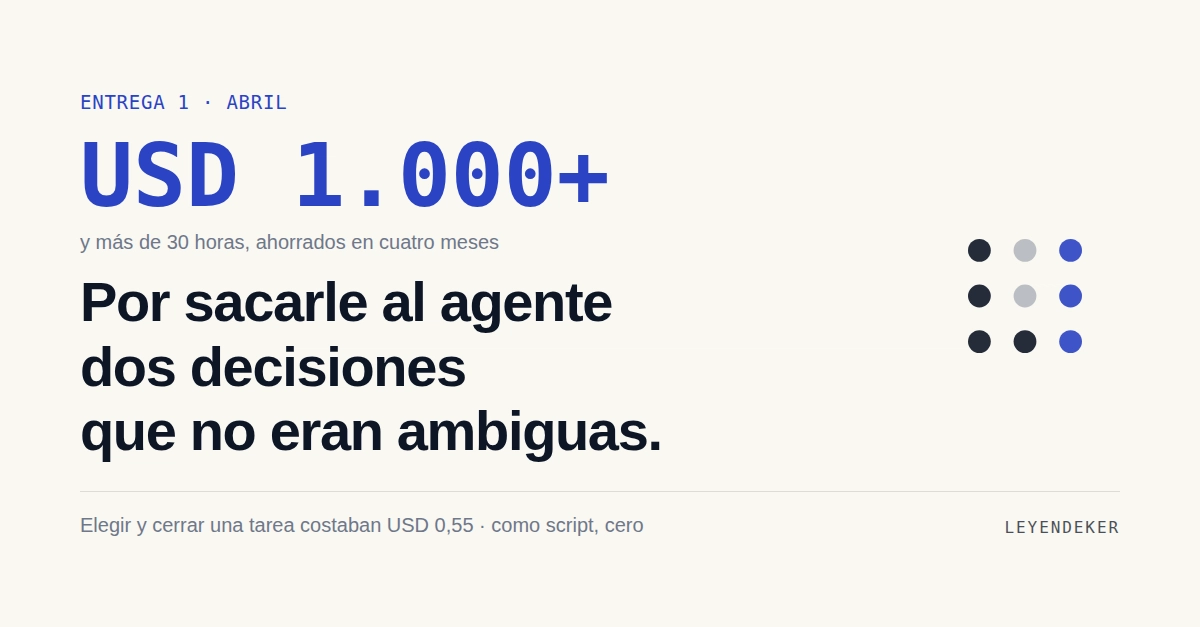
Four months and over two thousand completed tasks later, this initial assessment proved to be a significant underestimation of the system's true value. The first indication that the project's purpose extended beyond mere visibility arrived within three days of the initial commit. This early pivot point suggests that the underlying challenges being addressed were deeper than just task management.
Unforeseen Efficiency: The Agent's New Role
The evolution from a task-launching UI to a cost-saving engine was not immediate but rather a dawning realization. As the system processed thousands of tasks, it became apparent that its most substantial impact wasn't in how easily users could *see* and *launch* tasks, but in how it fundamentally altered the *workload* of human agents. The system began to automate decision-making processes that previously required human oversight, effectively reducing the need for an agent to manually intervene, re-evaluate, or re-initiate tasks that encountered minor deviations or required status updates.
Consider a scenario where an agent task involves data extraction and subsequent analysis. In a traditional setup, if the data format slightly changed or an intermediate step failed, a human agent would need to be alerted, diagnose the issue, and potentially restart the process with updated parameters. The orchestrator, however, began to incorporate logic that could detect these common deviations. Instead of flagging an error for human intervention, it could automatically adjust parameters, retry with a modified approach, or even switch to a pre-defined fallback procedure. This ability to self-correct and adapt is where the significant savings emerged.
Quantifying the Savings: Beyond the Interface
The initial focus on interface polish, while important for usability, masked the system's emerging capability to handle complex workflows autonomously. The 'savings' weren't just about reducing the number of agents required, but about optimizing the time and cognitive load of existing agents. Instead of spending hours monitoring queues, triaging minor errors, and manually triggering subsequent steps, agents could focus on higher-value activities: developing new agent capabilities, designing more complex workflows, or addressing the truly novel and challenging problems that the orchestrator could not yet handle.
The system's design allowed for a layered approach to agent management. At the base level, simple tasks could be executed with minimal oversight. As complexity increased, the orchestrator could coordinate multiple agents, passing data and control between them. Crucially, it learned from these interactions. When a specific type of error occurred, the orchestrator could be updated with a new rule or a refined algorithm to handle similar situations in the future. This continuous learning loop meant that the system became progressively more autonomous, and the need for human intervention diminished over time.
The True Value Proposition: Agent Augmentation, Not Just Orchestration
The core insight is that the system's greatest economic benefit stemmed from its ability to augment the capabilities of human agents, rather than simply managing them. By offloading repetitive, decision-heavy, or monitoring-intensive tasks, the orchestrator freed up human capital for more strategic work. This is a crucial distinction. It wasn't about replacing agents, but about making them exponentially more effective. The system acted as a force multiplier, allowing a smaller team to manage a significantly larger workload or to tackle more ambitious projects.
The author reflects that if asked today about the problem being solved, the answer would be fundamentally different. It's not just about 'seeing and launching.' It's about intelligent automation that reduces operational friction and elevates the role of human agents. The system evolved from a dashboard into an intelligent layer that proactively manages exceptions, optimizes resource allocation, and learns from its operational history. This shift in perspective highlights a common pattern in the development of sophisticated AI systems: the most impactful features are often those that emerge organically from solving core functional problems, rather than those that are initially envisioned.
Looking Ahead: The Evolving Landscape of Agent Systems
The success of this agent orchestrator points to a broader trend in AI development. As AI agents become more sophisticated and capable, the need for robust management and coordination systems will only grow. These systems will need to go beyond simple task queues and provide intelligent oversight, automated exception handling, and continuous learning capabilities. The challenge for developers and founders in this space will be to identify where the greatest value lies – not just in the agents themselves, but in the intelligent infrastructure that powers them.
The lesson learned here is that the most significant cost savings and efficiency gains often come from reducing the need for human intervention in predictable, albeit complex, operational tasks. The initial focus on a user-friendly interface was a necessary step, but the true breakthrough came when the system demonstrated its capacity to autonomously manage and resolve issues that would have previously required significant human agent time. This shift from a passive monitoring tool to an active, intelligent agent manager defines the system's ultimate value proposition.