The Illusion of Granular Security
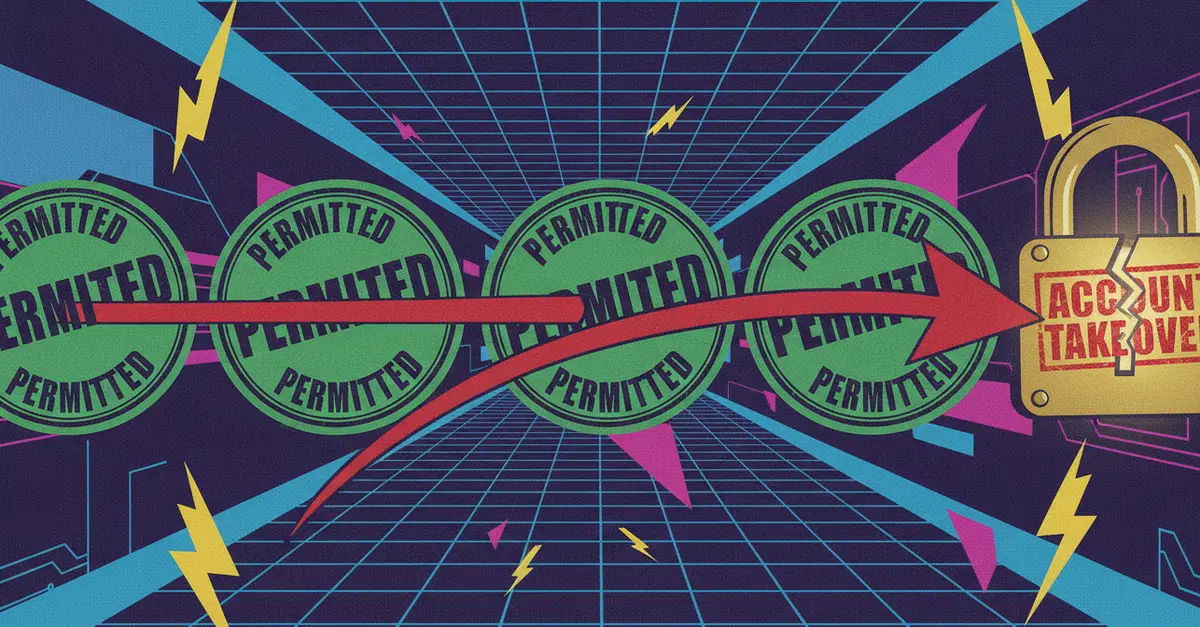
Most security systems rely on granular permission checks. Each API call, each action, is evaluated independently. If a user has permission to perform action A, and then permission to perform action B, the system assumes the sequence A followed by B is safe. This assumption is fundamentally flawed, as demonstrated by a new, runnable proof-of-concept (PoC) from developer Kenielzep97.
The PoC, available on GitHub, targets a common security failure class dubbed CLAIM-30. This class of attack exploits the fact that while individual permission checks might pass, the composition of those allowed actions can lead to a complete account takeover. The surprising detail here is not the exploit itself, but how it circumvents what many teams consider robust security: Role-Based Access Control (RBAC), scoped tokens, per-call permission checks, and rate limiting.
The attack works by chaining together a series of seemingly innocuous API calls, each of which is individually authorized. The system, focused on the validity of each single step, fails to recognize the emergent threat when these steps are executed in a specific sequence. This is akin to giving a user a key to the front door, a key to the office, and a key to the filing cabinet, without realizing that together, these keys unlock a vault.
What Most Teams Ship (And What It Misses)
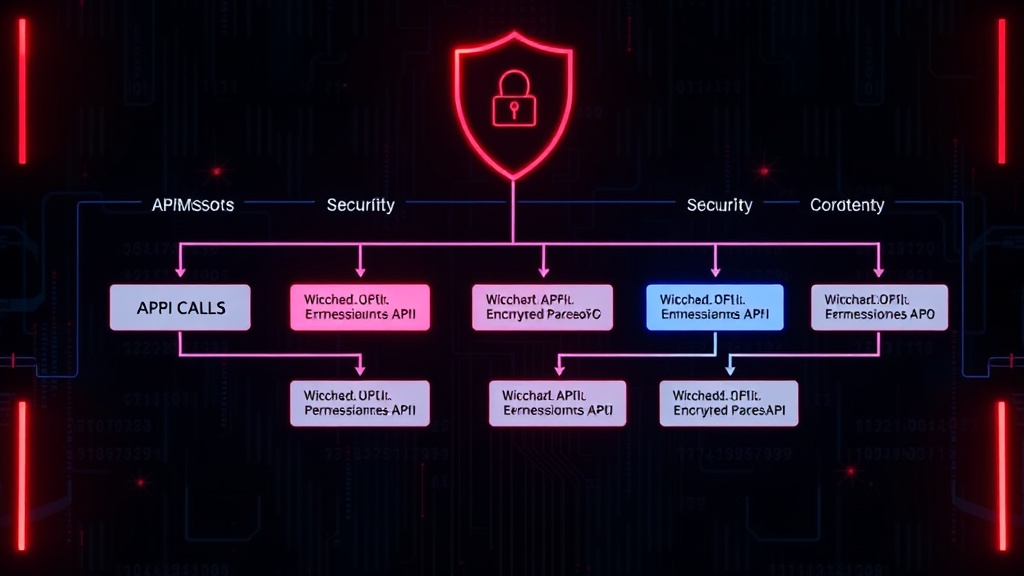
The baseline security measures commonly implemented by development teams include:
- Role-Based Access Control (RBAC): Assigning permissions based on user roles.
- Scoped Tokens: Tokens that grant access only to specific resources or operations.
- Per-Call Permission Checks: Verifying permissions for every single API request.
- Rate Limiting: Preventing abuse by limiting the number of requests within a time frame.
While these measures are essential and form the bedrock of many authorization systems, they are insufficient when viewed in isolation. The PoC shows that an agent, when granted permission for a sequence of operations, can effectively bypass the intended security boundaries. The attack doesn't require any complex model calls, network access, or extensive installation – just a standard Python 3 environment and about ten seconds to execute.
The core of the vulnerability lies in the lack of contextual awareness within the authorization system. It treats each permission check as an atomic operation, oblivious to the potential for malicious composition. The PoC provides a replayable receipt, allowing security teams to verify the attack and its implications on their own systems.
The Attack in Action: A Runnable Proof-of-Concept
To run the proof-of-concept, users can clone the repository from GitHub and execute a simple Python script:
git clone https://github.com/keniel13-ui/sequence-attack-repro
cd sequence-attack-repro && python3 repro.py
The script is designed to be lightweight, relying only on standard library modules, thus eliminating installation hurdles and network dependencies. This makes it a practical tool for security researchers and developers to test their own systems without introducing external complexities.
The implications are significant. If your system relies solely on individual permission checks for API calls, it is potentially vulnerable to this type of sequential attack. The agent, by executing a carefully crafted sequence, can achieve actions that would be outright denied if requested in a single, monolithic call. This highlights a critical gap in authorization logic: the failure to evaluate the state transitions induced by a sequence of operations.
Broader Implications for Authorization Systems
This demonstration forces a re-evaluation of how authorization is implemented, particularly in complex microservice architectures and API-driven applications. The security community has long debated the merits of different authorization models, but the CLAIM-30 class of attack underscores the need for systems that understand the context and cumulative effect of operations.
Consider a financial application. A user might have permission to view account balances, initiate a transfer, and approve a transaction. Individually, these are standard operations. But if an agent can chain them together – view balance, initiate a large transfer, then approve it – without the system flagging the suspicious sequence, the account is compromised. The PoC provides a concrete, albeit simplified, example of this exact scenario.
What nobody has addressed yet is the scalability of implementing state-aware authorization. Building systems that can effectively track and validate the cumulative impact of sequences of API calls across distributed services is a non-trivial engineering challenge. It requires a shift from stateless, per-request validation to a more stateful, session-aware approach, which can introduce significant complexity and performance overhead.
For developers and security professionals, this means moving beyond simple RBAC and per-call checks. It necessitates building authorization logic that considers the intended outcome of an operation sequence. This could involve implementing more sophisticated policy engines, using workflow-aware authorization frameworks, or employing anomaly detection to flag unusual sequences of otherwise permitted actions. If you manage an API gateway or an authentication service, you should be looking at how to embed context and state into your authorization decisions.