Understanding the Core Differences
When distributing React Native iOS builds for testing on real devices without going through the full App Store review process, developers typically face two primary options: Apple's official TestFlight or an Ad-Hoc distribution method, often facilitated by tools like Expo's EAS Preview. While both achieve the goal of getting an app into the hands of testers, their underlying mechanisms, workflows, and management overhead are distinct, impacting everything from initial setup to ongoing maintenance.
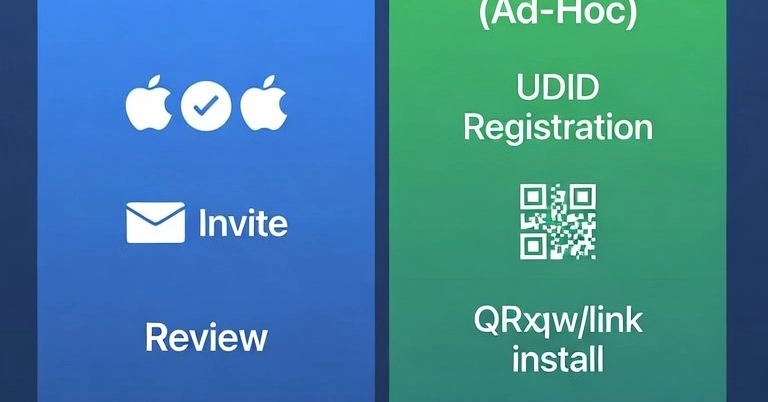
TestFlight leverages Apple's established infrastructure. The process begins with uploading a build to App Store Connect. This can be streamlined with commands like npx testflight. Once uploaded, Apple processes the build, which may include a brief review. Testers then install the TestFlight app from the App Store and accept an invitation, either via email or a public link. A key advantage here is that testers' device UDIDs (Unique Device Identifiers) do not need to be manually collected or registered. Apple handles device registration implicitly, simplifying the onboarding for testers.
In contrast, Ad-Hoc provisioning requires explicit device registration. With Expo EAS Preview, for instance, each tester's device UDID must be registered with your Apple Developer account before the build is created. This registration can be a manual process, involving commands like eas device:create and eas device:list, or it can be facilitated by having testers scan a QR code that installs a temporary provisioning profile. Once devices are linked to your provisioning profile, you can generate and distribute the build. This method offers granular control over which specific devices can run the app but introduces significant administrative overhead, especially for larger testing groups.
Workflow Comparison: Developer Experience
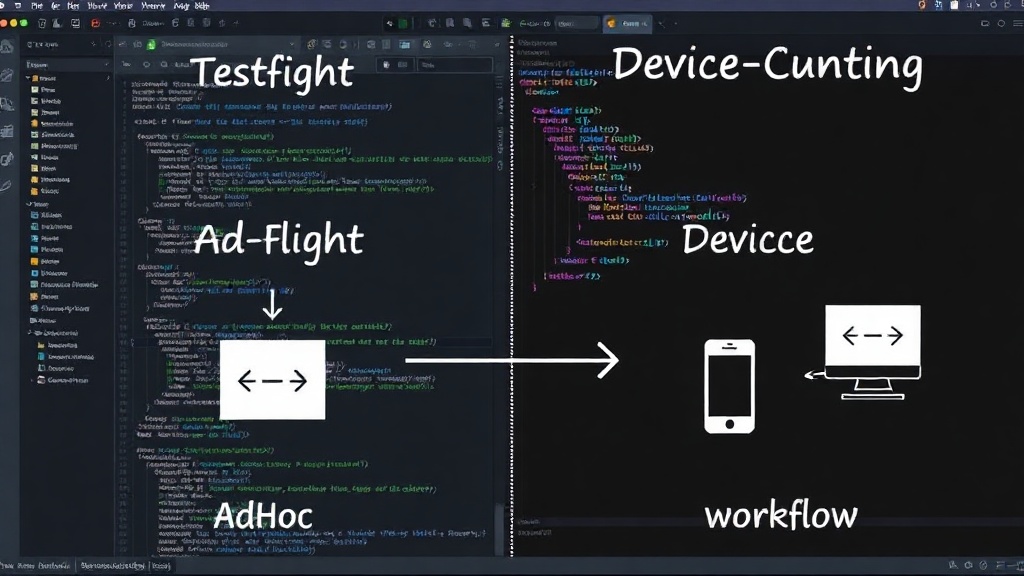
The developer experience diverges significantly between the two methods. TestFlight, being Apple's native solution, often feels more integrated into the iOS development ecosystem. The upload process, while requiring a build to be generated, is relatively straightforward. Developers can manage builds, select internal and external testers, and monitor download statistics directly within App Store Connect. The absence of UDID management means developers don't need to chase testers for their device identifiers, a common pain point in Ad-Hoc distribution.
Expo EAS Preview, when used for Ad-Hoc distribution, offers a more command-line-centric approach. The requirement to pre-register devices means developers must have a system in place to collect and manage these UDIDs. This can be particularly challenging if testers are not technically savvy or if the testing group is dynamic. While EAS simplifies the build and distribution process itself, the preceding step of device management adds a layer of complexity that TestFlight bypasses. For teams already heavily invested in the Expo ecosystem, EAS Preview offers a cohesive solution, but for those not using Expo, integrating Ad-Hoc distribution might involve more custom scripting and manual intervention.
Workflow Comparison: Tester Experience
For testers, the experience is equally varied. TestFlight provides a familiar and generally seamless onboarding process. Testers install the TestFlight app once, and then simply accept invites to download new builds. They receive notifications for updates and can easily switch between different app versions if needed. The process is largely automated by Apple, requiring minimal technical input from the tester's end. This makes it ideal for user acceptance testing (UAT) with non-technical stakeholders.
Ad-Hoc distribution, on the other hand, can be more cumbersome for testers. They might need to install a provisioning profile first, which can be a multi-step process involving scanning QR codes or clicking links and granting permissions. After the profile is installed, they can then install the app. If a tester's device is not registered, they cannot install the build at all. This process can be confusing for less technical users and requires testers to actively participate in the registration process. While it offers stricter control over who can install the app, it comes at the cost of a more involved user experience.
Provisioning Profiles and Certificates: The Underpinning Complexity
At the heart of Ad-Hoc distribution lies the challenge of provisioning profiles and certificates. For Ad-Hoc, the app is signed with a distribution certificate and linked to a specific provisioning profile that enumerates all allowed UDIDs. This profile must be regenerated and the app re-signed every time a new device is added or an old one is removed. This process is tied to the developer's Apple Developer Program membership, which has an annual fee. The expiry of certificates and profiles is another critical factor; a forgotten renewal can halt all testing distribution until rectified.
TestFlight sidesteps much of this complexity for the end-user and even for the developer managing testers. While developers still need an active Apple Developer Program membership to create and upload builds, the provisioning for testers is managed by Apple. The app is signed with a distribution certificate, but the provisioning profile used for TestFlight distribution is a generic one that allows installation via the TestFlight app. This abstracts away the UDID management and profile creation for specific tester devices, making it a more scalable solution for larger teams or external beta programs where detailed device tracking isn't the primary concern.
When to Choose Which
The choice between TestFlight and Ad-Hoc distribution for React Native iOS builds hinges on project needs and team capabilities. TestFlight is generally the preferred method for most beta testing scenarios, especially when involving external testers or when a smooth, user-friendly experience is paramount. Its integration with App Store Connect, automatic UDID handling, and familiar interface for testers make it efficient for broad testing campaigns. It's also the mandatory path for any app intended for public release on the App Store, as it uses the same distribution certificates and provisioning profiles.
Ad-Hoc distribution, while more administratively intensive, offers superior control. It is useful in scenarios where only a highly specific, known set of devices should be able to run the build. This might include internal testing with a fixed set of company-issued devices, or for very specific hardware testing requirements. If a team has a robust system for UDID management and is comfortable with the provisioning complexities, it can be a viable option. However, the manual effort involved in managing UDIDs and profiles often outweighs its benefits for typical app testing unless there's a strict security or device-specific requirement.
The surprising detail here is not the cost difference, as both require an Apple Developer Program membership, but the fundamental difference in administrative burden. TestFlight outsources the device management complexity to Apple, whereas Ad-Hoc places it squarely on the developer.
The Future of Mobile Testing Distribution
As mobile development platforms evolve, tools continue to abstract away some of the complexities of mobile distribution. For React Native, both Expo's EAS and other CI/CD platforms aim to simplify the build and upload process. However, the core distinction between Apple's managed TestFlight and the manual UDID-based Ad-Hoc provisioning remains. Developers must understand these underlying differences to choose the workflow that best suits their team's size, technical proficiency, and testing objectives. For most, TestFlight will remain the default, but Ad-Hoc offers a niche, albeit more complex, alternative for granular control.