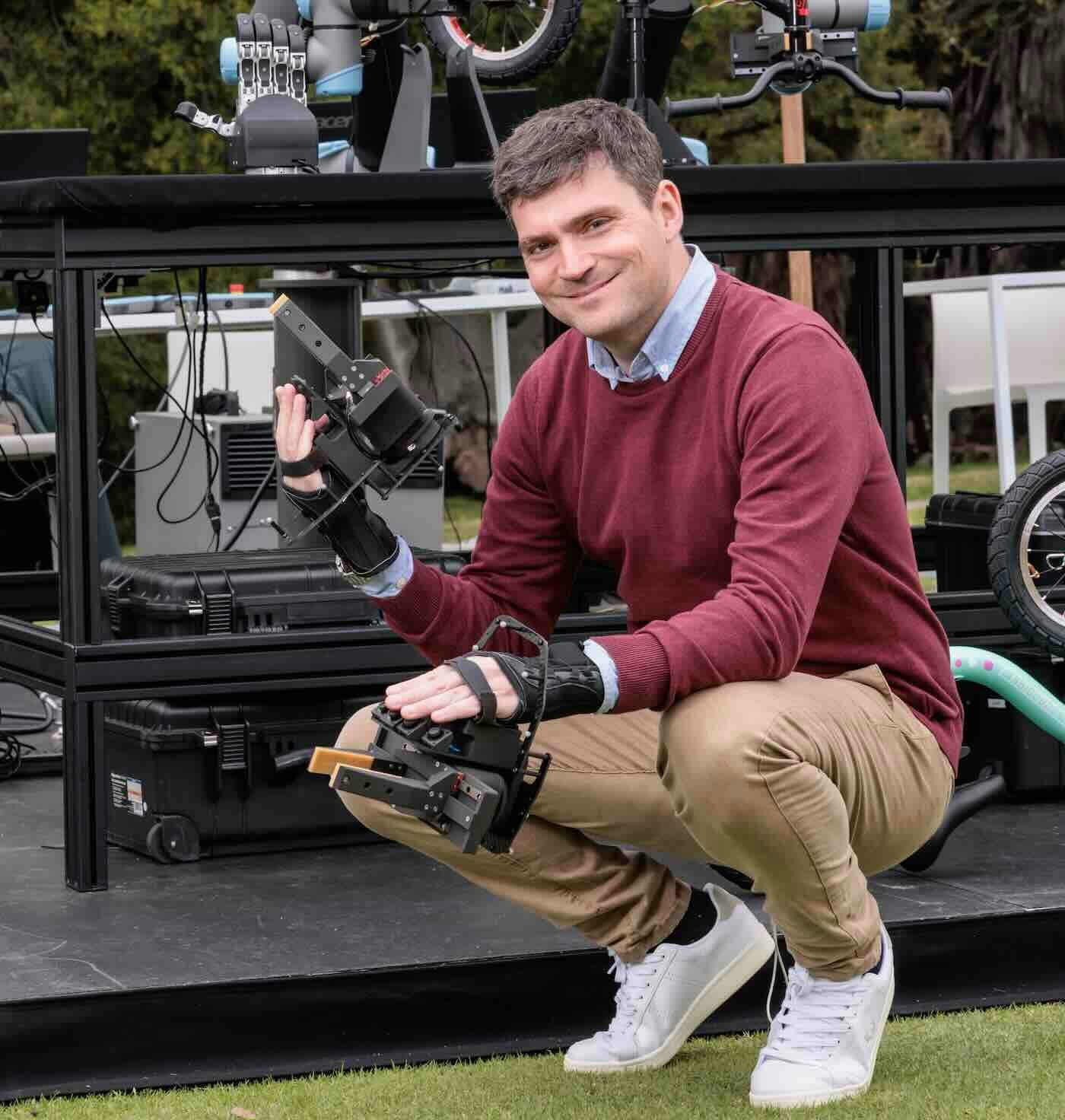
Acumino's Seed Round Signals Growth in Industrial Robotics Software
Robotics startup Acumino has announced a $11.7 million seed funding round, a significant capital injection aimed at scaling its deployments with industrial customers. The company, which spun out of the Max Planck Institute for Intelligent Systems, saw participation from prominent investors including Atlantic Labs, Point Nine Capital, UVM Ventures, Pentech, and Seedcamp. Founded in 2021, Acumino focuses on developing AI-powered software for industrial robots, aiming to make them more adaptable and efficient in complex manufacturing environments.
The significance of this funding round is amplified by Acumino's prior selection for DeepMind's robotics accelerator program. This program, which ran for 8 weeks in late 2023, is highly selective, focusing on startups with promising AI and robotics innovations. Acumino's inclusion suggests a strong validation of their technology and approach from one of the world's leading AI research labs.

The Problem: Rigid Robotics in a Dynamic World
Traditional industrial robotics, while highly effective for repetitive tasks in predictable environments, often struggle with the increasing demand for flexibility and adaptability in modern manufacturing. Robots are typically programmed for very specific tasks and environments. When a new product is introduced, or the production line layout changes, significant reprogramming and recalibration are required. This can be a costly and time-consuming process, especially for small and medium-sized enterprises (SMEs) that may lack extensive in-house robotics expertise.
Acumino's founders, including CEO Julian Ritter, identified this gap. They observed that while AI and machine learning have made strides in many fields, their application in robust, real-world industrial robotics deployments was still nascent. The challenge lies not just in developing sophisticated AI algorithms but in integrating them seamlessly into existing industrial workflows, ensuring reliability, safety, and ease of use. Ritter notes, “The whole point is to make robots more adaptable. AI has made big strides in many fields, but for industrial robots, it’s still early days, particularly for the more complex and unstructured tasks.”
Acumino's Solution: AI for Enhanced Robot Adaptability
Acumino's software platform is designed to address these limitations. Instead of hardcoding every movement and contingency, their system uses AI to enable robots to learn, adapt, and make decisions in real-time. This approach allows robots to handle variations in product positioning, unexpected obstacles, and changes in the production environment without requiring extensive manual reprogramming.
The system operates on a principle of learning-based control. Think of it less like a meticulously choreographed dance routine where every step is pre-determined, and more like a skilled improvisational dancer who can react to the music and the space around them. Acumino's software allows robots to perceive their environment through sensors, process that information using AI models, and then execute actions that are optimal for the current situation. This is particularly valuable for tasks like bin picking, where objects are randomly placed in a container, or for assembly processes that involve minor variations in part placement.
The company highlights that their approach doesn't necessarily replace existing robotic hardware but enhances its capabilities. By providing a more intelligent software layer, Acumino aims to unlock new use cases and improve the efficiency of existing robot installations. They are working on enabling robots to grasp a wider variety of objects, adapt to different lighting conditions, and operate safely alongside human workers.

Scaling Deployments and Future Ambitions
With the $11.7 million in seed funding, Acumino plans to significantly scale its operations. This includes expanding its engineering team to further develop its AI capabilities and growing its sales and support infrastructure to manage an increasing number of industrial deployments. The company is targeting a substantial increase in the number of robots running their software, aiming to move from a few pilot projects to a broader market presence.
Acumino's current focus is on industrial customers, where the need for efficiency and adaptability is paramount. The company reports that they are already in discussions for deployments that will involve hundreds of robots. Their goal is to equip 100 industrial robot arms with their technology within the next 18 months, a significant leap from their current pilot programs. This ambitious target underscores the confidence Acumino has in its product and the market's readiness for advanced robotics software.
The selection for the DeepMind accelerator provided Acumino with valuable mentorship and access to expertise, further refining their product and go-to-market strategy. This validation, combined with the substantial seed funding, positions Acumino as a company to watch in the rapidly evolving landscape of industrial automation. Their success could pave the way for more AI-native software solutions that enhance the capabilities of existing robotic hardware, driving further innovation across manufacturing sectors.