The Bottleneck of Human Annotation
Machine learning models, especially in areas like computer vision and natural language processing, often require vast amounts of labeled data to achieve high performance. Traditionally, this labeling process has been a manual, labor-intensive, and consequently expensive undertaking. Subject matter experts spend countless hours annotating images, transcribing audio, or categorizing text. This human annotation bottleneck not only drives up project costs but also significantly slows down the development and deployment cycles of ML solutions. In a world where human time is a precious commodity, relying solely on exhaustive manual labeling is becoming increasingly untenable for many organizations.
The core problem is that not all data points are equally informative for a model's learning process. Some data might be redundant, easily classifiable by the model as it is, or already well-represented in the training set. Conversely, other data points might represent edge cases, ambiguous scenarios, or entirely new patterns that the model has not yet grasped. It is precisely these challenging, informative data points that offer the most value for human review and correction. The inefficiency lies in treating all data equally during the annotation phase.
Introducing Active Learning
Active learning offers a paradigm shift by enabling ML models to intelligently select the data they need the most. Instead of passively receiving a randomly sampled or exhaustively annotated dataset, an active learning system queries a human annotator for labels on specific, strategically chosen data points. The model, being an active participant in its own training, identifies the unlabeled instances that, if labeled, would most effectively improve its performance or reduce its uncertainty. This is akin to a student asking the teacher for help on the specific problems they find most confusing, rather than re-reading the entire textbook.
The process typically involves an iterative loop. A model is initially trained on a small, labeled seed dataset. Then, it is used to predict labels for a larger pool of unlabeled data. The active learning strategy comes into play by evaluating these predictions and selecting a subset of the unlabeled data to present to the human annotator. Common selection strategies include:
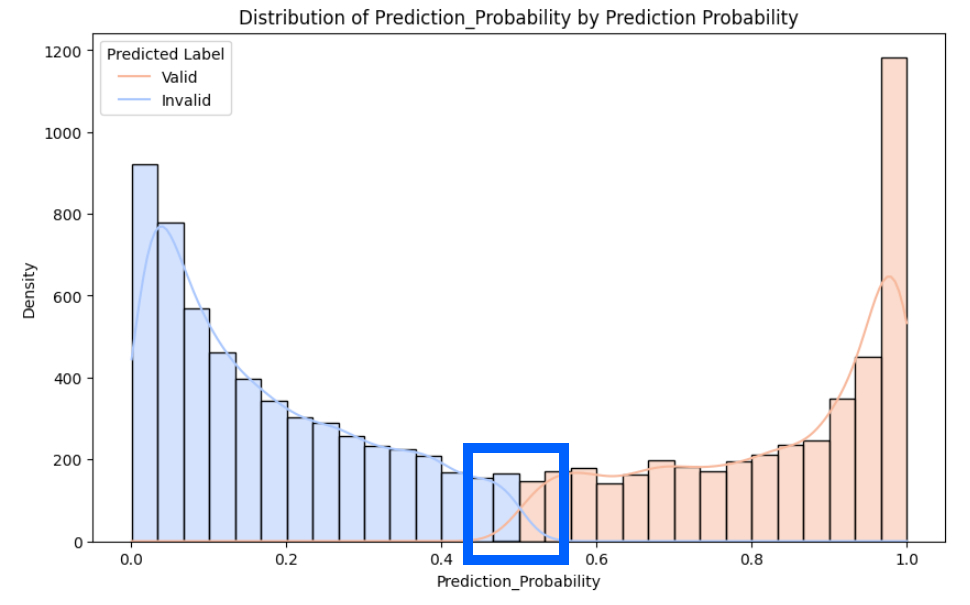
- Uncertainty Sampling: The model selects data points where its prediction confidence is lowest. For classification, this might mean picking instances where the predicted probabilities for the top two classes are very close.
- Query-by-Committee: Multiple models (or different versions of the same model) are trained. Data points on which these models disagree the most are selected for annotation.
- Expected Model Change: The model selects data that is expected to cause the largest change in its parameters if its label were known.
- Expected Error Reduction: The model selects data that is expected to minimize the model's overall error the most.
Once these selected data points are labeled by humans, they are added to the training set, and the model is retrained. This cycle repeats, with the model progressively learning from the most informative data, thereby reducing the total amount of data that needs manual annotation compared to traditional supervised learning where all data is labeled upfront.

Strategies for Effective Annotation Reduction
The effectiveness of active learning hinges on the chosen acquisition function – the strategy used to select which data points to query. While uncertainty sampling is intuitive and widely used, more sophisticated methods can yield even greater efficiency. For instance, in image segmentation tasks, selecting pixels or regions with high gradient variance or those near decision boundaries can be more effective than simply picking whole images where the model is uncertain about the overall class.
Furthermore, the strategy can be adapted based on the type of model and the specific task. For regression tasks, selecting data points with high predicted variance or those that lie in regions of the input space where the model has little training data can be beneficial. The key is to continuously evaluate the performance gains achieved by annotating queried samples and to adapt the selection strategy as the model improves. It is not a set-and-forget process; it requires monitoring and iterative refinement of the querying mechanism itself.
The Business Case: Cost and Time Savings
The primary driver for adopting active learning is the substantial reduction in annotation costs and development time. By focusing human effort only on the most critical data instances, organizations can:
- Drastically Cut Annotation Expenses: If a model can learn effectively from 20% of the data that would have been exhaustively labeled, the cost savings are immediate and significant, particularly for projects requiring millions of annotations.
- Accelerate Time-to-Market: Faster data labeling means faster model iteration, quicker deployment, and a reduced overall project timeline. This agility is crucial in competitive markets.
- Improve Model Robustness: By specifically targeting ambiguous and edge cases, active learning can inadvertently lead to models that are more robust and generalize better to real-world, varied data.
- Optimize Annotator Resources: Human annotators can be utilized more effectively, focusing on tasks that truly require human intelligence and judgment, rather than repetitive, low-value labeling.
Consider a scenario where a company needs to build a sentiment analysis model for customer reviews. Exhaustively labeling 100,000 reviews might cost tens of thousands of dollars. With an active learning approach, the model might identify the 15,000 most informative reviews to label, potentially achieving similar or even better performance at a fraction of the cost and time. This makes advanced ML capabilities more accessible to smaller teams and startups.
Challenges and Considerations
Despite its advantages, active learning is not a silver bullet. Several challenges need to be addressed:
- Initial Seed Data: A sufficiently good initial labeled dataset is required to bootstrap the process. If the seed data is too small or unrepresentative, the model may struggle to select informative samples initially.
- Cold Start Problem: In the very early stages, the model might not be capable enough to provide meaningful guidance on which data to label.
- Annotation Tooling: Efficient integration with annotation platforms is necessary to streamline the workflow between model querying and human feedback.
- Selection Bias: Over-reliance on a single active learning strategy might inadvertently bias the training data towards certain types of examples, potentially neglecting others.
- Computational Overhead: The process of evaluating unlabeled data and selecting the most informative instances adds computational overhead, which needs to be managed.
The surprising detail here is not the complexity of the algorithms, but how fundamentally it shifts the relationship between the model and its human supervisor. Instead of the human being a passive provider of labels, they become an active partner in the model's learning journey, guided by the model's own expressed needs.
The Future of Efficient ML Development
Active learning represents a critical step towards more efficient and cost-effective machine learning development. As models become more sophisticated and the demand for AI solutions continues to grow, the ability to intelligently manage and leverage human annotation becomes paramount. By empowering models to guide the data labeling process, active learning ensures that human expertise is applied where it matters most, paving the way for faster innovation and broader adoption of AI technologies across industries.