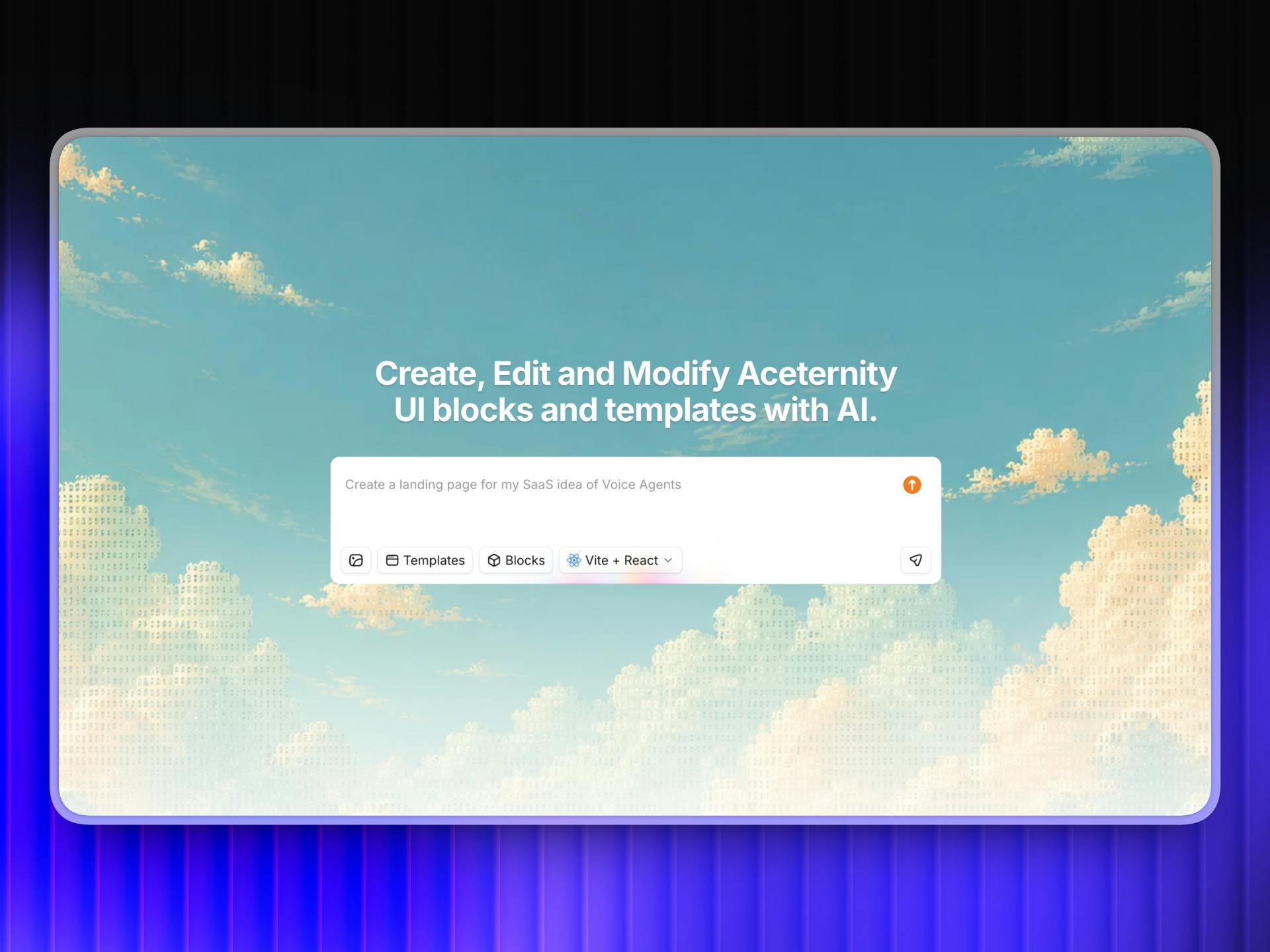
Acebuilder: A New Approach to Landing Page Development
The landscape of web development tools is perpetually crowded, yet a persistent need exists for solutions that simplify complex tasks without sacrificing design quality or developer control. Acebuilder emerges in this space, positioning itself as a tool designed to expedite the creation of landing pages. Its core promise lies in its integration with Aceternity UI, a popular library of Tailwind CSS components known for its modern aesthetics and developer-friendly structure.
Landing pages are critical touchpoints for any business, serving as the first impression for potential customers and the primary conversion point for marketing campaigns. Historically, building effective landing pages has involved a trade-off: either using clunky, template-based website builders that limit customization and often result in generic designs, or engaging in custom development that is time-consuming and resource-intensive. Acebuilder seeks to bridge this gap by providing a more integrated and efficient workflow.
At its heart, Acebuilder leverages the pre-built, high-quality components offered by Aceternity UI. This means developers and designers can bypass the often tedious process of styling individual elements from scratch. Instead, they can assemble pages using a curated set of components that are already designed to be visually appealing and responsive. This approach is akin to a chef using expertly prepared, high-quality ingredients to create a gourmet meal, rather than starting with raw produce and having to prepare each element from its basic form. The focus shifts from foundational styling to the strategic arrangement and customization of these polished building blocks.

Key Features and Design Philosophy
While detailed technical specifications are sparse, the primary value proposition of Acebuilder revolves around its direct integration with Aceternity UI. This suggests a toolkit that allows users to:
- Rapid Prototyping: Quickly assemble landing page mockups and functional prototypes by dragging and dropping or selecting pre-designed sections.
- Component-Based Assembly: Utilize a library of Aceternity UI components, which typically include features like hero sections, testimonial blocks, call-to-action buttons, pricing tables, and contact forms.
- Tailwind CSS Foundation: Benefit from the underlying Tailwind CSS framework, allowing for further customization and integration into existing Tailwind-based projects. This offers a degree of flexibility often missing in more proprietary website builders.
- Streamlined Workflow: Reduce the time spent on repetitive styling tasks, enabling a focus on content, user experience, and conversion optimization.
The design philosophy appears to prioritize efficiency and aesthetic quality. By abstracting away much of the low-level CSS work, Acebuilder aims to empower a broader range of users, from developers looking to move faster to designers who want more control over the final output without deep coding knowledge. The reliance on Aceternity UI implies a commitment to modern design trends, ensuring that landing pages built with Acebuilder will look contemporary and professional.
The Market Context and Potential Impact
The market for website builders and landing page tools is mature, featuring established players like Unbounce, Leadpages, Instapage, and more recently, tools integrated into broader platforms like Webflow and even Figma plugins. Acebuilder enters this arena by carving out a specific niche: developers and designers who appreciate the power and flexibility of Tailwind CSS and Aceternity UI but desire a more integrated, front-end focused tool for landing page creation. This is not a no-code solution for the absolute beginner, but rather a productivity enhancer for those already familiar with the web development ecosystem.
Its success will likely depend on how well it can balance ease of use with the flexibility demanded by its target audience. If Acebuilder can provide a seamless experience for integrating custom code or extending component functionality, it could become a valuable asset. The potential impact is significant for agencies and in-house marketing teams who frequently need to launch and iterate on landing pages. By reducing development time, Acebuilder could directly translate to faster campaign launches and more agile marketing strategies.
However, a key question remains: how deeply does Acebuilder integrate with Aceternity UI, and what level of customization is truly available beyond selecting pre-defined components? If the tool offers limited scope for advanced modifications or integrations, its appeal to experienced developers might wane. Conversely, if it provides hooks for custom JavaScript, A/B testing integrations, or advanced form handling, it could offer a compelling alternative to existing solutions.
Looking Ahead
Acebuilder’s launch on Product Hunt signals its entry into a competitive market. Its focus on leveraging a popular UI component library like Aceternity UI is a smart strategy, tapping into an existing community and design language. For developers and designers already invested in the Tailwind CSS ecosystem, Acebuilder presents an intriguing proposition for accelerating their workflow. The challenge will be to demonstrate clear advantages in speed, flexibility, and integration capabilities to stand out from the crowded field of web development tools.