The Impersonation Test
A recent experiment has exposed a significant vulnerability in how AI models and web services identify themselves. The developer, who runs a personal website, successfully tricked their own analytics into logging 984 requests as originating from Perplexity AI. The catch? None of these requests could actually be verified as coming from the popular AI search engine. This incident underscores a broader problem: the ease with which automated systems can spoof their identity, and the lack of robust mechanisms to counter such deception.
The test was remarkably simple. Using a single line of `curl` and copying the user agent string directly from Anthropic's documentation, the developer instructed their script to identify as 'ClaudeBot'. The initial results were immediate and alarming. Three requests to a single article page were logged, and the dashboard reported an increase from 1,698 to 1,701 requests, with the last seen time at 09:22. Crucially, the logs indicated these requests originated from a laptop in Japan, using standard home broadband. The IP address associated with these requests did not appear on any known crawler lists, suggesting a deliberate attempt to mimic legitimate traffic without actually being the purported bot.
The developer emphasized that their instrument (the website's logging and analytics) was not broken. It performed exactly as designed: recording the incoming traffic and the identity the traffic claimed. The user agent string, in this context, functions as a self-declared identity – a claim that is easily fabricated. This test revealed that the vast majority of measured traffic was merely a claim, with no verifiable basis. The honest answer, the developer found, was worse than anticipated, partly due to oversights on their own part in how they had configured their measurement systems.
The Missing Verification Layer
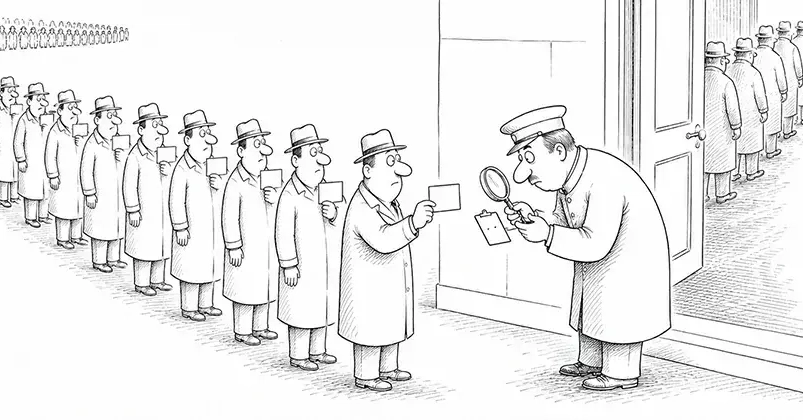
The core issue lies in the reliance on self-reported user agent strings. For AI models and web crawlers, the user agent is often the primary, and sometimes only, mechanism for identifying their traffic. This is akin to walking into a room and announcing your name; it’s a statement, not proof. Without a secondary layer of verification, any bot operator can simply adopt the user agent of a well-known entity like Perplexity or Claude. This lack of a verifiable handshake means that analytics, training data counts, and bot detection systems can be easily manipulated.
For instance, if a company like Perplexity relies on website traffic data to understand user engagement or to train its models, it might inadvertently count or be influenced by traffic that is not actually its own. This could lead to skewed metrics, inaccurate insights into user behavior, and potentially, the inclusion of falsified data in model training sets. The implications are significant for companies that crawl the web, for the websites they crawl, and for the integrity of the data economy.
Why This Matters: Data Integrity and Trust
The ability to easily impersonate AI crawlers has profound implications for data integrity across the web. Websites that meticulously track their visitors and bot traffic might be overcounting legitimate AI interactions, leading to flawed performance analysis and strategic decisions. This is particularly concerning for content creators and publishers who might be offering premium content or services based on perceived demand from specific AI entities.
Consider the perspective of a website owner. They might see a surge in requests attributed to a specific AI. Based on this, they might optimize content for that AI, allocate resources, or even enter into partnerships. If the source of these requests is fraudulent, these decisions are based on a false premise. The developer's experiment highlights that a user agent string is merely a declaration. Verifying that declaration is the missing piece. Some vendors, like Google with its Search Console verification, have systems in place to authenticate their crawlers. However, this is not a universal standard, especially for newer AI models and services.
The Path Forward: Towards Verifiable Bot Traffic
The solution requires a multi-pronged approach. Firstly, AI companies need to implement robust authentication mechanisms for their crawlers. This could involve cryptographic signatures, IP address whitelisting from known, verifiable ranges, or even a challenge-response protocol. For example, a crawler could be required to solve a unique, time-sensitive puzzle provided by the website it's trying to access, proving its legitimacy beyond a simple user agent string.
Secondly, website owners and analytics providers must move beyond simply trusting user agent strings. They need to integrate more sophisticated bot detection techniques that look at behavioral patterns, IP reputation, and potentially, third-party verification services. This could involve checking if the IP address belongs to a residential ISP or a known data center, analyzing the request timing and frequency for unnatural patterns, or querying services that maintain lists of verified bot IP ranges.
The experiment by the developer serves as a stark reminder. The internet's infrastructure, designed for human interaction and simpler forms of automation, is being strained by the rapid proliferation of sophisticated AI. Without a concerted effort to build trust and verifiability into automated systems, the data that fuels these systems and informs our digital world will remain fundamentally suspect. The question is not if this problem will be exploited further, but when, and what the fallout will be.
Unanswered Questions
What remains unaddressed is the responsibility of AI companies in ensuring their tools do not inadvertently facilitate such impersonations. If a company's user agent string is easily weaponized, does that company bear some responsibility for the downstream effects on data integrity? Furthermore, as AI models become more integrated into search and content consumption, how will the web adapt to a reality where a significant portion of traffic might be misattributed or entirely fabricated? The current landscape offers few definitive answers, leaving website operators and data consumers in a precarious position.