
Defining the Agent Harness
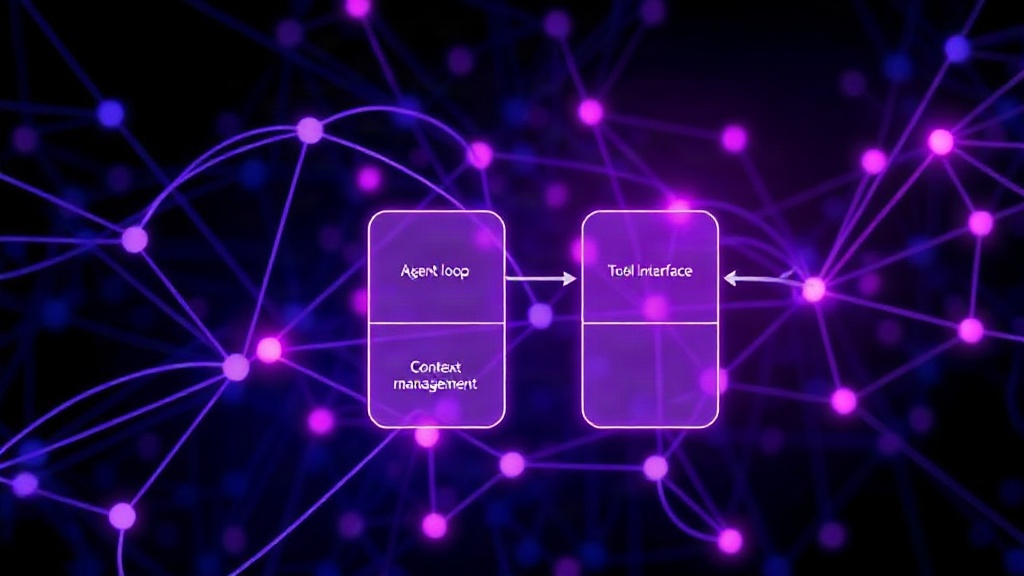
The past two months have seen a surge of academic papers, primarily from institutions like Alibaba's DreamX group, Meta AI, and Google Cloud, all converging on a critical component of advanced AI systems: the agent harness. This term, relatively new, describes the runtime layer that orchestrates large language models (LLMs), managing everything from context construction and state tracking to tool invocation, error handling, and result validation. Until recently, the precise definition of an agent harness lacked consensus. A paper by a researcher at Brazil's Federal Institute of Goiás, titled 'What makes a harness a harness,' sought to rectify this, proposing four essential and sufficient conditions. These include an agent loop that interleaves reasoning, action, and observation; a tool interface enabling the model to interact with and modify its external environment; context management that actively curates information within the model's attention window; and control mechanisms that ensure functionality even if the model is non-cooperative.
The significance of this underlying layer cannot be overstated. As LLMs evolve beyond simple text generation into sophisticated agents capable of performing complex tasks in digital and physical environments, the harness becomes the silent conductor. It bridges the gap between the LLM's raw intelligence and its ability to execute meaningful, multi-step actions reliably. Without a well-defined and robust harness, LLM-powered agents would struggle with consistency, context retention, and effective interaction with external systems, severely limiting their practical applications.
Key Research Themes and Findings
The eight papers collectively highlight several critical areas of agent harness development. A primary focus is on enhancing the reliability and efficiency of tool use. Many papers explore novel methods for tool selection, argument generation, and parsing tool outputs, aiming to reduce errors and improve the agent's ability to accomplish tasks that require external interactions, such as web browsing, database queries, or API calls.
Context management is another central theme. LLMs have finite context windows, and effectively managing what information is presented to the model at any given time is crucial for performance. Researchers are developing techniques for dynamic context summarization, retrieval augmentation, and selective information injection to ensure the LLM has the most relevant information without exceeding its capacity. This is akin to a skilled personal assistant who knows precisely what information you need to see at a glance, without overwhelming you with unnecessary details.
Error recovery and self-correction mechanisms are also heavily investigated. Agents operating in complex environments will inevitably encounter errors, whether from faulty tool execution, misunderstood instructions, or unexpected environmental changes. Papers are exploring how agents can detect, diagnose, and recover from these errors, often through iterative refinement of their plans or by seeking clarification. This resilience is vital for deploying agents in real-world scenarios where perfect conditions are rare.
Furthermore, several papers address the challenge of agent alignment and safety. As agents become more capable, ensuring they act in accordance with human intentions and ethical guidelines is paramount. Research in this area focuses on developing robust reward functions, implementing safety constraints, and creating mechanisms for human oversight and intervention. The goal is to build agents that are not only effective but also trustworthy and controllable.
Implications for Agent Development
The proliferation of research into agent harnesses signals a maturation of the field of AI agents. Previously, the focus was largely on the LLM's core capabilities. Now, the industry is recognizing that the surrounding infrastructure is equally, if not more, important for practical deployment. Developers building AI agents can expect a richer ecosystem of libraries, frameworks, and best practices emerging from this research.
These papers provide concrete strategies for improving agent performance, robustness, and safety. For instance, understanding advanced context management techniques can help developers design agents that maintain coherence over longer, more complex task sequences. Improved tool invocation mechanisms can reduce debugging time and increase the success rate of agents interacting with external services.
The research also points towards a future where AI agents are more autonomous and capable of handling intricate, multi-step tasks with minimal human supervision. This shift from simple task execution to complex problem-solving will open up new frontiers for AI applications across industries, from scientific research and software development to customer service and personal assistance.
The Road Ahead
While significant progress has been made, the field of agent harnesses is still nascent. Open questions remain regarding standardization, scalability, and the optimal balance between autonomy and control. As more research papers are published and practical implementations emerge, we can anticipate the development of more sophisticated and reliable AI agents. The current wave of research provides a strong foundation, setting the stage for the next generation of AI systems that can effectively reason, act, and adapt in complex environments.
The collective effort from these leading research institutions underscores the critical role of the agent harness. It is the scaffolding that allows LLMs to transcend their nature as text predictors and become true agents of action. As this layer solidifies, the capabilities of AI agents will expand dramatically, moving us closer to AI systems that can collaborate with humans on increasingly challenging problems.