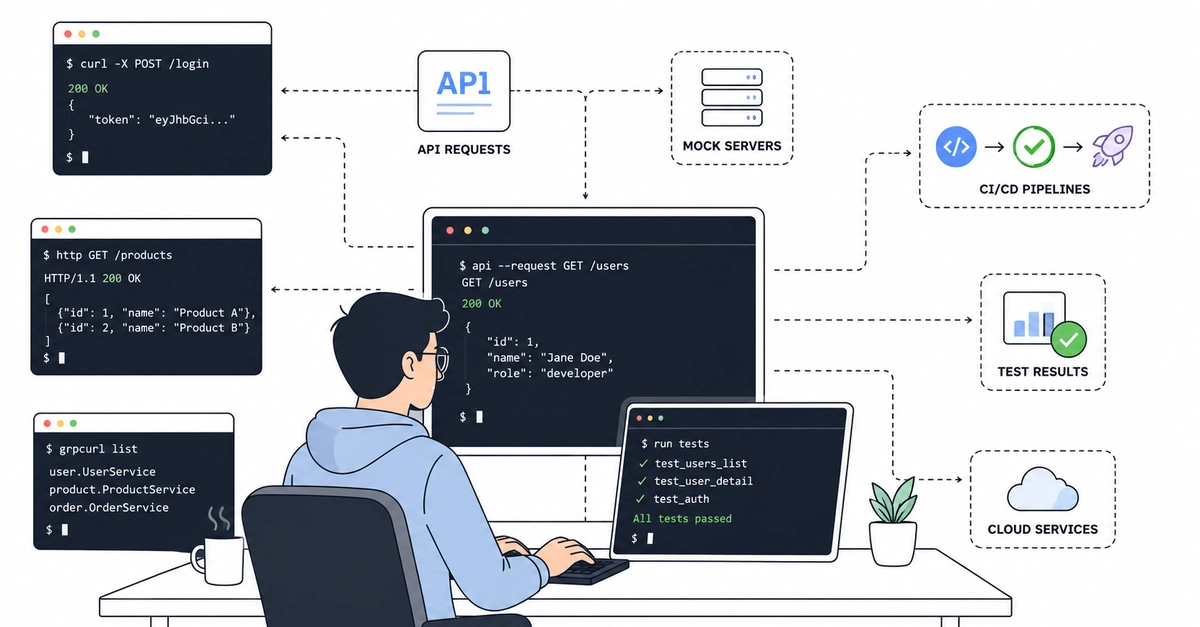
The Growing Pain of API Complexity
As organizations scale, managing APIs transforms from a manageable task into a significant challenge. The APIs themselves are rarely the root of the problem. Instead, it's the surrounding ecosystem: inconsistent naming conventions across teams, secrets embedded in API definitions, undocumented endpoints, and orphaned access for departed employees. When an organization has only a handful of APIs, manual oversight might suffice. But with hundreds of endpoints spanning multiple teams and environments, this approach quickly becomes unsustainable. This is precisely where API governance tools become indispensable.
API governance is more than just dictating API design principles. It’s a strategic framework encompassing security, reliability, discoverability, and lifecycle management. Effective governance ensures that APIs align with business objectives, meet regulatory requirements, and provide a stable, predictable interface for consumers, whether internal developers or external partners. Without it, organizations risk security breaches, integration failures, increased development costs, and a fragmented developer experience.
What API Governance Entails
At its core, API governance establishes and enforces a set of rules and best practices for designing, developing, deploying, and managing APIs throughout their lifecycle. This involves several key areas:
- Design Standards: Ensuring consistency in naming conventions, data formats (e.g., JSON, XML), and architectural styles (e.g., REST, GraphQL).
- Security Policies: Implementing authentication, authorization, rate limiting, and input validation to protect APIs from abuse and unauthorized access.
- Documentation and Discoverability: Mandating clear, up-to-date documentation (e.g., OpenAPI specifications) and providing a central registry for APIs, making them easy for developers to find and use.
- Lifecycle Management: Managing API versions, deprecation strategies, and retirement plans to ensure smooth transitions and minimize disruption.
- Compliance and Auditing: Verifying that APIs adhere to internal policies and external regulations (like GDPR or HIPAA) and providing audit trails for accountability.
- Performance Monitoring: Tracking API performance metrics to identify bottlenecks and ensure a reliable user experience.
Think of API governance like the building codes and zoning laws for a city. Without them, you’d have chaotic, unsafe construction, leading to structural failures and an unlivable environment. API governance provides the essential framework for building a robust and scalable API ecosystem.

The Top 7 API Governance Tools for 2026
Selecting the right tool depends on an organization's specific needs, existing infrastructure, and maturity level. Here are seven leading tools that excel in providing robust API governance capabilities:
1. SwaggerHub (by SmartBear)
SwaggerHub is a widely adopted platform for API design and documentation. It enforces API design standards through its integration with the OpenAPI Specification (formerly Swagger). Developers can create, document, and collaborate on API designs, ensuring consistency from the outset. Its governance features include version control, style validation, and integration with CI/CD pipelines to catch non-compliant designs early.
2. Postman
While often recognized as an API testing and development tool, Postman has evolved into a comprehensive platform that includes significant governance capabilities. Its API Builder allows teams to design, document, and mock APIs. The platform's Workspace feature facilitates collaboration, and its API governance features help enforce standards, manage API lifecycles, and provide discoverability through its API Network. Postman's strength lies in its widespread adoption and ease of use for development teams.
3. Axway Amplify API Management Platform
Axway offers a robust platform that covers the entire API lifecycle, with strong governance features. Amplify provides tools for API design, security, publishing, and analytics. It enables organizations to define and enforce policies for security, access control, and usage. Its comprehensive nature makes it suitable for large enterprises looking for an end-to-end solution to manage and govern their API landscape.
4. Kong Konnect
Kong Konnect is a cloud-native API management platform that emphasizes security and governance. It provides a unified control plane for managing APIs across hybrid and multi-cloud environments. Key governance features include API gateway security policies, developer portals for controlled access and documentation, and robust analytics for monitoring API health and usage. Konnect is particularly well-suited for organizations adopting microservices and cloud-native architectures.
5. WSO2 API Manager
WSO2 API Manager is an open-source platform that provides extensive capabilities for API governance and management. It supports REST, SOAP, and GraphQL APIs, offering features for API design, publishing, lifecycle management, security, and analytics. Its policy enforcement engine allows organizations to define and apply custom governance rules. The open-source nature provides flexibility and cost-effectiveness for many organizations.
6. Apigee (by Google Cloud)
Apigee is a leading API management platform that offers a comprehensive suite of tools for designing, securing, deploying, and analyzing APIs. Its governance features are deeply integrated, allowing for the definition and enforcement of security policies, traffic management, and developer portal configurations. Apigee excels in managing complex, large-scale API programs, offering granular control over API access and behavior.
7. MuleSoft Anypoint Platform
MuleSoft's Anypoint Platform provides a unified solution for API integration and management, with a strong focus on governance. It enables organizations to design, build, deploy, and manage APIs and integrations consistently. Governance is embedded through API design guidelines, security policies, and lifecycle management tools. MuleSoft's emphasis on integration makes it a powerful choice for organizations looking to connect disparate systems via APIs.
The Unanswered Question: Scalability of Governance Culture
While these tools provide the technical scaffolding for API governance, a crucial question remains: how do organizations cultivate a sustainable culture of governance as they scale? The tools can enforce rules, but they cannot inherently instill a mindset of responsibility and adherence across hundreds of developers. What is the tipping point where a tool-driven approach becomes insufficient, and a deeply ingrained cultural shift is required? And how do you measure the success of that cultural shift beyond mere compliance metrics?
Conclusion: Proactive Governance for Future-Proof APIs
API governance is no longer an optional add-on; it's a fundamental requirement for any organization serious about its digital future. As APIs become the connective tissue of modern applications and businesses, maintaining their security, consistency, and manageability is paramount. The tools listed above offer powerful solutions to tackle this complexity, enabling teams to build and manage APIs that are not only functional but also robust, secure, and aligned with strategic goals. Investing in the right API governance strategy and tools is an investment in the long-term health and agility of your technology ecosystem.