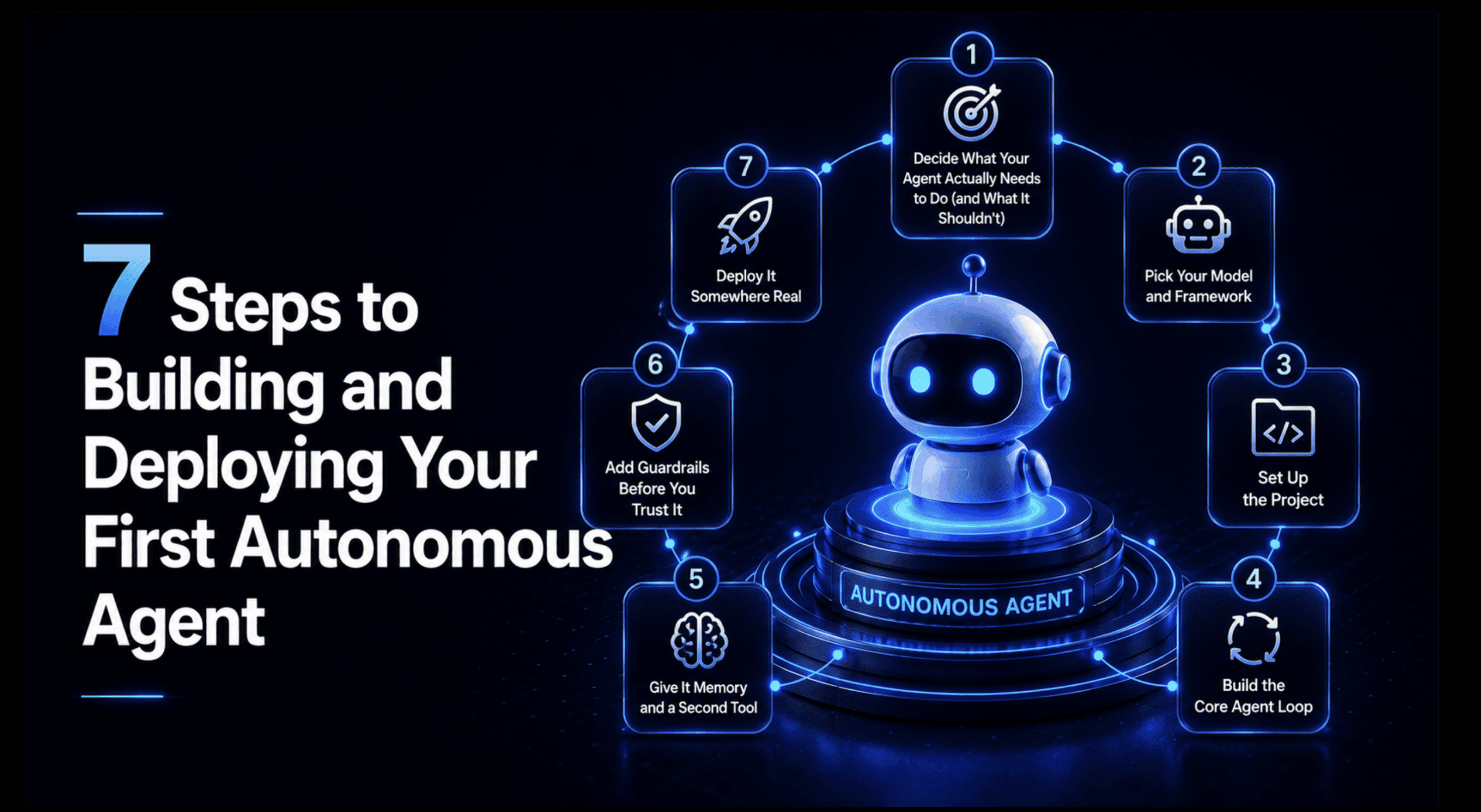
Understanding Autonomous AI Agents
Autonomous AI agents represent a significant leap forward in artificial intelligence. Unlike traditional AI models that require constant human input and direction, autonomous agents are designed to operate independently. They can perceive their environment, make decisions based on that perception, and take actions to achieve specific goals without direct human intervention. Think of them less like a sophisticated tool and more like a capable assistant that can be given a task and then figure out the best way to complete it, including adapting to unforeseen circumstances. This independence stems from their ability to leverage advanced algorithms, including machine learning, natural language processing, and sophisticated planning capabilities.
The development and deployment of these agents, however, involve a structured process. This guide outlines seven critical steps to navigate this process effectively, ensuring a robust and functional autonomous agent.
Step 1: Define the Agent's Purpose and Scope
The foundational step in building any autonomous agent is to clearly define its purpose. What specific problem will this agent solve? What are its primary objectives? A well-defined purpose acts as a compass, guiding all subsequent development decisions. Equally important is defining the scope of its operations. What are the boundaries of its environment? What types of tasks can it perform? What are its limitations? A clear scope prevents scope creep and ensures that the agent's capabilities remain focused and achievable. For instance, an agent designed to manage customer support inquiries should have its purpose clearly defined as handling FAQs and routing complex issues, with its scope limited to the company's product documentation and support channels.
Step 2: Select the Right Architecture and Tools
Choosing the appropriate architecture is crucial for an agent's performance and scalability. Common architectures include reactive agents, deliberative agents, and hybrid models. Reactive agents respond directly to current stimuli, deliberative agents use internal models to reason about the world and plan actions, and hybrid agents combine both approaches. The selection depends heavily on the agent's purpose and the complexity of its environment. Alongside the architecture, selecting the right tools and frameworks is essential. This includes programming languages (Python is a popular choice due to its extensive AI libraries), AI/ML libraries (e.g., TensorFlow, PyTorch, scikit-learn), agent development frameworks (e.g., LangChain, Auto-GPT, BabyAGI), and cloud platforms for deployment and scaling.
Step 3: Data Collection and Preprocessing
Autonomous agents often rely on data to learn, adapt, and make decisions. The quality and relevance of this data are paramount. This step involves identifying the necessary data sources, collecting the data, and then cleaning and preprocessing it. Preprocessing may include data cleaning (handling missing values, outliers), data transformation (normalization, feature scaling), and data augmentation (creating synthetic data to increase dataset size and diversity). The data collected should be representative of the environment the agent will operate in and the tasks it will perform. For example, an agent designed to navigate a simulated environment would require detailed data about that environment's physics, objects, and possible interactions.
Step 4: Model Development and Training
This is where the core intelligence of the agent is built. Based on the chosen architecture and data, you will develop and train the AI models that power the agent's decision-making and action-taking capabilities. This could involve training machine learning models for prediction, classification, or reinforcement learning for optimal decision-making. The training process requires careful hyperparameter tuning, validation, and testing to ensure the model generalizes well to new, unseen data. Iterative refinement is key here; the initial models may not perform optimally, requiring adjustments to the model architecture, training data, or training parameters.
Step 5: Integration and Testing
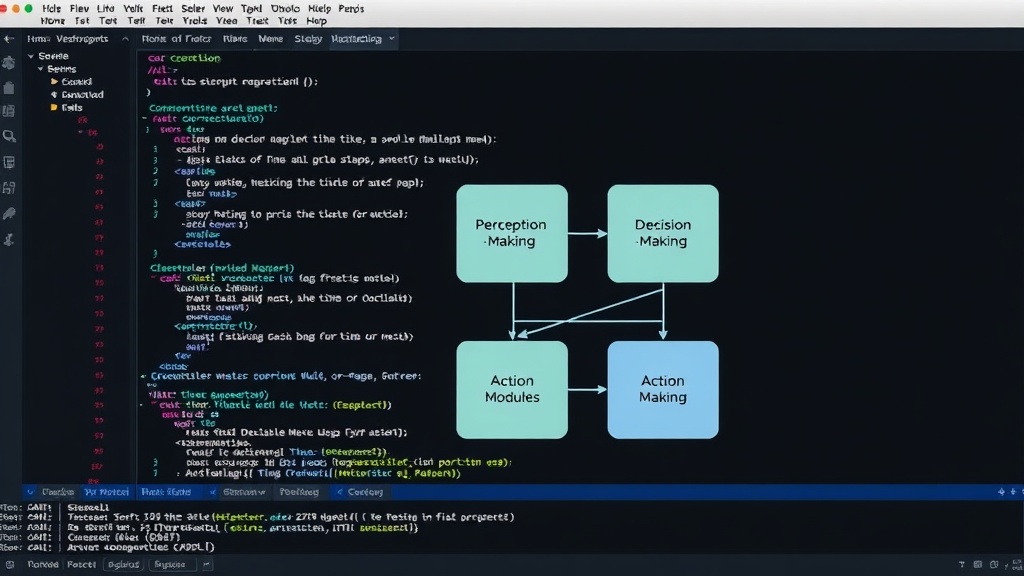
Once the core models are developed, they need to be integrated into the agent's overall architecture. This involves connecting the perception modules, decision-making components, and action execution systems. Rigorous testing is critical at this stage. This includes unit testing of individual components, integration testing of the combined system, and end-to-end testing in simulated environments that closely mimic the agent's real-world operational setting. Testing should cover various scenarios, including edge cases and failure conditions, to identify bugs and performance bottlenecks. The goal is to ensure the agent behaves as expected and can handle a wide range of inputs and situations reliably.
Step 6: Deployment and Monitoring
After successful testing, the agent is ready for deployment. This involves deploying the agent to its target environment, whether it's a cloud server, an edge device, or a specific software platform. The deployment strategy will depend on the agent's requirements for real-time processing, scalability, and connectivity. Post-deployment, continuous monitoring is essential. This involves tracking the agent's performance, identifying any deviations from expected behavior, and collecting feedback data. Monitoring tools can provide insights into operational metrics, error rates, and resource utilization. Setting up alerts for critical issues ensures that problems can be addressed promptly.
Step 7: Iteration and Improvement
The deployment of an autonomous agent is not the end of the development cycle; it's the beginning of its operational life. Continuous improvement is key to maintaining and enhancing the agent's effectiveness. Based on the data collected during monitoring and user feedback, the agent can be refined. This iterative process involves retraining models with new data, updating algorithms, and adjusting operational parameters. What nobody has addressed yet is the long-term maintenance strategy for highly complex autonomous agents, especially when the underlying data distributions shift over time. This ongoing cycle of learning, adaptation, and deployment ensures that the agent remains relevant and performs optimally in its dynamic environment.