AI Automation Projects
The landscape of AI automation is rapidly evolving, and Python remains the go-to language for developers looking to build intelligent systems. For 2026, expect to see a surge in projects that leverage advanced machine learning models for tasks previously considered too complex for automation. One such project could be an AI-powered content generation tool. This system would go beyond simple text completion, aiming to produce coherent articles, marketing copy, or even code snippets based on user prompts and a deep understanding of context.
Building such a tool involves integrating large language models (LLMs) like GPT-4 or its successors, fine-tuning them on specific datasets to improve relevance and accuracy, and developing a user-friendly interface. Libraries such as Hugging Face Transformers and LangChain will be essential for managing model interactions and prompt engineering. The output could be a web application where users input keywords or a brief outline, and the AI generates a draft document. This project would test your ability to handle complex NLP tasks, manage API integrations, and deploy scalable solutions.

Machine Learning and Data Analysis Applications
Machine learning continues to be a driving force, and practical applications are becoming more sophisticated. For 2026, consider projects that focus on predictive analytics for specific industries or personalized recommendation engines. A robust predictive maintenance system for industrial equipment, for instance, could analyze sensor data (vibration, temperature, pressure) to predict potential failures before they occur. This minimizes downtime and reduces maintenance costs.
Implementing this requires expertise in time-series analysis, anomaly detection, and classification algorithms. Libraries like Pandas for data manipulation, NumPy for numerical operations, and Scikit-learn or TensorFlow/PyTorch for model building are critical. You would collect historical sensor data, label instances of equipment failure, train models (e.g., LSTMs, Random Forests), and deploy them to monitor real-time data streams. The project could culminate in a dashboard displaying equipment health status and predicted failure times.
Another compelling ML project is a hyper-personalized recommendation system. Moving beyond simple collaborative filtering, these systems would incorporate user behavior, contextual information (time of day, location), and even sentiment analysis from user feedback. This requires advanced feature engineering and potentially deep learning models to capture nuanced user preferences. Libraries like Surprise for recommender systems or custom implementations using deep learning frameworks would be key.
API Development and Integration Projects
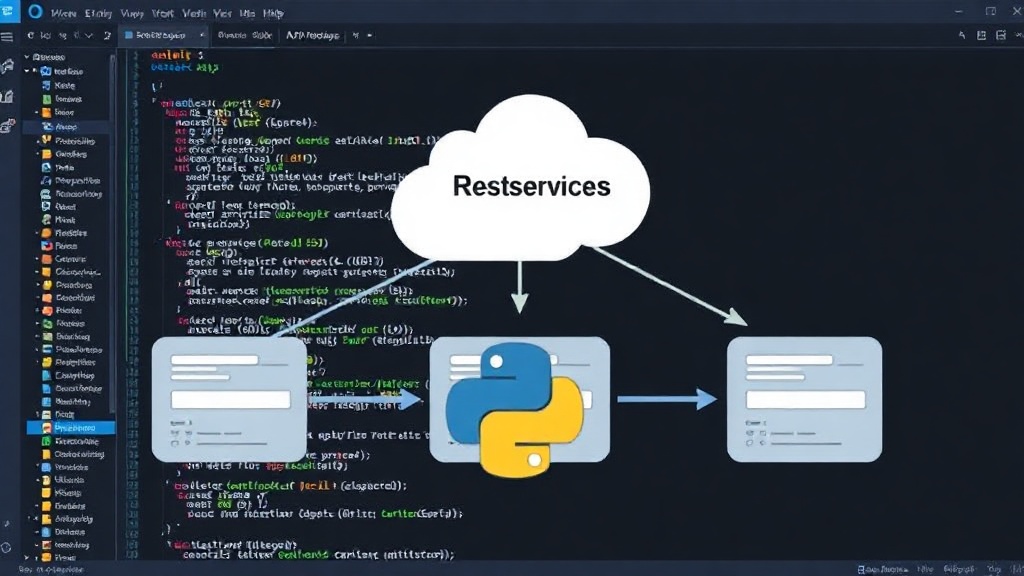
APIs remain the backbone of modern software architecture, enabling seamless communication between different services. In 2026, the trend will be towards building more robust, secure, and efficient APIs, particularly for microservices architectures and real-time data feeds. A project could involve creating a real-time stock market data API that aggregates information from multiple exchanges, processes it, and provides clean, actionable data to financial applications or trading bots.
This project would necessitate understanding RESTful principles or GraphQL, building a scalable backend using frameworks like FastAPI or Django/Flask, and integrating with external data sources, potentially using asynchronous programming techniques for high throughput. Security considerations, such as authentication (OAuth2) and rate limiting, are paramount. Thorough testing, including load testing and security audits, would ensure the API's reliability and performance.
Interactive Dashboards and Data Visualization
Presenting complex data in an understandable and interactive format is crucial for decision-making. For 2026, interactive dashboards will move beyond static charts to incorporate more dynamic elements, real-time updates, and sophisticated user interaction capabilities. Consider building a personalized financial dashboard that allows users to track investments, analyze spending patterns, and visualize financial goals in real-time.
Libraries like Plotly Dash or Streamlit are excellent choices for building such applications. These frameworks allow Python developers to create web-based dashboards with interactive charts, tables, and input controls without needing extensive frontend development knowledge. The project would involve connecting to various data sources (e.g., financial APIs, CSV files), performing data cleaning and aggregation, and then using visualization components to present insights effectively. The ability to filter data, drill down into specific metrics, and receive real-time updates will be key features.
Portfolio-Ready and Specialized Applications
Beyond core technical skills, building projects that showcase problem-solving abilities and domain knowledge is vital for a strong portfolio. One such project could be a personalized learning platform. This platform would use Python to track user progress, recommend learning resources based on performance, and adapt the learning path dynamically.
This involves database management for user profiles and progress, logic for recommendation algorithms, and a clean user interface. It’s a project that demonstrates a blend of backend development, data handling, and an understanding of user experience. Another idea is an automated task scheduler that goes beyond cron jobs, offering a visual interface and intelligent rescheduling based on task dependencies and priority. This would require robust task management logic and potentially integration with calendar APIs.
Finally, for those interested in cybersecurity, a Python-based network security monitor could be a valuable project. This tool could scan networks for vulnerabilities, detect suspicious activities, and generate security reports. It would leverage libraries for network scanning (like Scapy), data analysis, and potentially machine learning for anomaly detection. Such a project highlights a critical and in-demand skill set.