
Understanding the AI Agent Leap: From Probabilistic Decisions to Real Actions
AI agents represent a significant departure from traditional AI systems. Unlike chatbots that merely process information or generate text, agents can actively interface with and alter the real world. They connect probabilistic decision-making—the inherent uncertainty in AI outputs—to tangible actions. This means an agent that can read emails, update databases, execute code, or even initiate financial transactions becomes an integral component of your production control plane. Prompt quality is paramount, but it is not a security boundary. The potential for unintended consequences or malicious exploitation demands robust controls before any agent is granted production access.
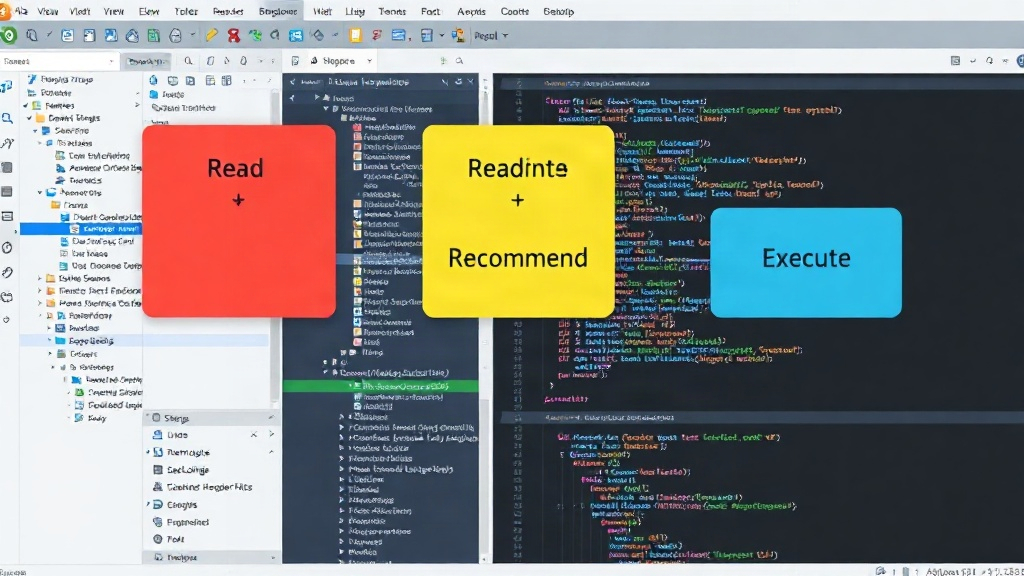
1. Separate Read, Recommend, and Execute Permissions
The first critical control is to avoid treating "access" as a monolithic permission. Instead, break down an agent's capabilities into distinct stages: Read, Recommend, and Execute. Each stage should have its own granular permissions and oversight.
The Read stage involves retrieving the minimum necessary data for the agent to understand its task. This minimizes data exposure and the potential for an agent to learn sensitive information it doesn't need.
The Recommend stage is where the agent formulates a proposed action based on the data it has read. Crucially, at this stage, the agent should not be able to alter any external state. It generates a plan or a suggestion, allowing for human review or automated validation.
The Execute stage is the final step, where the approved action is carried out through a narrowly scoped tool. This permission should be the most tightly controlled, requiring explicit confirmation and often limited to specific, well-defined operations.
This separation provides essential checkpoints. For instance, a customer support agent might automatically read incoming tickets and draft responses (Read and Recommend), but sending the actual reply would require a human "Execute" approval. Similarly, a finance agent could analyze invoices (Read) and suggest payment actions (Recommend), but actually processing a payment would be a separate, highly gated Execute step.
2. Implement Rate Limiting and Throttling
Even with well-defined permissions, an AI agent can cause significant disruption if it operates too rapidly or too frequently. Rate limiting and throttling are essential to prevent accidental over-execution or denial-of-service conditions, whether caused by the agent itself or external manipulation.
By setting limits on the number of actions an agent can perform within a given timeframe (e.g., per minute, per hour), you can prevent a runaway process from overwhelming systems. This is akin to setting a maximum speed on a vehicle to prevent crashes. For example, an agent tasked with updating inventory might be limited to 100 updates per hour. If it reaches that limit, it must wait or trigger an alert for human intervention.
Throttling also helps manage resource consumption. Rapid, repeated API calls can incur significant costs or strain downstream services. Implementing these controls ensures predictable performance and cost management.
3. Establish a Human-in-the-Loop (HITL) Review Process
For critical or high-impact actions, a human-in-the-loop process is non-negotiable. This means that before an agent's "Execute" command is finalized, a human must review and approve it. The complexity and frequency of HITL reviews should be proportionate to the risk associated with the action.
Think of HITL as the final safety check before a pilot takes off. The AI can handle navigation and pre-flight checks, but the human pilot makes the ultimate decision to proceed. For less critical tasks, the HITL might involve periodic audits rather than real-time approval. For high-stakes operations, like financial transfers or system configuration changes, immediate, explicit human sign-off is mandatory.
This process not only adds a layer of security but also allows for continuous learning and refinement of the agent's decision-making capabilities based on human feedback.
4. Utilize Observability and Auditing
Comprehensive logging and auditing are fundamental to understanding what an AI agent is doing, why it's doing it, and what the outcome was. This is not just for security incident response; it's crucial for debugging, performance monitoring, and compliance.
Every decision, recommendation, and executed action should be logged with sufficient detail: the input prompts, the data accessed, the reasoning (if available), the proposed action, the approval status (if HITL is involved), and the final outcome. This creates an irrefutable audit trail.
The surprising detail here is how often organizations overlook the need for detailed AI agent logs. It's not enough to log that an action occurred; you need to log the context around it. This data is invaluable for identifying emergent behaviors, biased outputs, or potential vulnerabilities before they cause significant problems.
5. Implement Time-Bound Access and Scoped Tools
AI agents should never have standing, unlimited access to production systems. Access should be granted on a least-privilege, just-in-time basis.
This means that an agent should only be granted the specific permissions it needs to perform its current task, and only for the duration that task is active. For example, if an agent needs to update a specific set of user profiles, it should only be given write access to those profiles, and that access should expire once the update is complete.
Furthermore, the tools an agent can invoke should be strictly limited. Instead of granting an agent access to an entire API, provide it with access to specific functions that perform only the required operations. This significantly reduces the attack surface.
6. Enforce Input Validation and Sanitization
AI agents are susceptible to prompt injection attacks, where malicious input is crafted to manipulate the agent into performing unintended actions. Robust input validation and sanitization are critical defenses.
This involves treating all external inputs—whether from users, other systems, or even other AI agents—as untrusted. Implement checks to ensure that inputs conform to expected formats, lengths, and character sets. Sanitize inputs to remove or neutralize any potentially harmful code or commands before they are processed by the agent.
This is similar to how web applications sanitize user input to prevent cross-site scripting (XSS) attacks. The goal is to ensure that the agent's processing logic is not subverted by cleverly disguised malicious data.
7. Develop a Rollback and Recovery Strategy
Despite all preventative measures, errors or malicious actions can occur. A well-defined rollback and recovery strategy is essential for minimizing the impact of such events.
This strategy should outline the steps to quickly undo an agent's actions if they prove to be erroneous or harmful. This might involve automated rollback mechanisms for certain types of changes or clear procedures for manual intervention. It also includes having backup and restore procedures in place for any data or systems the agent interacts with.
Having a plan for what happens when things go wrong—before they go wrong—is a hallmark of mature production systems. For AI agents, this means ensuring that you can revert to a known good state quickly and efficiently.