Understanding Small Language Models (SLMs)
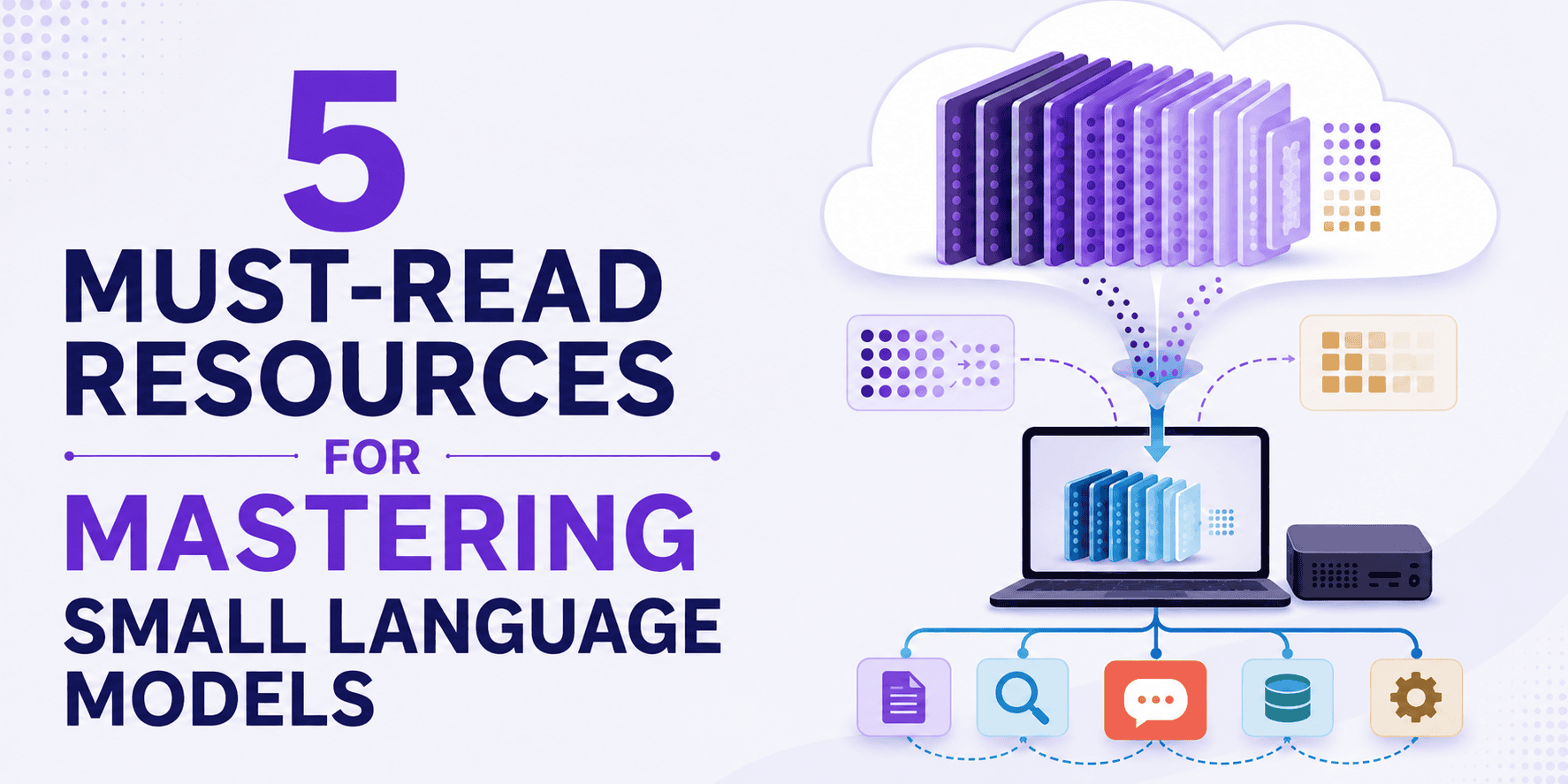
The landscape of artificial intelligence is rapidly evolving, with Small Language Models (SLMs) emerging as a critical area of focus. Unlike their larger counterparts, SLMs offer a compelling balance of performance and efficiency, making them ideal for a wider range of applications, particularly those constrained by computational resources or requiring on-device deployment. Mastering SLMs involves understanding their fundamental architecture, effective fine-tuning strategies, the nuances of agentic workflows, and the practicalities of local deployment. This article highlights five indispensable resources designed to equip data professionals with the knowledge needed to navigate and excel in this domain.
Resource 1: Deep Dive into SLM Architecture
For professionals aiming to grasp the inner workings of SLMs, a foundational understanding of their architecture is paramount. The first recommended resource provides an in-depth exploration of how these models are constructed, contrasting them with larger models and explaining the design choices that enable their efficiency. This includes examining transformer variants optimized for smaller parameter counts, efficient attention mechanisms, and quantization techniques that reduce model size and inference cost without significant performance degradation. Understanding these architectural nuances is key to selecting the right SLM for a specific task and appreciating its limitations and strengths.
Resource 2: Fine-Tuning Strategies for SLMs
Once the architecture is understood, the next logical step is learning how to adapt SLMs to specific tasks. Resource two focuses on fine-tuning methodologies tailored for smaller models. This section delves into techniques such as LoRA (Low-Rank Adaptation), QLoRA, and other parameter-efficient fine-tuning (PEFT) methods that allow for customization without the prohibitive computational demands of full fine-tuning. It covers best practices for data preparation, hyperparameter selection, and evaluation metrics relevant to SLMs. Mastering these techniques allows data professionals to leverage pre-trained SLMs and tailor them for domain-specific applications, achieving state-of-the-art results with minimal resources.
Resource 3: Agentic Workflows with SLMs
The utility of SLMs extends beyond simple text generation. Resource three explores the exciting domain of agentic workflows, where SLMs act as the core reasoning engine for autonomous agents. This involves understanding how SLMs can be integrated with tools, memory systems, and planning modules to perform complex tasks. The material covers frameworks and patterns for building LLM-powered agents, such as ReAct (Reasoning and Acting) and AutoGPT-like architectures, adapted for the constraints of SLMs. It discusses how to design prompts that enable SLMs to break down problems, access external information, and execute multi-step plans, opening up new possibilities for automation and intelligent systems.
Resource 4: Practical Local Deployment of SLMs
A significant advantage of SLMs is their potential for local deployment, offering enhanced privacy, reduced latency, and offline capabilities. The fourth resource tackles the practical challenges and solutions associated with deploying SLMs on local hardware, including personal computers, edge devices, and embedded systems. It covers various inference engines and libraries like Ollama, LM Studio, and llama.cpp, detailing how to set them up and optimize them for different hardware configurations. This section provides actionable guidance on model quantization, hardware acceleration (CPU, GPU, NPU), and efficient inference serving, enabling developers to bring powerful AI capabilities directly to their users' devices.
Resource 5: Case Studies and Advanced Applications
To solidify understanding and inspire further innovation, the fifth resource presents a collection of case studies and advanced applications of SLMs. These examples showcase real-world implementations across various industries, from customer service chatbots and content summarization tools to code generation assistants and data analysis tools. The case studies often highlight the specific architectural choices, fine-tuning approaches, and deployment strategies employed, offering valuable lessons learned. By examining these practical use cases, data professionals can gain a deeper appreciation for the versatility of SLMs and identify opportunities to apply them within their own projects and organizations. This resource serves as a bridge between theoretical knowledge and practical implementation, demonstrating the tangible impact of mastering small language models.
By engaging with these five resources, data professionals can build a comprehensive understanding of Small Language Models, from their fundamental design to their practical application in real-world scenarios. The focus on architecture, fine-tuning, agentic capabilities, and local deployment ensures a well-rounded education that is both technically rigorous and highly relevant to current industry demands.