The Vulnerability Gap in Logistics Image Uploads
In logistics communities, users upload images of labels, damaged parcels, and delivery notes. These images often undergo transformations: resizing for thumbnails, content scanning for safety, and Optical Character Recognition (OCR) for data extraction. A critical security gap emerges if the system assumes an image is safe immediately after upload. This assumption is dangerous. A malicious actor could upload a file disguised as an image, such as a renamed executable, a decompression bomb, or an image with a malformed color profile. Such files might bypass initial checks but fail catastrophically later in the processing pipeline, potentially corrupting data, crashing workers, or even creating security vulnerabilities.
The core problem is treating an 'upload succeeded' status as equivalent to 'image is safe.' This linear thinking creates a vulnerability window. By the time the image reaches a specialized worker for OCR or further processing, it may have already undergone several transformations, each a potential point of failure or exploitation if the initial validation was insufficient. Bandwidth and quality are directly linked in this process: optimizing for one without considering the other leads to inefficiency and risk.
A Five-Gate Validation Strategy
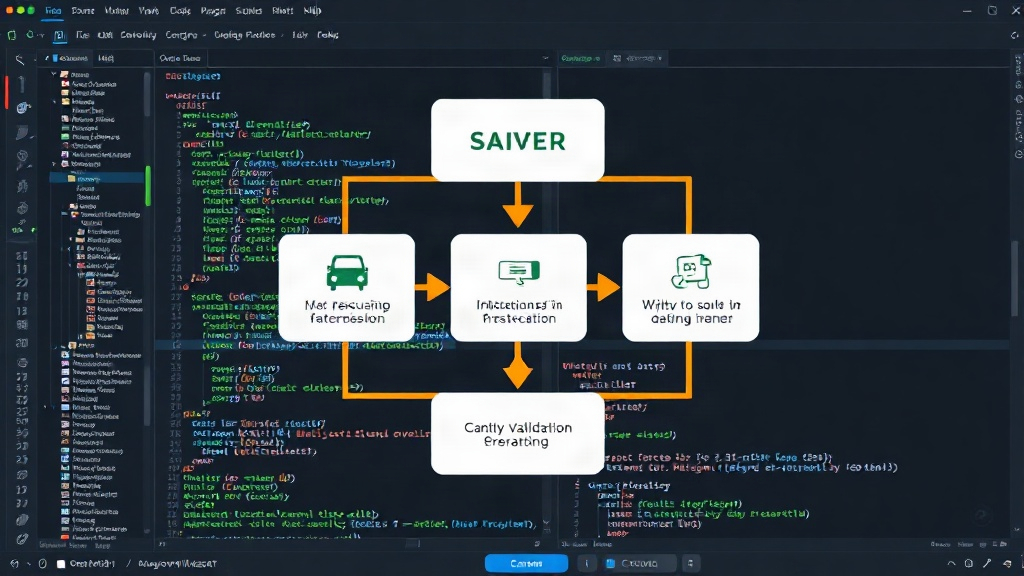
To address this, a robust, multi-stage validation strategy is essential. The most effective approach validates an image as early as possible in the client, followed by rigorous checks after upload, and only then proceeds with resource-intensive processes like OCR on validated objects. This phased approach minimizes wasted bandwidth and ensures that only safe, properly formatted images enter the critical processing path. I've identified five key validation gates that form a comprehensive pipeline.
Gate 1: Client-Side Initial Validation
The first line of defense is on the client. Before the image even leaves the user's device, basic checks should be performed. This includes verifying the file type (ensuring it's a common image format like JPEG, PNG, or GIF), checking file size limits, and potentially performing a quick sanity check on image dimensions. While not foolproof, this gate filters out obviously incorrect or excessively large files, saving bandwidth and reducing the load on the server from the outset. This is analogous to a bouncer checking IDs at the door – it stops the most egregious offenders before they enter the venue.
Gate 2: Server-Side Upload Verification
Once the image is uploaded to the server, a second, more critical validation step must occur. This is the primary security boundary. Here, the system controls the uploaded bytes, the metadata, and the initial transformation path. This gate should re-verify the file type using content inspection (magic numbers) rather than just relying on the file extension. It should also check for known malicious patterns or signatures. Importantly, this stage should ensure the image is not a decompression bomb or a file that could exploit image parsing vulnerabilities. The goal is to confirm the file is a legitimate image and not an attempt to smuggle malicious code or data.
Gate 3: Pre-Transformation Sanity Check
Before any expensive transformations like resizing, cropping, or format conversion, a sanity check is crucial. This gate ensures the image data itself is internally consistent and conforms to expected image standards. For example, it can check for malformed image structures that might cause a parser to crash or behave unexpectedly. It verifies that the image data is decodable and represents a valid image representation. This is like checking if the contents of a package are what they're supposed to be before you start unpacking and sorting them.
Gate 4: Post-Transformation Integrity Check
After initial transformations (like resizing for thumbnails), the resulting image must be re-validated. Transformations can sometimes corrupt image data or introduce new vulnerabilities, especially if the transformation libraries themselves have flaws. This gate ensures that the image integrity is maintained post-operation. It’s a check to confirm that the modification process didn't break the image or introduce new risks. Did the resizing operation create a corrupted file? Did it alter the metadata in a way that’s now suspicious?
Gate 5: Pre-OCR Object Contract
The final gate is the most critical for the downstream OCR process. This is the post-upload contract that assures every subsequent worker that its input is trustworthy. By this stage, the image has passed all previous checks, is in a known, safe format, and has been transformed according to defined rules. This gate confirms that the image is suitable for OCR – it has the expected dimensions, color depth, and resolution for accurate text extraction, and crucially, it is not malformed or malicious. This is the point where the system can confidently pass the image to the OCR engine, knowing that the risk of failure due to malformed input is minimized. Every worker downstream can trust this input, as it has been rigorously vetted.
Benefits of the Five-Gate Approach
Implementing these five gates provides several key benefits. Firstly, it significantly enhances security by catching malicious uploads early, preventing them from reaching sensitive processing stages. Secondly, it improves system stability by reducing the likelihood of crashes or errors caused by malformed image data. Thirdly, it optimizes resource utilization by avoiding costly transformations and OCR on invalid files, saving processing time and bandwidth. Finally, it establishes a clear, trustworthy contract for data flowing through the system, making it easier to debug issues and maintain system health. This layered defense is not just about preventing attacks; it's about building a resilient and efficient image processing pipeline for community-driven logistics data.